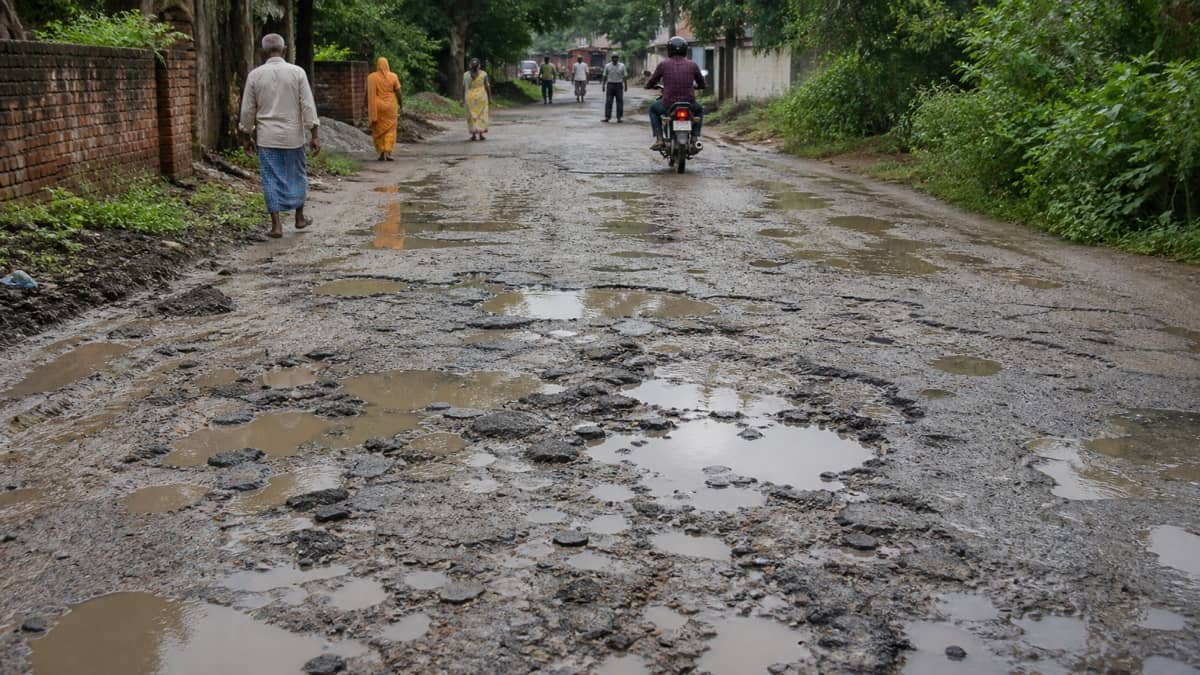
VARANASI: A road that should still be in its early service life has become a daily obstacle in Dasepur village, where broken asphalt, potholes and monsoon mud are slowing two-wheelers and pedestrians.
Residents of the Harahua block village say the road was built about two years ago but began to come apart within a month. Patch repairs were later carried out, yet those sections also failed to hold. Even light rain now leaves water and loose soil across the damaged surface, making the route slippery and difficult to use.
The allegation about the road’s early failure needs to be checked against the work order, completion certificate and maintenance clause. Those documents should identify the executing agency, contractor, sanctioned thickness and defect-liability period. If the first damage appeared within weeks, officials should establish whether the base was poorly prepared, drainage was omitted, material was below specification or later digging weakened the carriageway.
For villagers, the engineering explanation matters because it determines who should repair the route and who pays. Repeatedly filling potholes with loose material can make a wet road worse. A patch placed over standing water or an unstable edge will quickly lift under traffic. Unless runoff has somewhere to go, new asphalt may fail in the same locations.
The route is used for ordinary trips that rarely appear in project reports: children travelling to school, workers reaching the main road, farmers moving produce and families taking a patient towards a clinic. A rider can lose balance at low speed when a wheel enters a water-filled hole whose depth is invisible. At night, the risk increases if the road has no edge markers or lighting.
The responsible department should first make the stretch safe with warning markers and temporary drainage, then carry out a measured condition survey. Core or material testing may be warranted if the road truly deteriorated almost immediately after construction. The result, cost estimate and repair deadline should be shared with the gram-level representatives rather than communicated only after work resumes.
Residents can strengthen the complaint by submitting dated photographs from the same points, copies of earlier petitions and details of any injury or vehicle damage. The evidence should remain focused on condition and response; unsupported claims about corruption can distract from defects that are visible and testable.
Dasepur does not need another ceremonial layer of blacktop. It needs a repair designed for the road’s traffic and monsoon drainage, followed by an inspection before payment is closed. A two-year-old public asset should not require villagers to relearn the safest line through a pothole every time it rains.