
BHU Students Take Third Place in National Handloom Innovation Hackathon
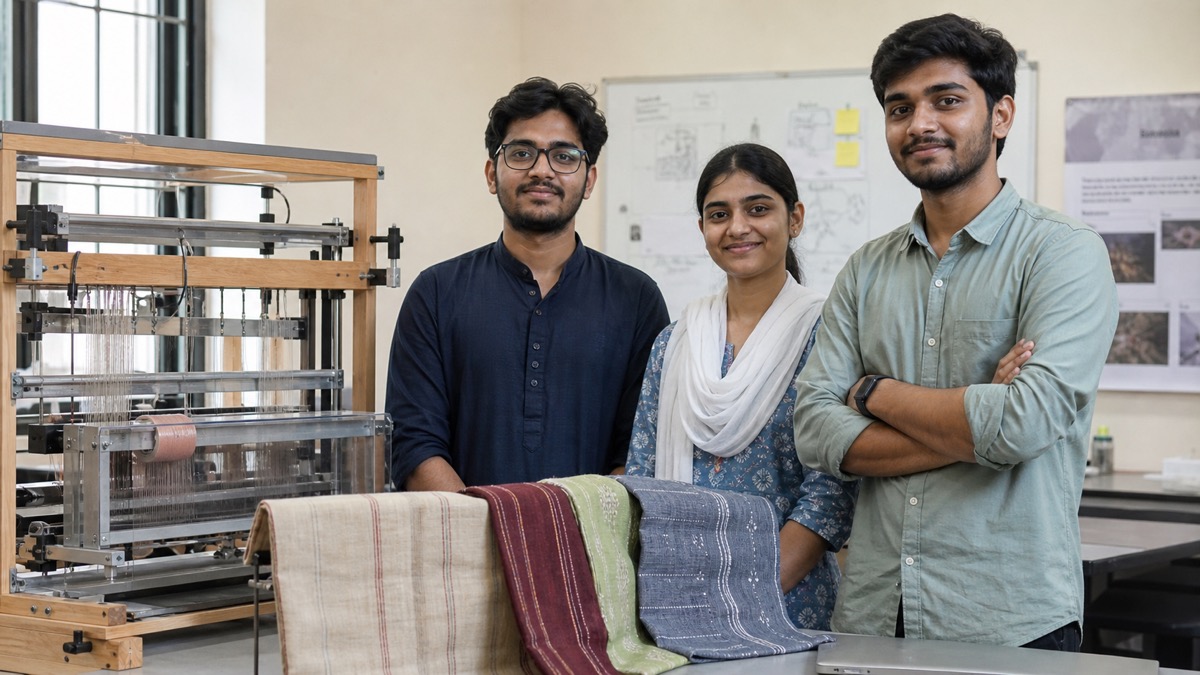
Varanasi: A team of Banaras Hindu University students has secured third place in a national handloom innovation hackathon, placing young researchers from the city on a platform focused on one of India’s most employment-intensive traditional industries. The result is especially resonant in Varanasi, where weaving is not an abstract design subject but a living urban economy.
Hackathons compress the innovation process into a demanding format. Teams must identify a real problem, develop a workable response and explain its value to judges within a limited time. In handloom, the useful ideas are not necessarily the most futuristic. A modest improvement in ergonomics, quality checking, design transfer or market information can make a meaningful difference to a weaver’s working day.
The BHU team’s third-place finish recognises both the proposal and the ability to present it nationally. The public announcement did not provide enough verified technical detail to assess the prototype independently, so claims about performance should wait for fuller documentation. The next constructive step would be testing with artisans rather than assuming a campus solution will fit every loom.
Varanasi’s handloom sector contains enormous variation. Large workshops, family looms, master weavers, women doing home-based tasks and specialised artisans all encounter different constraints. Co-design is therefore crucial. A tool that saves time but raises maintenance costs, or a digital system that assumes constant internet access, may fail outside a demonstration room.
Universities can bridge that gap through field trials and long-term partnerships. Engineering, design, management and social-science students can work together, while weavers are compensated as experts rather than treated as research subjects. Intellectual-property agreements should also recognise community knowledge and make clear who benefits if an idea is commercialised.
The national placement gives the students momentum, but a prize is the start of the harder phase. They will need to refine the concept, document results and see whether it can be manufactured or adopted affordably. If the project moves from hackathon table to loom floor without losing sight of artisan realities, it could demonstrate the best kind of innovation for Varanasi: technically ambitious, locally grounded and measured by the value it creates for the people who keep the craft alive.
BHU can strengthen the achievement by releasing a plain-language project note after any intellectual-property review. It should explain the problem, testing method, limitations and next stage without revealing protected details. That transparency would let artisans, funders and other researchers judge where collaboration could help, while giving the students credit for work beyond the competition result.
Sources and reporting
Based on university and local education reporting published on 14 August 2026. The article does not invent a project name or technical specification that was not included in the public result.
Related Stories

Ramnagar Day Three Follows Vishwamitra Into the Forest and Mithila

Shivpur Ramlila Stages Narad Moh and Kshirsagar Tableau Through Rain
VMC Puts City on Alert for Navratri and Durga Puja Civic Arrangements
Chowk Becomes Varanasi's First Police Station With ISO 9001 Certificate

World Tourism Day: Guides Welcome Visitors; Namami Gange Cleans Namo Ghat