
BHU and CDFD Begin DNA Study of 2,800-Year-Old Rajghat Skeleton
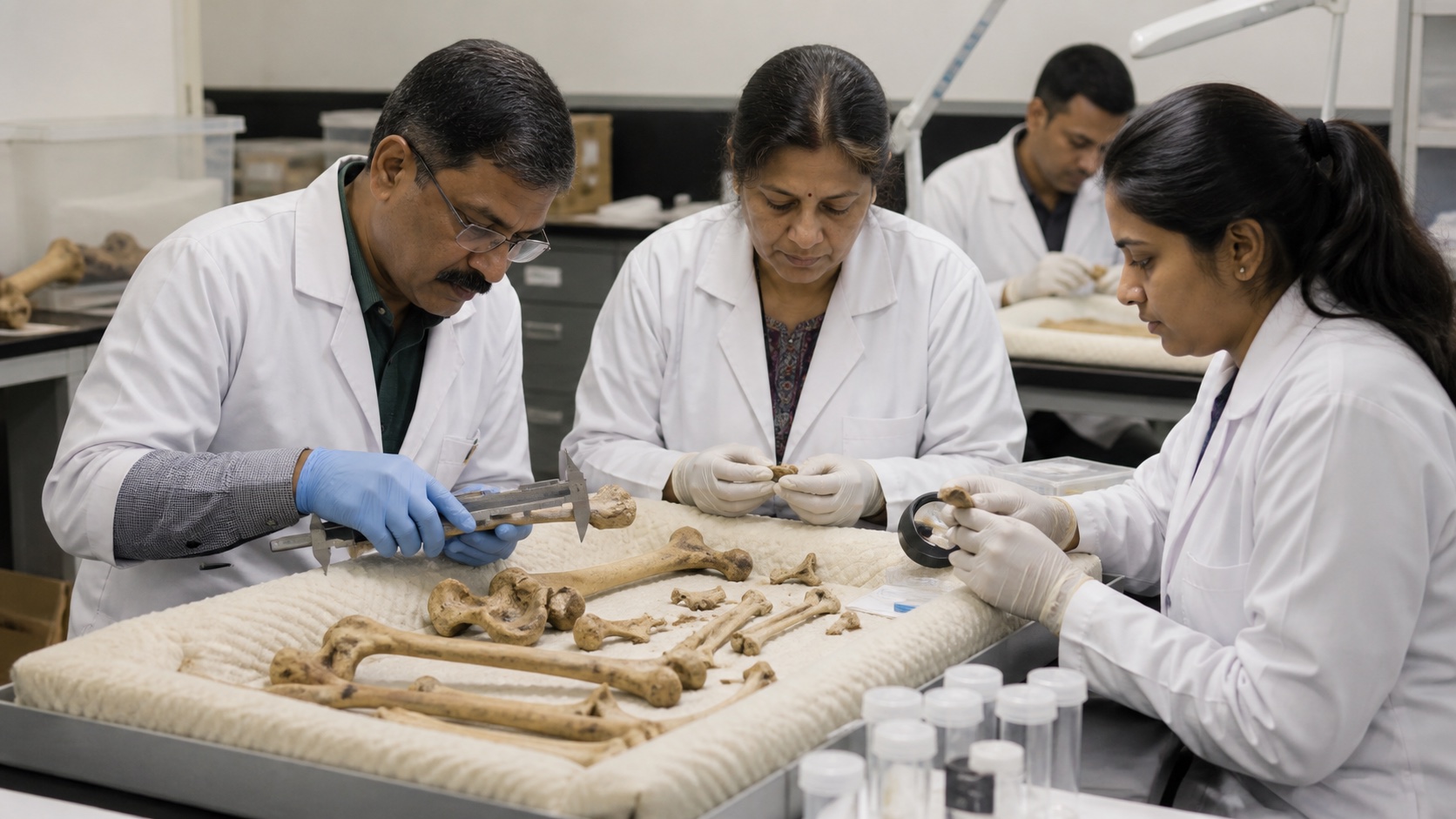
A human skeleton excavated at Rajghat in 1957 is at the centre of a new scientific collaboration between Banaras Hindu University and the Centre for DNA Fingerprinting and Diagnostics in Hyderabad. The remains are estimated to be about 2,800 years old, placing the individual within a period crucial to understanding the early urban history of Kashi.
Researchers plan to combine ancient-DNA analysis with radiocarbon dating and isotope testing. Each method answers a different question. Radiocarbon measurements can refine the age of the remains; stable isotopes may offer clues about diet and mobility; and recoverable DNA can contribute information about biological ancestry and health. Ancient material from a hot, humid environment is often degraded, so usable results are never guaranteed.
The study is also expected to compare evidence from ancient Kashi with broader South Asian archaeological datasets, including material associated with the Harappan world. Comparison does not mean that researchers have already proved a direct link. Similarities and differences must be established through replicable analysis, appropriate samples and careful chronology, not through civilisational slogans.
Rajghat has long been important to archaeologists because its occupational layers document settlement on the city’s northern edge across many centuries. A single skeleton cannot narrate an entire population, but it can add a human-scale record to pottery, structures and other excavated material. Diet, movement and disease evidence can show how one life intersected with the environment and economy of the period.
Work on human remains carries ethical responsibilities. Sampling is destructive, even when only a small amount of bone or tooth is used. Researchers must document provenance, minimise consumption, prevent contamination and communicate with sensitivity. The individual should not be reduced to a spectacle, and preliminary signals should not be publicised as final ancestry claims before peer review.
The most valuable result may be a more precise set of questions rather than a dramatic revelation. If the team obtains reliable dates and biomolecular data, historians can place early Kashi within a better evidenced regional story. If preservation limits the analysis, publishing that limitation is equally scientific. Ancient DNA is powerful, but disciplined interpretation—not technological novelty—is what can responsibly deepen Varanasi’s understanding of its past.
The collaboration between an archaeological collection in Varanasi and a specialist DNA centre in Hyderabad is itself important. Ancient-DNA work depends on clean facilities and contamination controls that few institutions maintain. Combining local archaeological knowledge with specialised laboratory practice can strengthen the study, provided decisions about sampling, data access and long-term curation are recorded for future researchers.
Sources and reporting
Based on research details verified by the Dalimss News Banaras team on August 5, 2026. Findings remain under study and have not yet established ancestry or lifestyle conclusions.
Related Stories

Festive Special to Gorakhpur Gets Gurugram Halt
Fifth Accused Held in Rs 25 Lakh Sector 47 Robbery

Courier Staffer Booked Over 105 Missing One8 Returns
HC Sets Rs 50 Lakh Costs for Accused's Return to India

Gurugram Swimmer, 20, Crosses English Channel