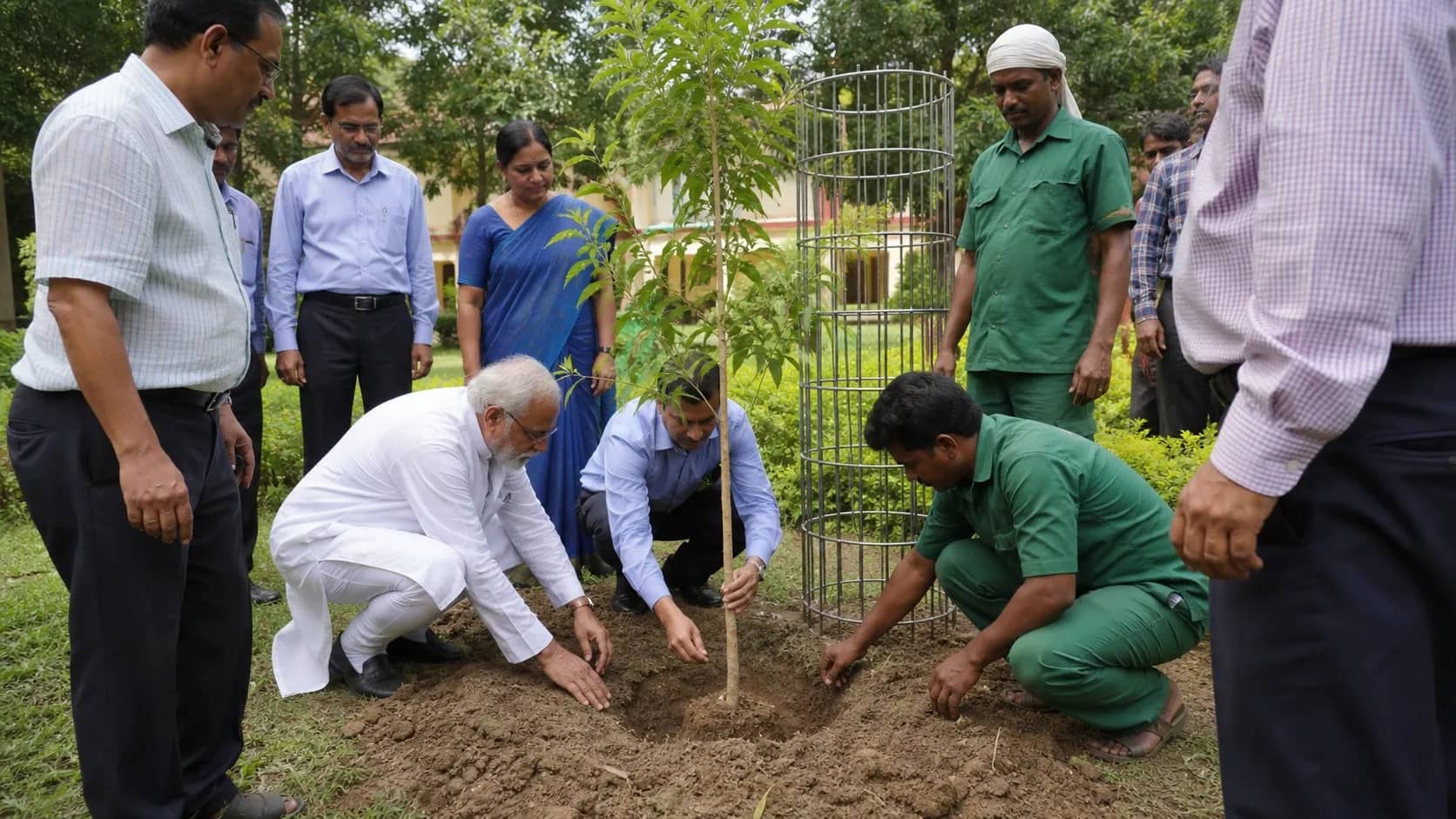
VARANASI: Banaras Hindu University has begun a campus drive to plant 5,000 saplings, opening the campaign at Malaviya Bhavan with white sandalwood and a promise to prioritise species that can add long-term shade and ecological value.
Vice-Chancellor Professor Ajit Kumar Chaturvedi, Mayor Ashok Tiwari and Registrar Rajan Srivastava planted saplings at Thursday’s launch. Varanasi Municipal Corporation is supplying 5,000 plants along with steel tree guards. The first day covered 51 saplings, including white sandalwood, jarul, mango and maulshree.
The vice-chancellor sought details about the species selected for the university, while the mayor said the corporation would help provide varieties absent from the campus or present only in small numbers. Officials also spoke about choosing trees that will provide substantial shade as they mature. Former Rohaniya MLA Surendra Singh planted a maulshree during the programme.
The scale is ambitious, but a plantation drive should be measured by survival rather than distribution. Newly planted trees need a documented watering schedule, guards that do not constrict the trunk, replacement of failed saplings and protection during mowing or construction. A public survival audit after one monsoon and again after two summers would say more than the launch-day count.
Species selection matters just as much. Native and locally adapted trees are generally better placed to support birds and insects and cope with Varanasi’s heat. Some species require particular soil, sunlight or security. White sandalwood, for example, has biological and protection needs that differ from a routine avenue tree. Planting units should match each site rather than arranging species mainly for ceremonial value.
Shade should be planned around how the campus is used. Pedestrian routes, bus stops, hostel approaches and waiting areas outside departments can benefit most from canopy. Roots also need room. A sapling squeezed into a tiny concrete opening may survive for a time but is unlikely to become the healthy tree imagined at the ceremony.
The new campaign arrives while students are separately demanding accountability over an NGT penalty tied to the illegal cutting of 33 trees at BHU. The two developments are connected in public perception but should not be treated as cancelling each other out. New planting is necessary; it does not erase the ecological value of mature trees or remove the need to establish responsibility for past felling.
Municipal collaboration can help BHU build a consistent inventory. Each sapling could be tagged with species, date, location and maintenance responsibility. A simple public dashboard or annual map would allow students, gardeners and researchers to report damage and study survival patterns.
The campus has long been valued for its greenery. Keeping that identity under growing development pressure requires more than occasional campaigns. Thursday’s 51 saplings are a visible start. The real achievement will come years later, when students walk beneath their shade and the university can show exactly how many of the promised 5,000 became established trees.