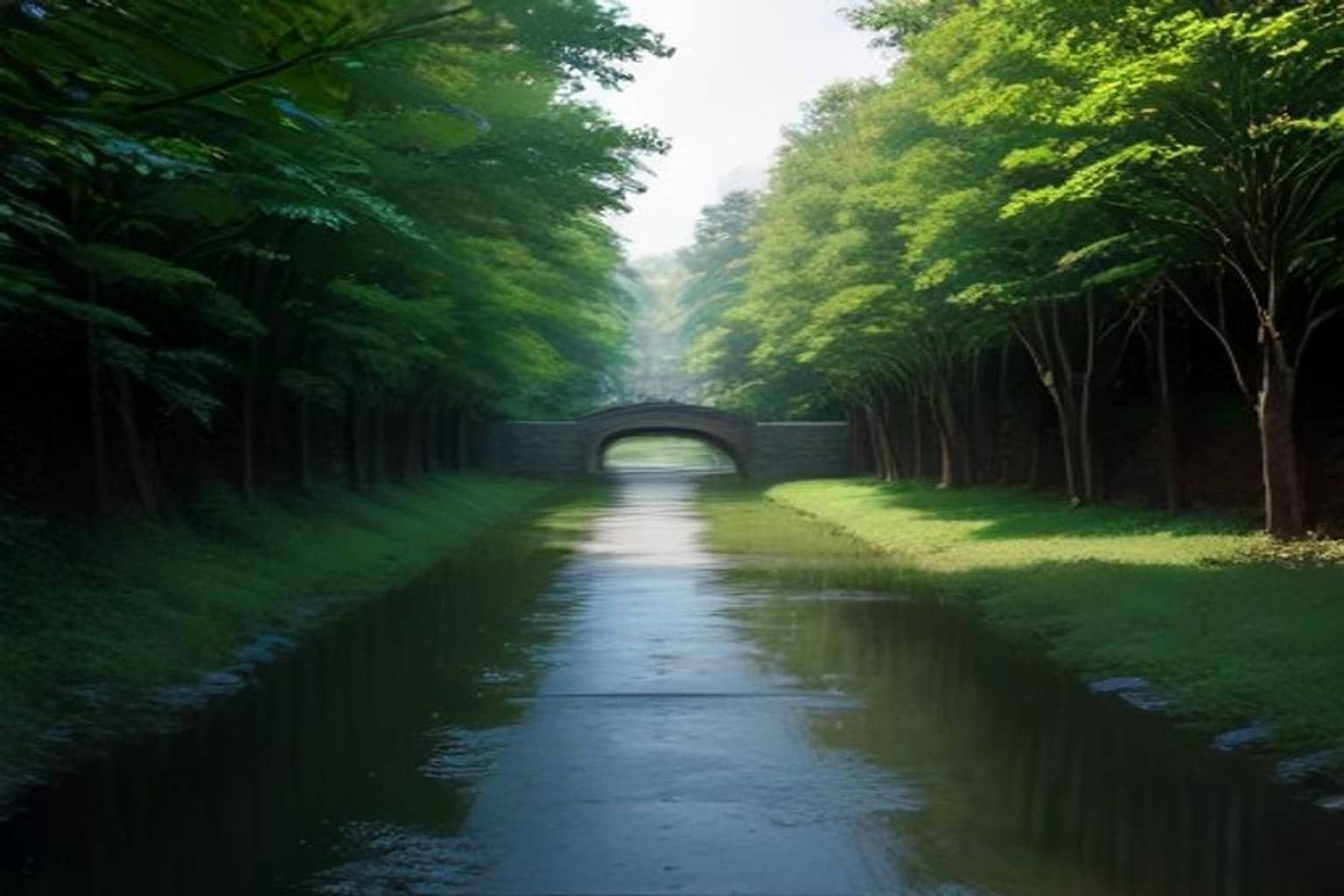
GURUGRAM: Most residents of Golf Course Road know the Aravali hills only as a ridge seen from a balcony. The creeks that carry rainwater down from those hills into the city are harder to spot, partly because many of them were filled with waste for years. One restoration effort has turned two of them into walkable green corridors.
The citizens' group iamgurgaon says on its project page that Gurugram is home to four significant creeks. Two are the focus of its work: Creek 1, in Sectors 42 and 43, and Creek 4, which runs through Sectors 55, 56 and 57. Both sit close to Golf Course Road and its side roads.
The group says it took up the eco-restoration with the Gurugram Metropolitan Development Authority, with design input from Sehreeti Developmental Practices. The page lists the project under 2024 and says it has been handed over to the Municipal Corporation of Gurugram.
The page describes what was cleared. Decades of solid waste, construction debris and encroachments were removed, which the group says reduced open defecation, improved visibility and opened the creek for community use. That background explains why some stretches still look rough at the edges.
Water was the main reason for the work. The group says rainwater channels were reopened to restore natural flow, catchment areas were deepened and creek edges stabilised to prevent erosion. The aim, according to the page, is to improve groundwater recharge and reduce flood risk during heavy rain.
Native plants were introduced to bring back biodiversity, support local wildlife and create shade, the page says. The restoration is tied to what the group calls Gurugram's Green and Blue System, a planning idea that links green spaces and water bodies across the city.
Walking the creek, and the drop-off points nearby
For walkers, the most relevant line on the page is about mobility. The group says the creeks now serve as a green corridor for pedestrians, with shaded pathways that connect neighbourhoods and encourage walking and cycling. That makes the creek useful not just for exercise but as a quieter way to move between nearby blocks.
The page also says more than 186 tonnes of construction and demolition waste were reused to build walls, benches, pathways and bridges along the creeks. As with other iamgurgaon sites, the finish is practical rather than decorative, so expect uneven surfaces in places.
The Creek 4 stretch has a dry waste drop point. The group lists one Samadhaan Hub unit near Metro Pillar 226 on Golf Course Road, opposite Early Years Pathways School, and another listed as Samadhaan Hub Sector 56 at Aravali Creek 56, near Kendriya Vihar. Both pages link to the same map pin, so check the location before you go.
These units accept paper, plastic, metal, e-waste, glass, clothes, and expired and non-expired medicines, according to the group. They are open all seven days except national holidays, from 8 am to 5 pm, and the pages say that for every 10 kg of dry waste dropped off, you get a free reusable bag.
The page names only two of the four creeks. It does not say where the other two run or whether they are part of later phases, so residents in other parts of the city should not simply assume a restored path exists near them.
For people living in Sectors 42 and 43, Creek 1 is the nearer stretch. The group does not list a drop point on that creek, so for now the nearest listed units are the ones on the Creek 4 side near Golf Course Road and the Sushant Lok 2 belt, which one of the hub pages names in its title.
The waste dropped at these points is sorted on site and passed to partner groups for recycling and reuse, according to the hub pages. The group's main Samadhaan Hub page gave a running total of 816,927.25 kg of dry waste kept out of landfill across all its units when Dalimss News read it.
The project page does not list public entry points, gate hours or rules for pets and cyclists. Residents living nearby will know the access points, but visitors coming from further away should start from the Creek 56 drop point, which has a clear address, and walk from there.
Because the creeks are drainage channels first, the walk will change with the weather. After heavy rain, some paths may be wet or closed for safety, and in the dry months the creek bed may look bare. October, after the monsoon, is a good time to see the planting at its greenest.
Joggers using the creek path should follow the same care as on any shared trail. Dalimss News' explainer on safer running habits, based on the FIT Gurugram community's advice, covers basics such as warming up and choosing the right surface.
For a longer restored walk in central Gurugram, the Chakkarpur Wazirabad Bundh guide covers another iamgurgaon project of similar style. Both are signs of how much of Gurugram's walkable green land now comes from cleaned-up drains, bunds and creeks rather than planned parks.
If you find a broken bench or a blocked channel on the creek walk, the Municipal Corporation of Gurugram is the body to contact, since the group says the site has been handed over to it. Dalimss News has not checked the creek's present condition for this piece.
Dalimss News did not receive payment or any other consideration for this article. It is independent editorial coverage.