Workers Clear Months of Water Hyacinth From Varuna at Rameshwar
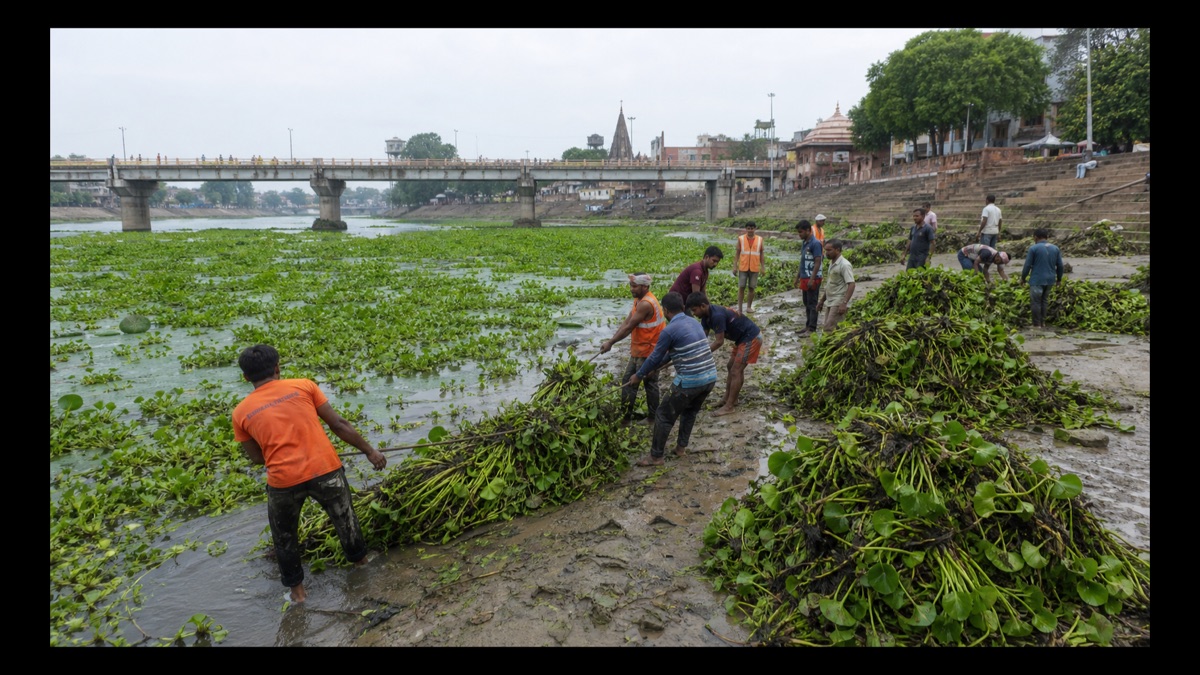
VARANASI: Dozens of workers began removing a dense layer of water hyacinth from the Varuna at Rameshwar on Monday, clearing the stretch between the temple area and the new bridge after months of complaints. The invasive plant had formed a near-continuous green mat in places, slowing visible water movement and trapping waste along the bank.
The operation was led locally by outpost in-charge Aditya Sen Singh, according to the field report. Workers pulled plants to the edge and stacked them for removal. A group of young residents had earlier cleared part of the river, but a thick stretch of roughly 40 metres near the bridge remained. The larger crew was brought in to tackle that section.
Residents said stagnant conditions had increased mosquitoes and were associated with skin irritation. Those concerns are plausible reasons for inspection, but individual illnesses cannot be attributed to the hyacinth without medical and water-quality evidence. Local people also reported that five buffaloes became trapped and died on August 7. That account should be verified through veterinary or administrative records before a precise cause is stated.
Water hyacinth is more than a cosmetic problem. It can block light, reduce oxygen in the water, hinder small boats and create pockets where plastic and organic waste collect. When a large mass is removed, however, it must not simply be left on the bank. Decaying piles can smell, leach nutrients back into the river and slide into the water during rain.
The cleanup therefore needs a disposal plan. Plants should be moved to an approved location, with any composting or reuse assessed for contamination. Workers require gloves, boots and tools that reduce contact with polluted water. Deep or fast sections should be handled from boats or with trained support rather than by people wading into an unseen channel.
Village head Ghanshyam Singh Yadav and local officers were named among those following the work. Their next task is to prevent the same mat returning. Upstream nutrient discharge, sewage and slow flow allow hyacinth to multiply quickly; physical removal deals with the symptom. Regular monitoring, interception of solid waste and action on untreated drains are needed to hold the gains.
The timing on the third Monday of Shravan also mattered around a riverfront used by worshippers. Clearer access can reduce the temptation to step onto what looks like solid vegetation but may hide deep water.
Rameshwar residents have finally seen a large response to a visible problem. The result should be measured after the crew leaves: whether the plants are disposed of, the channel stays open and water-quality sources are addressed. Otherwise, the Varuna’s green cover will return with the next growth cycle.
Sources and reporting
Based on an August 17, 2026 field report from Rameshwar. Residents’ health complaints and the reported animal deaths have not been independently medically or technically verified.
Related Stories

Dalimss 20 Under 40 Varanasi 2026: Meet the 20 Young Achievers Making Their Mark on Banaras

Biker Dies After Thar Hit on Golf Course Road

Court Orders Probe Into Body Handling Lapses
Two Held After Rs 54,000 Robbery Near Rampura
Manduadih Fan Warehouse Fire Burns for Hours; No Deaths Reported