Woman and Boy Injured by Electrical Arc While Removing Tricolour in Harahua
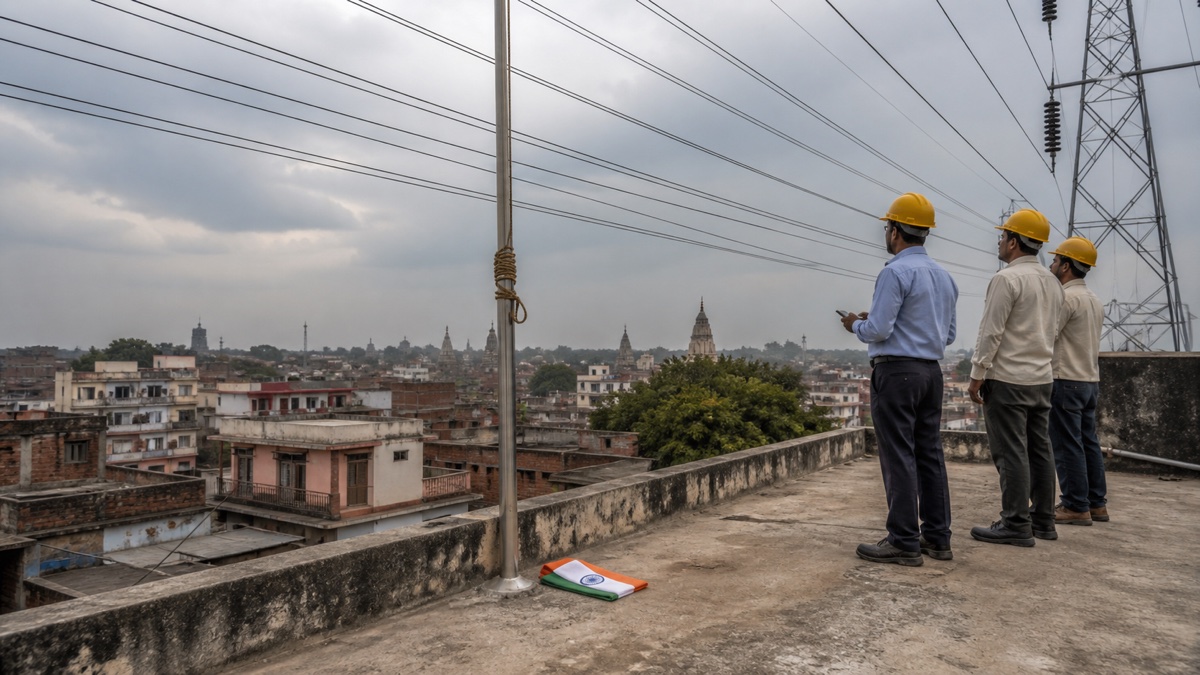
A 12-year-old boy and his 48-year-old aunt were injured on Sunday while removing a tricolour from the roof of their home in Harahua, where an 11,000-volt overhead line passes close to the building. The family said electricity arced into the flag setup even without direct contact, leaving both with burns and turning a routine post-Independence Day task into an emergency.
Arshad Hashmi had gone to the roof to take down the flag when he received a strong shock. His aunt Amina, who was nearby, was also struck and fell unconscious on the terrace. Arshad managed to get downstairs and alert relatives that she was still lying above. The family rushed Amina to a private hospital in Vyasbagh and later took Arshad to another facility in Harahua when his pain and burning sensation increased.
Doctors treated the boy and allowed him to return home after his condition stabilised. Amina remained under observation, though the initial medical account said she was out of danger and could be discharged after improvement. The exact path of the current has not been established publicly. High-voltage lines can produce an arc across an air gap when a conductive pole, wet rope or metal fitting comes too close, which is why visible contact is not the only risk.
The incident has prompted residents to ask the electricity department to review the line above the house. A technical inspection should measure statutory clearances from the roof, identify unauthorised construction or sagging conductors and decide whether the line or nearby structures require corrective work. That assessment must be done by qualified utility staff; residents should not approach, measure or attempt to move the wire themselves.
Flags, poles, decorative lights and kites all become dangerous near overhead conductors. Before installing or removing anything from a roof, families should scan upward as carefully as they scan the floor. Long metal pipes, wet bamboo, ladders and even strings can enter the danger zone. If an object becomes entangled, the safe response is to keep everyone away and call the electricity utility, not pull it free.
When someone is being shocked, touching the person directly can make the rescuer another victim. Power should be disconnected by authorised personnel, emergency services called and first aid started only when the area is safe. Electrical burns may appear small while causing deeper injury, so medical assessment is essential.
Harahua’s accident was not caused by the flag’s symbolism but by a hazardous physical arrangement. Respect for the tricolour includes installing and removing it safely. The utility’s follow-up should determine whether the rooftop clearance complies with safety rules and whether other nearby homes face the same risk.
Sources and reporting
Based on the family and hospital account reported from Harahua on August 16. The precise electrical mechanism requires technical confirmation by the power utility.
Related Stories

Dalimss 20 Under 40 Varanasi 2026: Meet the 20 Young Achievers Making Their Mark on Banaras
Biker Dies After Thar Hit on Golf Course Road
Court Orders Probe Into Body Handling Lapses
Two Held After Rs 54,000 Robbery Near Rampura
Manduadih Fan Warehouse Fire Burns for Hours; No Deaths Reported