Varanasi Residents Question Drain Cleaning as Waterlogging Returns After Rain
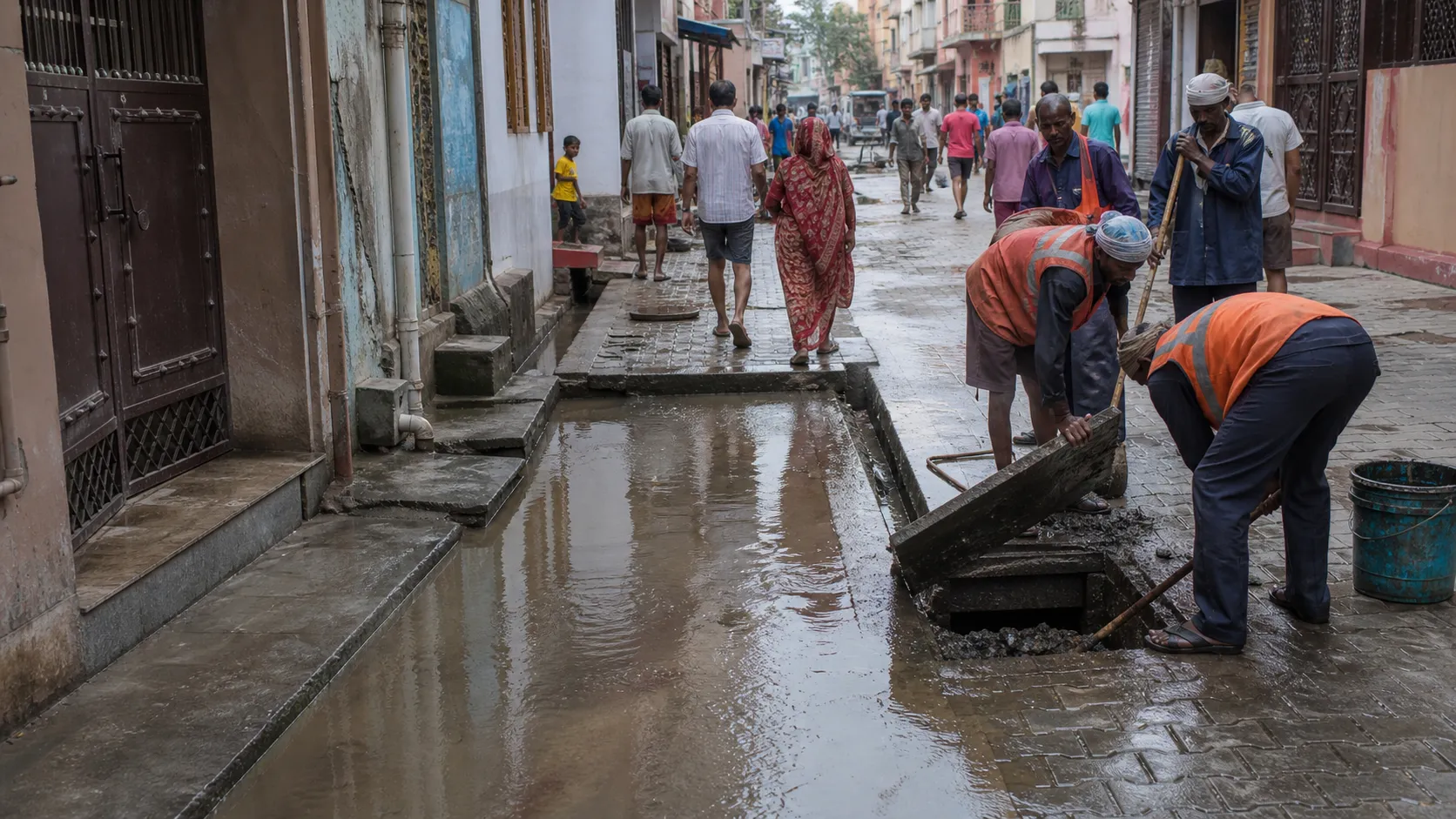
VARANASI — The municipal corporation says it cleaned 364 of the city's 386 large and small drains before the monsoon. Residents looking at sewage and rainwater returning to their lanes are asking a blunter question: if the drain is counted as clean, why is the street still filling up?
The complaint has become specific in Jaiprakash Nagar Colony in Shivpurwa. Residents submitted a memorandum to the municipal commissioner's office in July seeking the clearing of a choked drain and repair of damaged concrete slabs. They alleged that workers removed visible waste but did not properly clear the silt trapped beneath the covered section.
Local residents said the drain overflows after even a short spell of rain and that sewage appears in the lane during dry weather as well. They also said the mayor inspected the location last year and directed that slabs be removed, the drain cleaned thoroughly and the covers replaced, but the work remained pending despite a tender process several months ago.
THE DIFFERENCE BETWEEN CLEANED AND FLOWING
A drain can appear finished on a checklist while remaining blocked at a covered bend, damaged outlet or downstream connection. Removing silt from an open stretch is useful only if water has a continuous path. When a slab prevents access, the job takes longer and may require reconstruction, but leaving the hidden section untouched shifts the problem back to residents during the first hard rain.
Mixed sewage and stormwater create more than an inconvenience. Standing wastewater raises the risk of skin infections, mosquito breeding and damage to ground-floor homes. Broken slabs add a fall hazard, particularly at night or when brown water hides the edge of the drain.
The mayor has said the Jaiprakash Nagar issue will be addressed. Residents now need a dated work order and a named department responsible for completion. Repeated inspections without a closure report can become another layer of paperwork rather than a solution.
WHAT THE CITY SHOULD PUBLISH
The claim that 364 drains were cleaned would be stronger if the corporation released a ward-wise list showing dates, length cleared, silt removed and disposal location. Photographs should include the outlet and covered sections, not only a worker standing beside an open drain. Complaints after rain can then be matched against the original work record.
Dalimss News has not independently inspected all 386 drains or verified the corporation's citywide count. The Jaiprakash Nagar complaint nevertheless illustrates why a percentage alone cannot describe monsoon readiness.
Drain cleaning is unglamorous civic work, but it is among the most visible tests of local government. Residents may never read the tender file; they know whether wastewater enters the lane after fifteen minutes of rain.
Varanasi's target should not be a near-perfect number on a pre-monsoon report. It should be a network that carries water away, a complaint system that closes the loop and a repair team that reaches the slab everyone already knows is broken.
Sources and reporting
Based on Varanasi Municipal Corporation's reported drain-cleaning figures and a residents' memorandum from Jaiprakash Nagar Colony in July 2026. Dalimss News did not independently inspect all 386 drains.
Related Stories
Railways Orders Weekly Puja Special 09465 via Varanasi Through November
Hindi Diwas Marked Across BHU, Sanskrit University and Kashi Vidyapith

Lohta Police Register FIR After Bhitari Villager Alleges Hostage Beating
Baragaon Police Book Named Youths After Kazisaray Tea-Stall Assault and ₹1,900 Loot

Mayor Announces Stricter MCG Drive Against Stray Cattle