
VARANASI: The Union housing and urban affairs ministry identified Varanasi's creative redevelopment projects among approvals under the Urban Challenge Fund in a statement issued on Thursday, November 26, 2026. The update gives residents a new confirmation of the city's inclusion, while leaving the project sites, city allocation and construction timetable unspecified.
People seeking neighbourhood details can direct enquiries to the municipal corporation, whose published address is the Nagar Nigam Building on Sigra Road, opposite Shaheed Udyan. Before drawing conclusions about a particular property or access road, ask for the project name, approved boundary and implementing authority. Thursday's statement does not identify a ward or announce a local land acquisition notice.
The ministry published the November 26 update at 5:48 pm IST following a national workshop in New Delhi. It says approved projects across 16 states and Union Territories exceed Rs 50,000 crore. That is the combined national value, not an allocation of Rs 50,000 crore to Varanasi.
What Varanasi's inclusion establishes
The ministry places Varanasi with Patna and Lucknow under the fund's creative redevelopment category. It lists other approved projects separately, including Warangal's comprehensive development, a waste processing project in Lucknow and growth hub projects in Guwahati and Gangtok. These examples explain the breadth of the national programme; their features cannot be assumed to apply to Varanasi.
The National Apex Committee considers projects under the fund, with meetings described as taking place in the first week of each month under the urban development secretary's chairmanship. The November 26 statement reports approvals made so far. It does not give a separate date on which the Varanasi proposal was approved.
For residents, the next useful documents are therefore the city project description, financing plan and implementation schedule. The statement reviewed here supplies none of those local details. It confirms inclusion in an approved category but does not establish which streets will be excavated, which public spaces will change or when work will begin.
How the funding arrangement works
The fund has Rs 1 lakh crore in central assistance intended to support investment approaching Rs 4 lakh crore across the urban sector. Those are programme totals. The ministry's published questions and answers explain that central assistance covers up to 25 per cent of a project's cost, conditional on at least 50 per cent coming from market financing.
Bank loans, municipal bonds and public private partnerships are among the permitted financing routes. The balance can come from the state, Union Territory or urban local body, or from further market financing. Residents should therefore look at both the approved work and the proposed repayment arrangement when a detailed city plan becomes public.
Thursday's statement says states have proposed raising about 61 per cent through loans, bonds or partnerships, against the minimum 50 per cent requirement. That percentage is an aggregate proposal across participating states. It is not a published Varanasi borrowing ratio, interest rate or completed financial transaction.
The ministry's earlier scheme explanation links funding to reforms, milestones and specified outcomes, with continuation of reforms required for further releases. Its questions and answers also exclude projects already funded under AMRUT 2.0, SBM 2.0 or another centrally sponsored scheme. Existing local works should not be relabelled as UCF projects without a specific official record.
What redevelopment can cover
The scheme's creative redevelopment category covers congested business districts and historic cores, older drainage, water and sewer infrastructure, public spaces, mobility and flood resilience. Its other two categories concern growth hubs and water and sanitation. These are eligibility descriptions from the national framework, rather than a newly released list of Varanasi works.
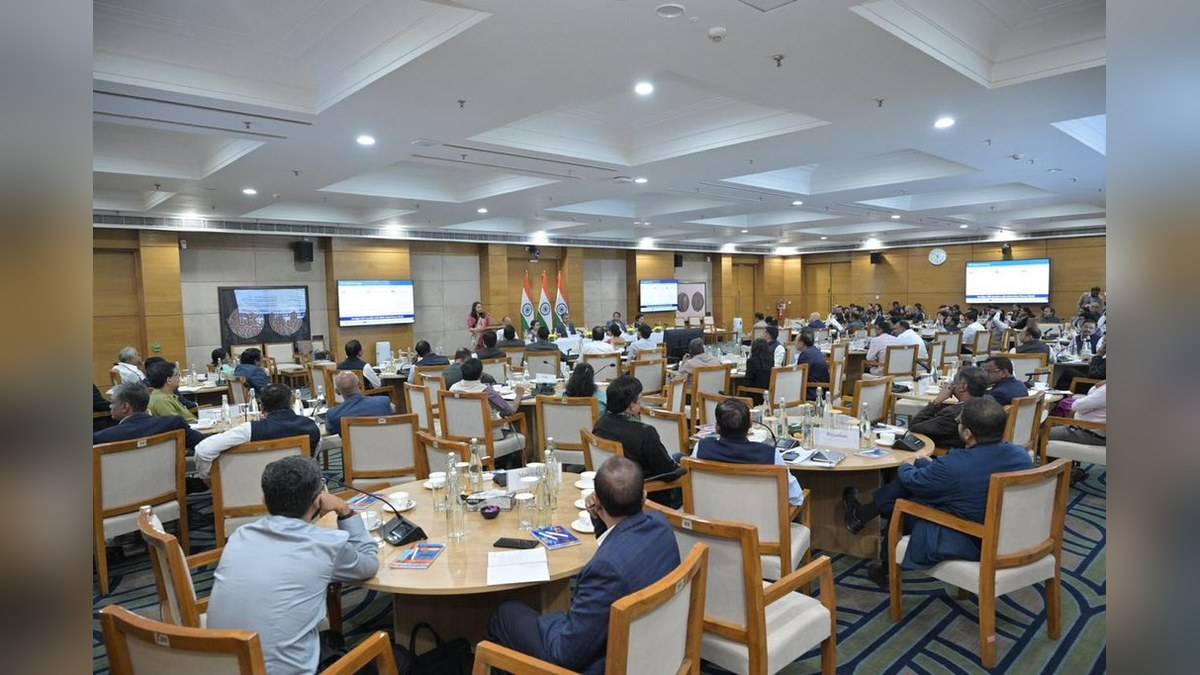
At the November 26 workshop, municipal commissioners, development authority chiefs and state mission directors worked with experts on preparing projects that lenders and partners could finance. Sessions addressed revenue sources, project structure, allocation of risks and investor expectations. Financial institutions and academic organisations also participated. The ministry's official event post confirms the workshop at Vanijya Bhawan.
What residents should do
Use the corporation's published contact directory for municipal enquiries. Routine civic faults can still be reported through 1533. The fund announcement supplies no resident application form, household payment deadline or local relocation instruction.
Separate local records remain useful background: our reports cover five road and drain tenders, the Ganjari stadium road land draft and the property tax settlement deadline. None is identified as part of the newly reported UCF approvals in Thursday's ministry statement.