
Varanasi Suspends Boat Operations Again as Strong Ganga Current Raises Safety Risk
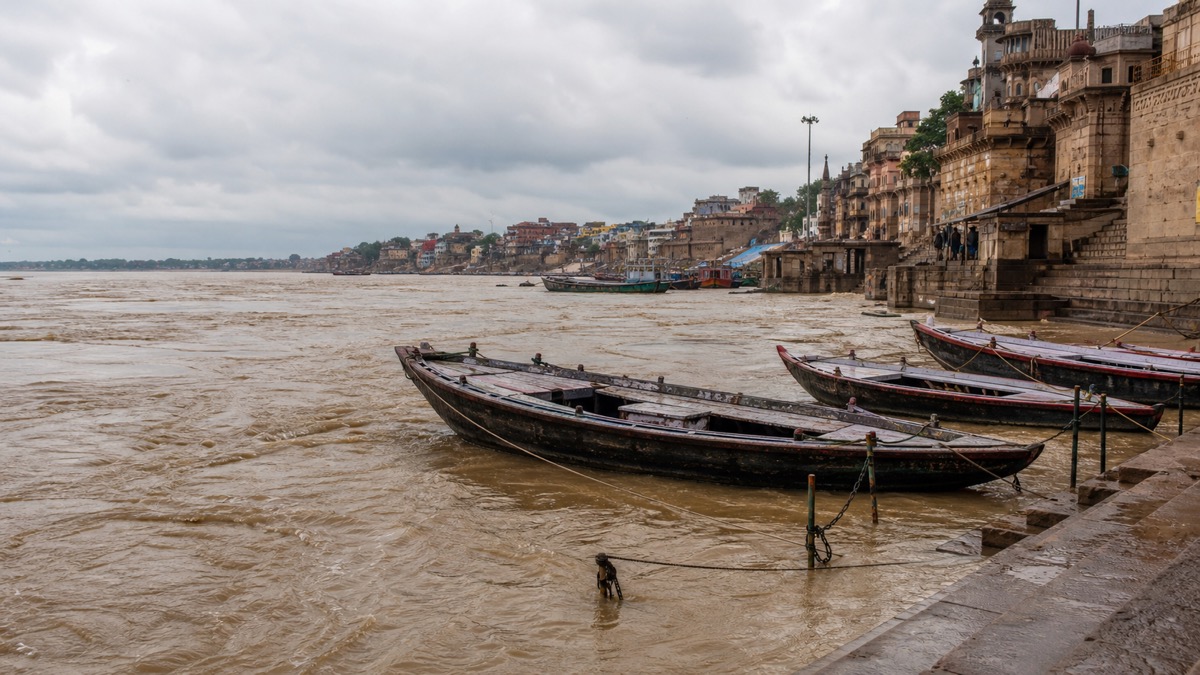
Boat movement along Varanasi’s riverfront has been suspended again after the Ganga resumed rising and the current strengthened near the ghats. The restriction covers small and large passenger boats, according to the latest local update. For residents, boatmen and visitors, the order changes the riverfront immediately: routine crossings stop, sightseeing schedules collapse and operators must keep vessels secured even if the weather above the water appears calm.
The danger is not measured only by how high the river sits on a particular step. A rising river can carry faster surface flow, hidden debris and uneven eddies around moorings, platforms and submerged structures. Familiar routes also change when lower ghat connections disappear under water. A boatman who knows the dry-season river intimately can still face a different channel during a monsoon surge. That is why administration-wide suspension is safer than leaving each operator to make an individual commercial decision.
Cruise services were initially being considered separately and remained subject to review, reflecting the different size and operating profile of those vessels. But larger craft are not exempt from safety obligations. Operators should be able to show that passenger counts, life jackets, crew deployment, communication equipment and emergency procedures are all in order before any departure. If the administration permits limited cruise movement, the criteria and the period of permission should be stated clearly to avoid mixed signals at the ghats.
The suspension lands at a busy point in Sawan, when pilgrims and tourists add to the ordinary demand for river travel. Boat workers will feel the loss of earnings first. Yet opening the river too early would create a risk that no day’s income can justify. A practical response would pair enforcement with regular, time-stamped bulletins so operators know when the next assessment will be made and what conditions—water trend, current, visibility or wind—must improve before services resume.
Visitors should not negotiate private rides around the ban or assume that a short trip close to the bank is harmless. They should follow police and municipal instructions, keep away from submerged edges and avoid stepping onto tied vessels. Hotels, guides and tour desks also have a responsibility to stop selling river experiences while the restriction is active. Clear information at major approach points can prevent tourists from reaching the waterfront with outdated expectations.
The order should be read as a temporary safety measure, not a forecast of a full flood emergency. Conditions can change quickly in either direction as upstream rainfall works through the river system. Until the administration issues a fresh clearance, the most useful image of caution in Varanasi is also the simplest one: boats tied to the bank, passengers kept ashore and the Ganga given room to move.
Sources and reporting
Fresh Dalimss News Banaras updates from 10 August 2026, cross-checked against recent river-level reporting; operational details are attributed to the local administration.
Related Stories

Festive Special to Gorakhpur Gets Gurugram Halt
Fifth Accused Held in Rs 25 Lakh Sector 47 Robbery

Courier Staffer Booked Over 105 Missing One8 Returns

HC Sets Rs 50 Lakh Costs for Accused's Return to India
Gurugram Swimmer, 20, Crosses English Channel