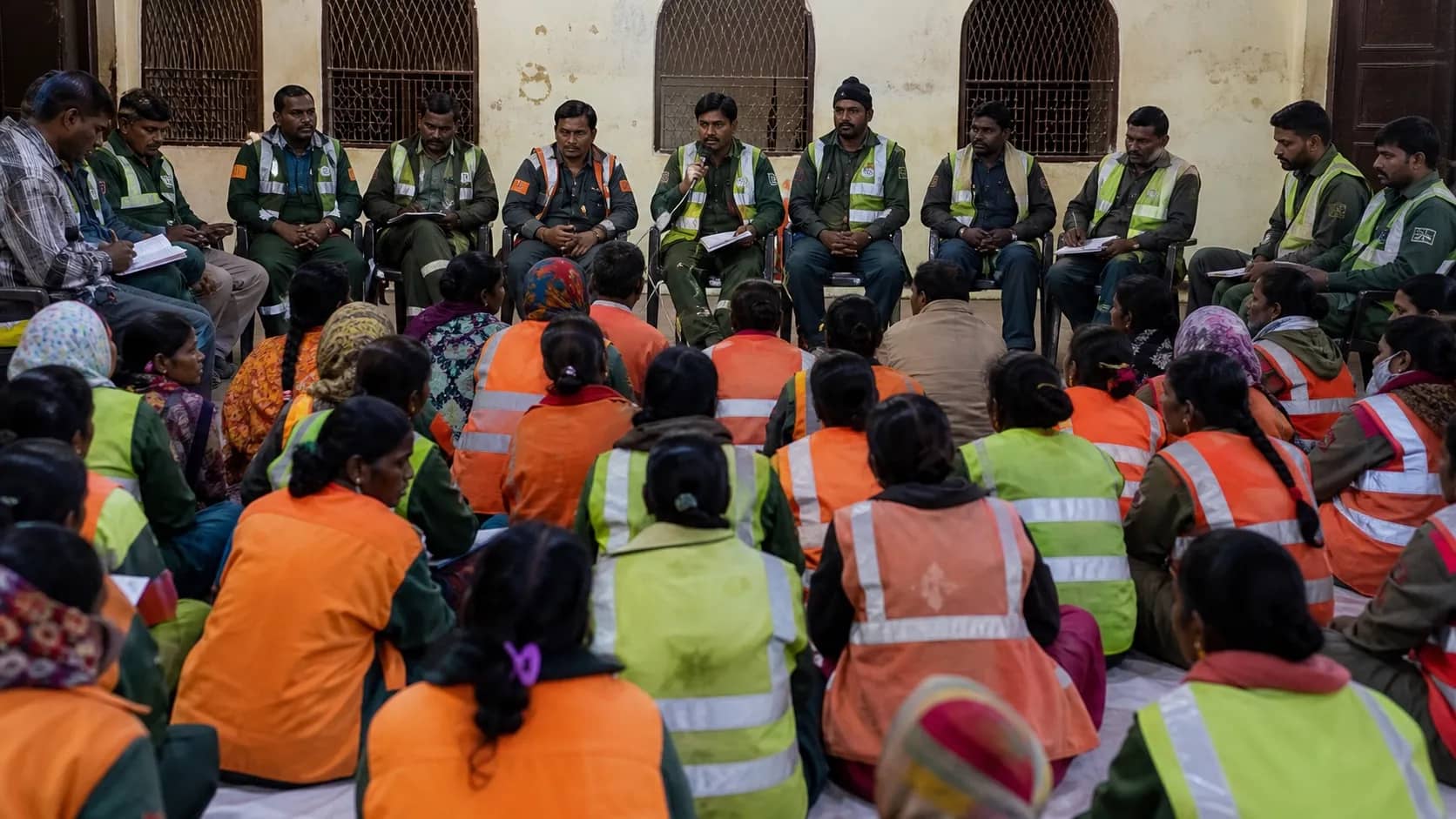
VARANASI: A sanitation workers’ organisation in Varanasi says it is compiling complaints against municipal officials and supervisors accused of workplace harassment, with a large workers’ conference planned for September.
Representatives said the list would be sent to member Karm Singh “Karma” of the National Commission for Safai Karamcharis, as well as to the prime minister and Uttar Pradesh chief minister. The organisation’s account was reported on Friday after a local meeting in which speakers said mistreatment of workers would not be accepted. The national president is expected to attend the proposed conference as chief guest.
The allegations have not yet been presented in a publicly available findings report, and the municipal officials concerned have not been identified in the source account. For that reason, the claims should be treated as grievances requiring examination rather than established misconduct against any named person. A documented process is important for both workers and administrators.
Sanitation work is among the city’s most visible public services and one of its least forgiving jobs. Workers handle mixed waste, blocked drains, sharp objects and biological hazards, often in traffic and severe weather. Their conditions directly affect the reliability of doorstep collection and street cleaning. A workforce that lacks equipment, timely wages or a safe way to report abuse cannot be expected to carry an ambitious cleanliness programme indefinitely.
The proposed conference could be useful if it produces a precise charter rather than only speeches. Complaints should record dates, locations, the nature of the alleged conduct and earlier attempts to seek redress. The corporation, in turn, should provide a time-bound response and protect complainants from retaliation while ensuring that officials have an opportunity to answer specific allegations.
Basic occupational safeguards should be part of the discussion: gloves suited to the task, reflective clothing, masks where dust or sewage exposure is likely, access to washing facilities, vaccinations and medical support after an injury. Mechanisation can reduce dangerous manual handling, but machines do not replace the need for trained staff and proper maintenance.
The city’s waste challenge is also changing. Door-to-door segregation campaigns ask households to separate wet and dry waste, but workers often confront bags in which food, glass, sanitary waste and plastic are mixed together. Residents share responsibility for safer conditions. Broken glass should be wrapped and labelled, while sanitary and biomedical waste should never be tossed loose into a municipal bin.
Labour disputes can quickly become politicised, yet the core questions are practical: Was a worker treated unfairly? Is there evidence? Does the grievance system function? Are supervisors trained to manage without humiliation or coercion? Transparent answers would protect honest officials as well as employees.
September’s proposed gathering gives the organisation time to assemble cases and the corporation time to review its systems. Varanasi’s cleanliness rankings may be discussed through vehicles, bins and dashboards, but the service ultimately depends on people. Their safety and dignity should be treated as operating requirements, not as a side issue raised only when a conference is announced.