
Varanasi Plants 2.51 Lakh Saplings in One Hour, Claims Guinness World Record
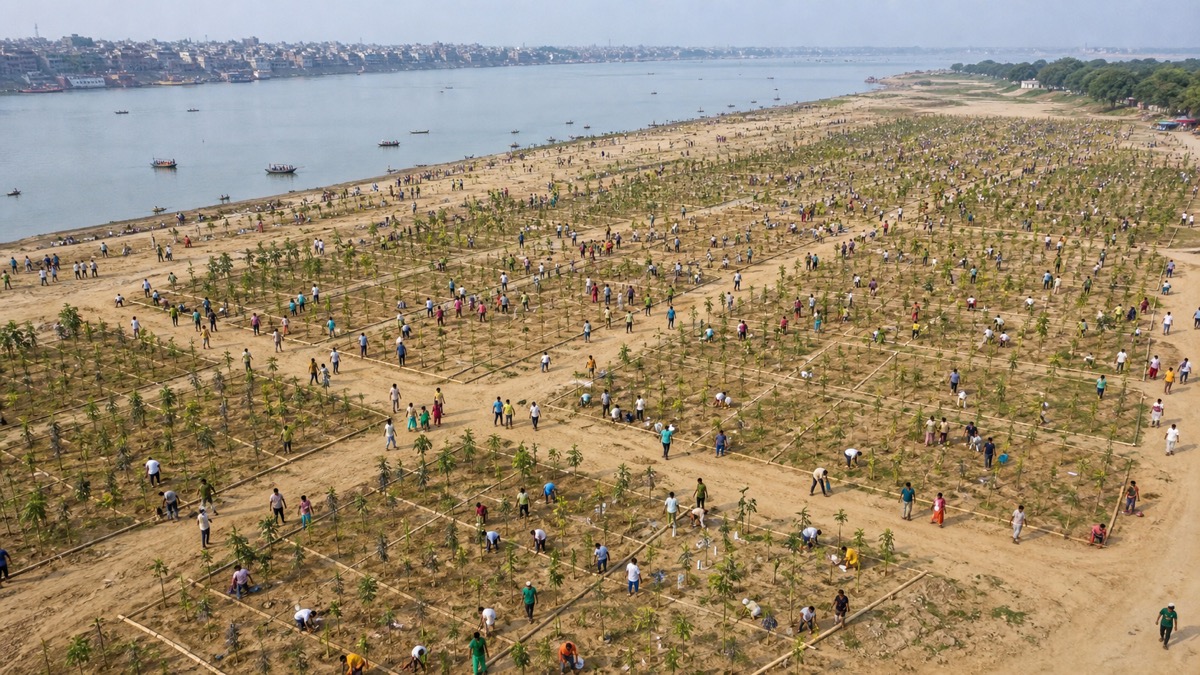
Varanasi has entered the Guinness World Records book after volunteers planted 251,446 saplings in one hour at Domari, according to the adjudication announced at the site. The Independence Day exercise surpassed the previous reported benchmark of 153,981 saplings, set in China in 2018.
Guinness judge Rishinath presented the certificate to Mayor Ashok Kumar Tiwari and Municipal Commissioner Himanshu Nagpal after the count was verified. Event strategist Nischal Barot helped design the operation, which relied on drone coverage, digitally managed counting and a site divided into 60 sectors named after Varanasi’s ghats.
Each sector was expected to handle more than 4,000 plants. More than 27 native, fruit-bearing and medicinal species were included, according to organisers. Personnel from the Army’s 39 Gorkha Training Centre, 34 Gorkha Training Centre, 39 Gorkha Rifles and 137 Composite Ecological Task Force worked alongside the NDRF, CRPF, Civil Defence, PAC, civic agencies and students. The coordination was as much a logistical exercise as an environmental one.
A world-record certificate measures speed and verified quantity. It does not measure whether 251,446 young plants will be alive after one summer. That distinction should be central to the follow-up. Saplings need species-appropriate soil, watering, guards where grazing is likely, replacement of failures and publicly assigned responsibility. Dense planting done for a one-hour target can also create competition if spacing is poor.
Domari’s plantation should therefore be followed by a survival dashboard. The municipal corporation can publish geotagged sector maps, quarterly survival rates and the agencies responsible for maintenance. Independent checks by schools or environmental groups would turn a ceremonial event into a transparent urban-ecology project. Survival figures should include replacements separately rather than quietly resetting the count.
The choice of native and useful species is encouraging because local plants generally support birds and insects better than ornamental monocultures. Yet the right species must also suit the floodplain, drainage and future land use. If a plot is later paved or construction access cuts through it, the headline number will have delivered little climate value.
The achievement at Domari deserves recognition: organising thousands of people, documenting each plant and crossing an international benchmark in sixty minutes is substantial. The municipal budget should now disclose the maintenance period and cost, allowing citizens to judge whether aftercare was designed before planting began. The harder record begins now. If most of the saplings establish roots and form canopy over the next several years, Varanasi will have converted a spectacular hour into a lasting public asset.
Sources and reporting
Based on official-event reporting and the Guinness adjudication at Domari. The planting count refers to the one-hour event, not long-term survival.
Related Stories

Ramnagar Day Three Follows Vishwamitra Into the Forest and Mithila

Shivpur Ramlila Stages Narad Moh and Kshirsagar Tableau Through Rain
VMC Puts City on Alert for Navratri and Durga Puja Civic Arrangements
Chowk Becomes Varanasi's First Police Station With ISO 9001 Certificate

World Tourism Day: Guides Welcome Visitors; Namami Gange Cleans Namo Ghat