
Varanasi Municipal Staff Trained on TDS and TCS Compliance
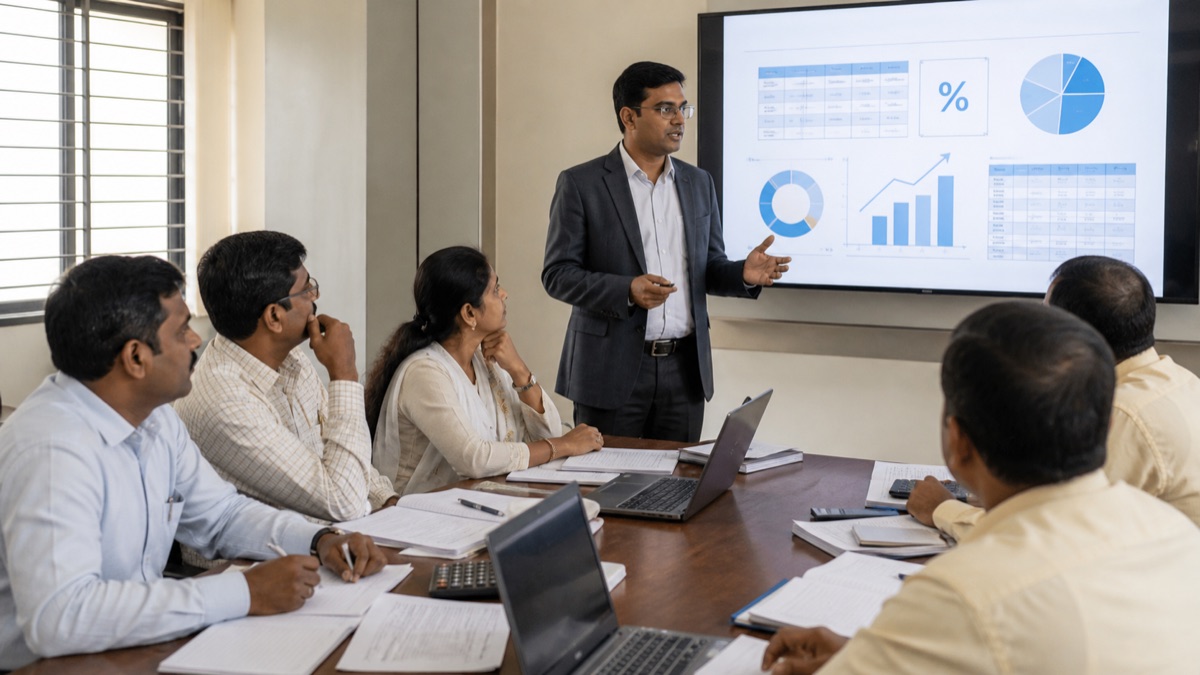
Varanasi Municipal Corporation has held a training session for officers and employees on tax deducted at source and tax collected at source, two compliance areas that sit behind everyday civic contracts and payments. The programme brought departmental staff together with chartered accountant Achal Srivastava to review provisions and reduce avoidable errors in deduction, deposit and reporting.
TDS and TCS rarely attract public attention until a mismatch delays a vendor payment, creates an income-tax notice or requires records to be corrected months later. A municipal corporation handles salaries, professional services, works contracts, purchases and fee collections across departments, so a small procedural mistake repeated at scale can become a significant reconciliation problem.
Training is particularly relevant when staff rotate between assignments or rules change. The useful content is practical: which rate applies, what documentation must be retained, when a deduction is deposited, who validates the return and how an error is corrected. Clear internal responsibility can protect both public revenue and contractors who need accurate credit reflected against their tax accounts.
The corporation did not release a detailed curriculum or post-training assessment. Publishing a concise compliance checklist could extend the benefit and show vendors what information they should receive with a payment. Financial discipline is not only an accounting concern; it affects whether procurement remains competitive and whether municipal accounts can be audited without long chains of unresolved entries.
Civic announcements are ultimately judged street by street. A direction issued from the municipal headquarters becomes meaningful only when a resident can see a repaired surface, a working light, a resolved tax record or a cleaner public space. That is why the measurable details in this update matter: they create a baseline against which ward officials, contractors and citizens can assess whether the promised action has moved beyond the meeting room.
Varanasi presents an unusually demanding operating environment. Dense neighbourhoods, pilgrim traffic, monsoon stress and overlapping responsibilities among the municipal corporation, public works, utilities and police can turn a small maintenance delay into a serious mobility or sanitation problem. Clear ownership, realistic deadlines and publicly accessible complaint channels are therefore as important as the announcement itself. Residents should also receive advance notice whenever work disrupts access or traffic.
The immediate follow-up is documentation: completion dates, ward-level progress and a record of complaints closed rather than merely forwarded. Public money and staff time are involved, so the corporation should communicate results in plain language and correct the record if targets change. This report will treat the latest official update as the starting point, not the end of accountability, and will avoid claiming outcomes that have not yet been independently visible on the ground.
Sources and reporting
Reported on 9 August 2026 from the official Varanasi Municipal Corporation TDS/TCS training update.
Related Stories
VMC Launches Doorstep E-Waste Pickup With On-the-Spot Payment

Family Alleges Youths Chased Car, Assaulted Women and Children Near V-2 Mall in Lanka

Sigra-Trained Shooter Kamaljeet Wins Asian Games Gold in Mixed Air Pistol

Sarnath Police Arrest Three Over Locked-House Burglaries, Claim ₹7 Lakh Recovery

NER Varanasi Division Runs 2,915 Chlorine Tests on Station and Colony Water