VARANASI: A district review held at the Collectorate's Rifle Club on Thursday, November 12, 2026, directed that monkeys should not be fed in the open at public places and called for conflict hotspots to be identified across urban and rural Varanasi. Residents are being asked to change that practice while officials map the areas needing intervention. The meeting also reviewed waste disposal at Karsara, sewage projects around Durga Nala and Lohta, and protection of the Kandwa wetland.
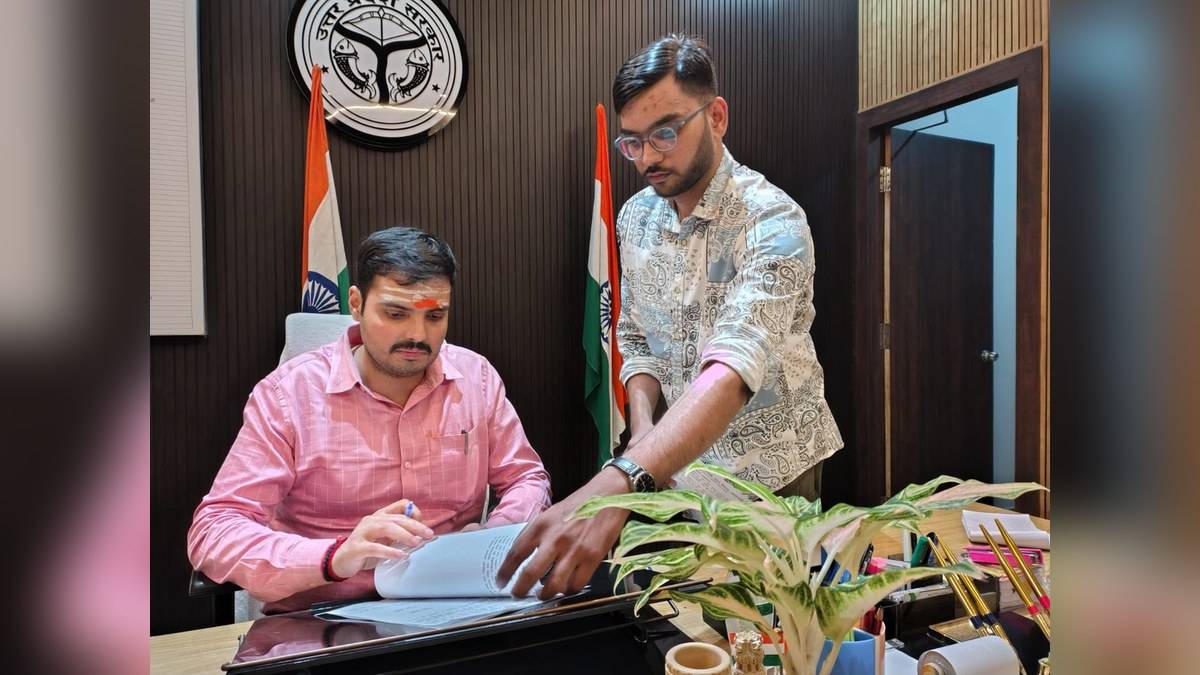
District Magistrate Satyendra Kumar chairs the nine member committee dealing with human and monkey conflict, according to reports of the meeting published on November 13. The direction concerns public places, rather than a named ward or a single temple approach. No wardwise hotspot list was available in the material reviewed for this report, so residents should not assume that a particular neighbourhood has already been selected for an operation.
For households and shopkeepers, the immediate practical step is to stop leaving food for monkeys in open public spaces. If a recurring problem needs municipal attention, the corporation's official website lists 1533 for civic complaints and suggestions. Give the precise lane, nearest landmark and location of the problem. That is a general civic complaint route, rather than a newly announced monkey response service.
What the district review covered
The meeting brought together the district plantation, Ganga, wetland, environment and human and monkey conflict committees. Its agenda linked immediate neighbourhood problems with longer term river and waste management work. Reports agreed on the feeding restriction, the proposed identification of sensitive areas and the instruction to maintain anti rabies vaccine supplies at government hospitals.
The hospital instruction was a preparedness measure. It should not be read as confirmation that every hospital has a particular quantity in stock, because no hospitalwise inventory was provided in the reports. Likewise, the direction to identify hotspots does not establish how many locations have been mapped or how many animals have been caught. Those results were not supplied.
The administration's official directory identifies Satyendra Kumar as district magistrate and places his office at the Collectorate in Katchehry. The current meeting details were crosschecked between reports published on November 13. The directory provides official institutional context; it is not a copy of the feeding restriction or the meeting minutes.
Waste figures and river projects
Municipal officials told the review that 29,814 tonnes of solid waste generated during October had been handled at the Karsara plant. The figure describes a month's reported disposal, rather than one day's collection. It does not establish that every street, river approach or informal dumping point was clear when the review took place.
The committee was also told that an enforcement campaign had seized 2,135.60 kilograms of prohibited single use plastic and collected Rs 4,80,200 in fines. These are campaign totals reported to the meeting. They should not be confused with a fine payable by an individual resident, or with a penalty announced for feeding monkeys.
Sewage treatment work associated with Durga Nala and Lohta was discussed with a completion target of December 2027. That is a future project target. The review does not mean a new treatment facility is already operating, or that a household sewer complaint will automatically be resolved by that date. Residents facing an immediate overflow still need to report its exact location.
At Kandwa, the discussion concerned an integrated management plan for the wetland associated with the origin of the Asi river. Officials also reported that village wetland committees had been constituted across the district's gram panchayats. The next useful evidence will be the resulting management measures and work on the ground, rather than the existence of committees alone.
What residents should do
- Avoid feeding monkeys in the open at public places, in line with the district review.
- For civic waste or sanitation complaints, use the corporation's published 1533 route and identify the location clearly.
- Keep an immediate local complaint separate from a long term sewage project request, so the responsible team can understand what needs attention.
The municipal website also lists a separate 14420 number for sewer and septic tank cleaning. Residents seeking that service can use the dedicated route rather than treating it as a monkey complaint line. Neither number was introduced by the November 12 meeting.
For background on the city's wider sanitation work, earlier coverage explains the municipal budget and treatment plant operations decision, the difficulty of clearing silt from ghat approaches and the recovery of dumping sites in Jagatganj and Chetganj. These concern separate decisions and works, and provide context for the neighbourhood issues considered in the district review.