Varanasi Madrasa Students Mark Independence Day With Anthem and Freedom Songs
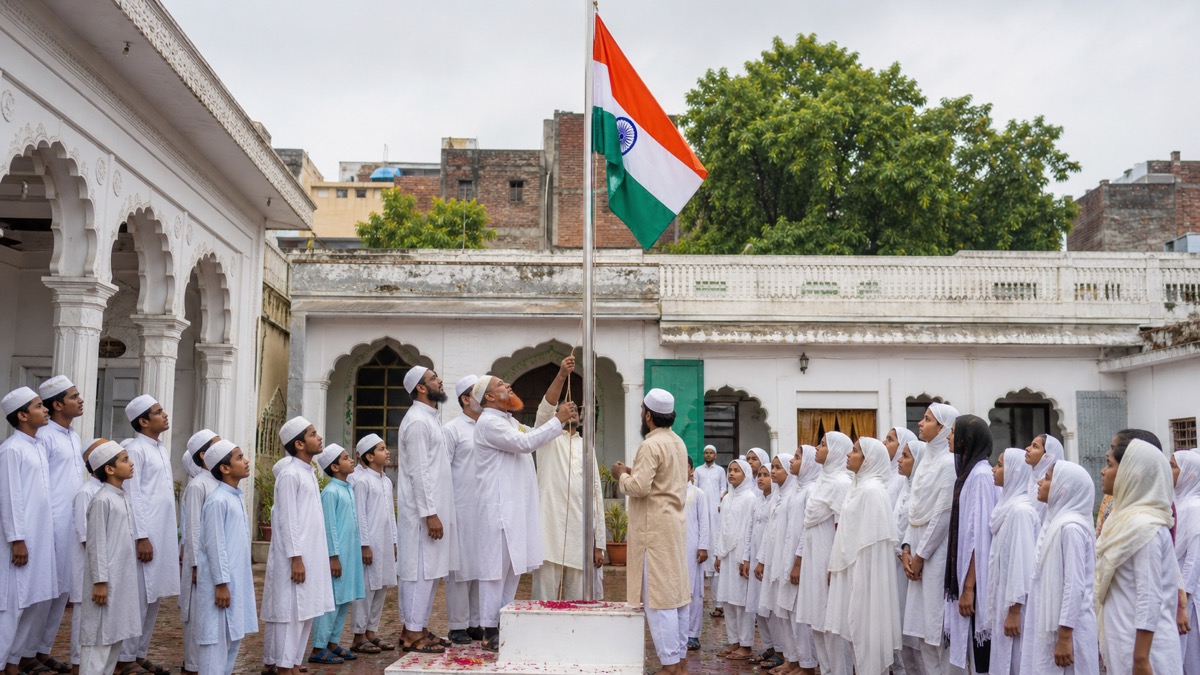
Students at madrasas across Varanasi marked Independence Day with flag-hoisting, the national anthem and songs about the freedom struggle, placing young voices at the centre of the city’s morning observances. At Mazharul Uloom in Peeli Kothi, the flag was raised at about 9 am before students and teachers gathered for a programme on national unity and the sacrifices behind independence.
The institution’s manager, Maulana Akhlaq Ahmad, and principal, Maulana Riazuddin, joined the ceremony. Students sang patriotic songs, recited pieces on freedom and offered prayers for peace, harmony and the country’s progress. Similar programmes were reported at other religious schools in the city.
For the pupils, the event was not treated as a formality between classes. Gulfshan Parveen, a Class 8 student, spoke about the pride of taking part in the national celebration. That perspective matters: national days acquire meaning when children are asked to understand them, rather than simply stand through a rehearsed schedule.
Madrasa students are often spoken about in public debate without being heard directly. A school celebration offers a more grounded picture—children learning religious subjects alongside civic history, teachers explaining the flag and families watching them participate in a shared national ritual. The anthem and freedom songs also connect the present generation with a movement that included Indians from many regions, languages and faiths.
Good Independence Day teaching should go further than a list of famous names. It can introduce pupils to local histories of anti-colonial organising in Banaras, the constitutional promises that followed independence and the responsibilities citizens carry today. Discussions of equality, liberty and fraternity can be made practical through school life: fair treatment, respect across differences and the willingness to question injustice without dehumanising another group.
The prayers for peace gave the Varanasi events a distinctly educational tone. In a diverse city, peace is not passive silence; it requires neighbours to recognise one another’s dignity and institutions to give every child a sense of belonging. A flag ceremony becomes more valuable when that ethic continues after the programme ends.
Independence Day can easily become a stream of identical images on social media. The substance lies in what students take back to the classroom. At Peeli Kothi, the combination of anthem, song, remembrance and prayer allowed children to locate themselves inside India’s public story. The morning’s most important image was therefore not only the flag overhead, but a generation of Varanasi students being invited to think about what freedom asks of them now.
Sources and reporting
Based on local reporting from Independence Day ceremonies at Varanasi madrasas, including Mazharul Uloom at Peeli Kothi.
Related Stories
Sarnath Police Bring Two From Punjab in Fake GST Firm Case
Lohta Hit-and-Run: Hardoi Truck Driver Ankit Pal Arrested
Magic Van Hit-and-Run Kills Security Guard Near Mohansarai
DGP Flags 15-20 Overseas Gangsters, Opens New PS
Puja Specials via Varanasi: Amritsar, Ahmedabad and Kolkata Paths Listed