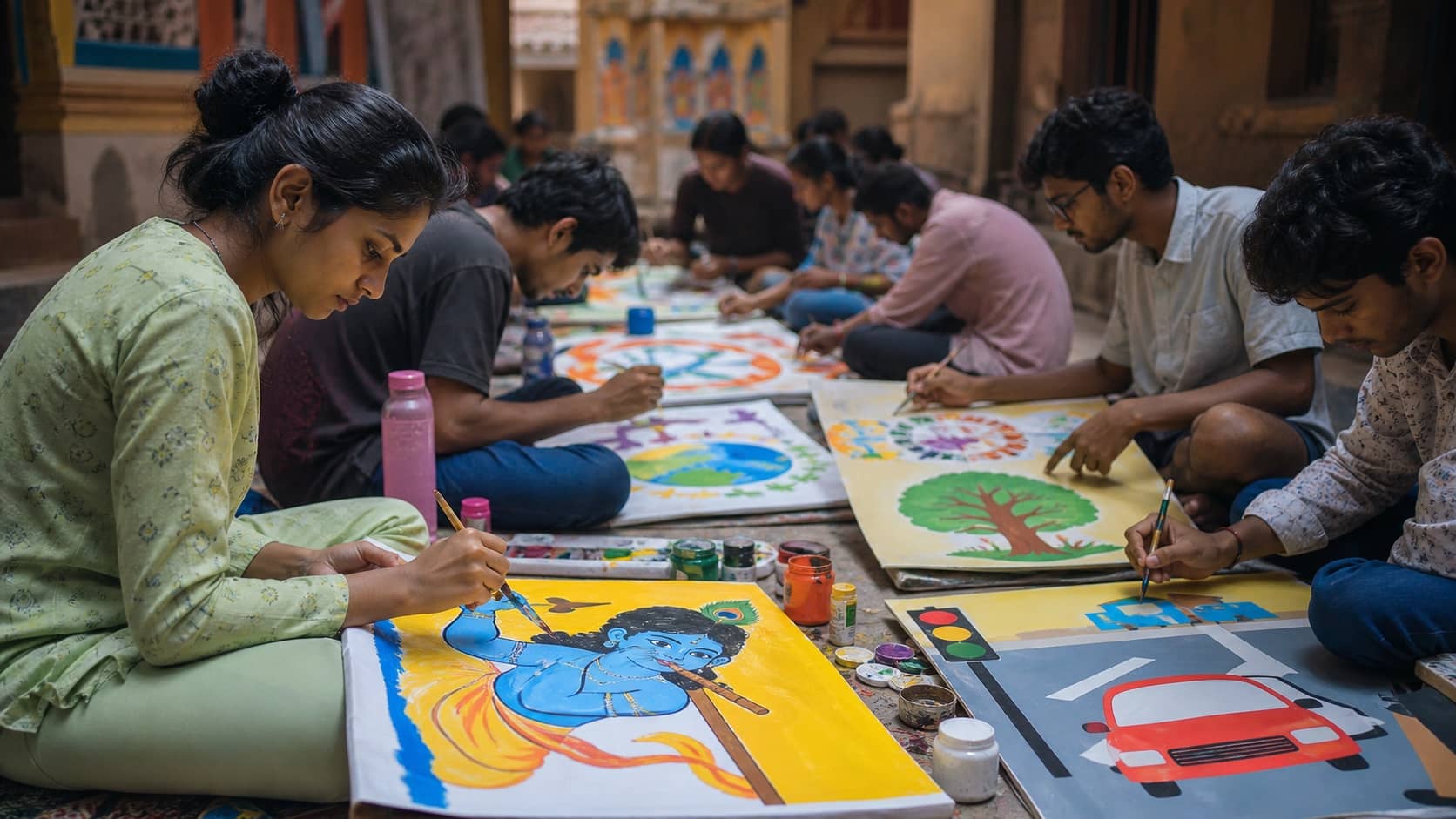
VARANASI: A Janmashtami procession in Varanasi will carry more than 70 placards addressing food waste, road safety, environmental protection, forgiveness and the dignity of girls, as organisers seek to combine celebration with a wider public message.
The slogans have been prepared by the Hare Krishna Hare Ram Sankirtan Society. One of the most direct urges people to take only as much food as they can finish so that it does not end in a drain. Others ask residents to plant trees, follow road-safety rules, value Hindi, respect daughters and practise forgiveness. Religious messages will appear alongside the civic themes.
Processions are among the city’s most visible forms of public communication. A placard moves through neighbourhoods and reaches people who may never attend a seminar or open an awareness brochure. By choosing short, memorable lines, the organisation is using a traditional format for concerns that residents encounter every day.
Food waste is a particularly practical subject during large celebrations. Community feasts and prasad distribution can generate significant leftovers when serving is not matched to demand. Volunteers can make the slogan meaningful by beginning with smaller portions, arranging clearly marked refill points and working with recognised groups that can safely redistribute untouched food. Waste segregation should be planned before the event rather than improvised after plates begin piling up.
Road safety also has immediate relevance to a procession. Devotional energy does not remove the risk created by traffic, electrical wires, crowding or vehicles moving beside walkers. A responsible route needs marshals, reflective clothing after dark, space for ambulances and coordination with traffic personnel. The strongest safety message is an event conducted safely.
Environmental appeals face the same test. A tree-planting slogan sounds hollow if plastic cups, flex banners and food packaging are left in the street. Reusable signs, steel water stations and a post-procession clean-up team can turn the words into visible practice. Organisers have an opportunity to show that religious gatherings can reduce waste without reducing participation.
Some slogans focus on interpersonal conduct, including the idea that asking forgiveness takes courage and granting it takes strength. That language broadens the event beyond rule-following. Public life in a crowded city depends on patience—especially in lanes where residents, pilgrims and shopkeepers negotiate limited space.
The project also shows how festival communication is changing. Social media produces instant reach, but a physical procession creates a shared local moment. The challenge is to avoid turning serious issues into decorative backdrops. Follow-up activities at schools, temples or neighbourhood meetings would give the messages a life beyond one day.
Janmashtami will remain, first, a religious celebration. The Varanasi group is not trying to replace that meaning; it is arguing that devotion can sit beside civic responsibility. If the procession leaves its route cleaner, safer and more thoughtful than it found it, the 70 slogans will have done more than provide captions for photographs.