Varanasi DM Tells Departments to Close Grievances Only After Complainant Signs Off
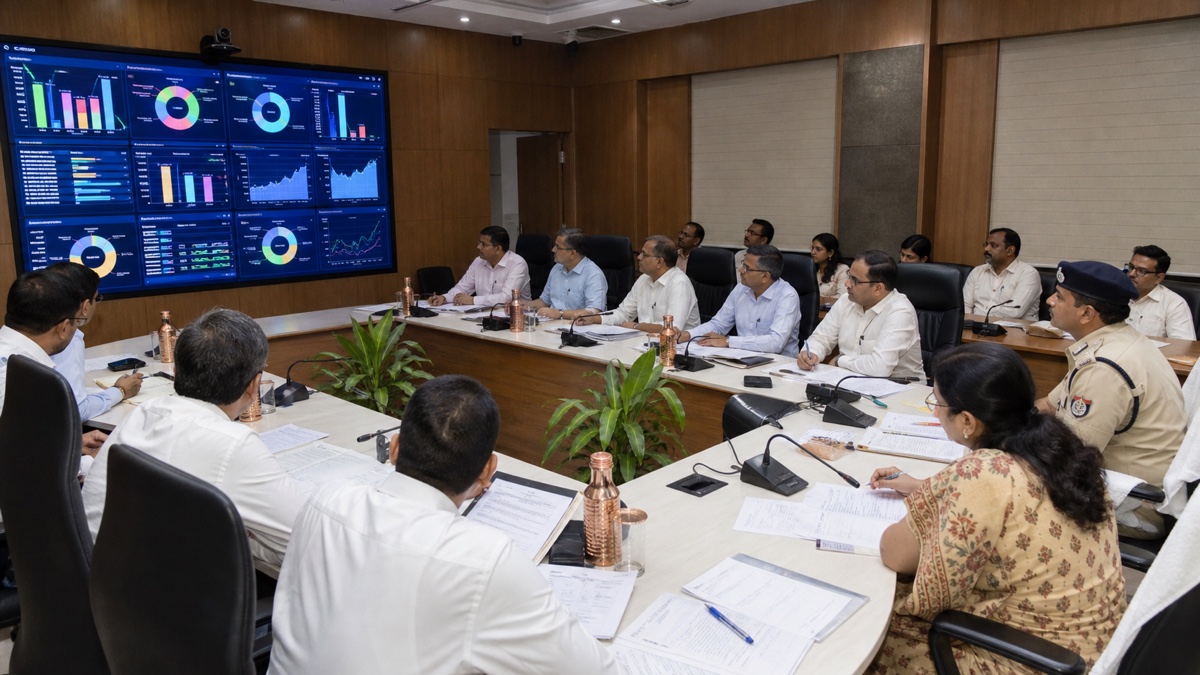
Varanasi District Magistrate Satyendra Kumar has directed departments not to show a public grievance as resolved on the IGRS portal until the complainant’s signed acknowledgement is on record. At a collectorate review of the CM Dashboard and development and welfare schemes, he also called for regular testing of the data used to measure departmental performance.
The instruction addresses a familiar gap in complaint systems: a file can be marked closed even when the citizen says the underlying problem remains. A signature creates a traceable checkpoint, though its credibility will depend on how consent is obtained. An acknowledgement should confirm that the stated action occurred; it should not become pressure on a complainant to accept an incomplete response.
Kumar told departments to review pending cases and ensure timely, substantive disposal. Schemes performing below target should receive a specific action plan, he said, and incomplete data updates should not be allowed to lower the district’s dashboard ranking. He described improvement as a collective responsibility across departments rather than the work of a single data operator.
Rankings can be useful because they reveal delay and force departments to compare progress. They can also reward neat entries over real outcomes if verification is weak. The district’s emphasis on signed closure and regular data checks is therefore important. A meaningful audit should sample the quality of the remedy, contact complainants independently and flag repeated closures by the same office.
The meeting also called for village- and block-level camps to help eligible residents understand and access government schemes. That approach can reach people who cannot repeatedly travel to an office or navigate an online form. Camp dates, eligibility documents and responsible officers should be publicised in advance so the exercise does not become a one-day photo opportunity.
In a separate review of the district AYUSH committee, the DM asked officials to identify hospitals with low outpatient attendance and prepare plans to improve it. He sought adequate essential medicines, regular inspections and wider awareness of yoga, Ayurveda, healthy living and medicinal plants. Increasing footfall should follow reliable staffing and care; attendance alone is not a measure of medical quality.
Environmental committees were also reviewed. Officials were asked to prepare a concrete plan for reviving the Varuna and Assi rivers, examine clearances connected with proposed projects, verify earlier plantation work, protect saplings and accelerate conservation of selected wetlands. Solid-waste management and coordination between departments were included in the directions.
The range of subjects makes follow-through the real test. A dashboard can show whether a target was entered, but residents judge administration through a repaired drain, a supplied medicine or a complaint that does not return. Publishing periodic results—how many closures were independently confirmed, how many were reopened and why—would turn the new signature rule from a procedural instruction into an accountability tool.
Sources and reporting
Based on an August 16 report of district-level review meetings chaired by DM Satyendra Kumar at the collectorate. The article explains the directions and the accountability questions they create.
Related Stories

Dalimss 20 Under 40 Varanasi 2026: Meet the 20 Young Achievers Making Their Mark on Banaras

Biker Dies After Thar Hit on Golf Course Road

Court Orders Probe Into Body Handling Lapses
Two Held After Rs 54,000 Robbery Near Rampura
Manduadih Fan Warehouse Fire Burns for Hours; No Deaths Reported