Varanasi City Transport Plans 250-Bus Expansion and New Routes
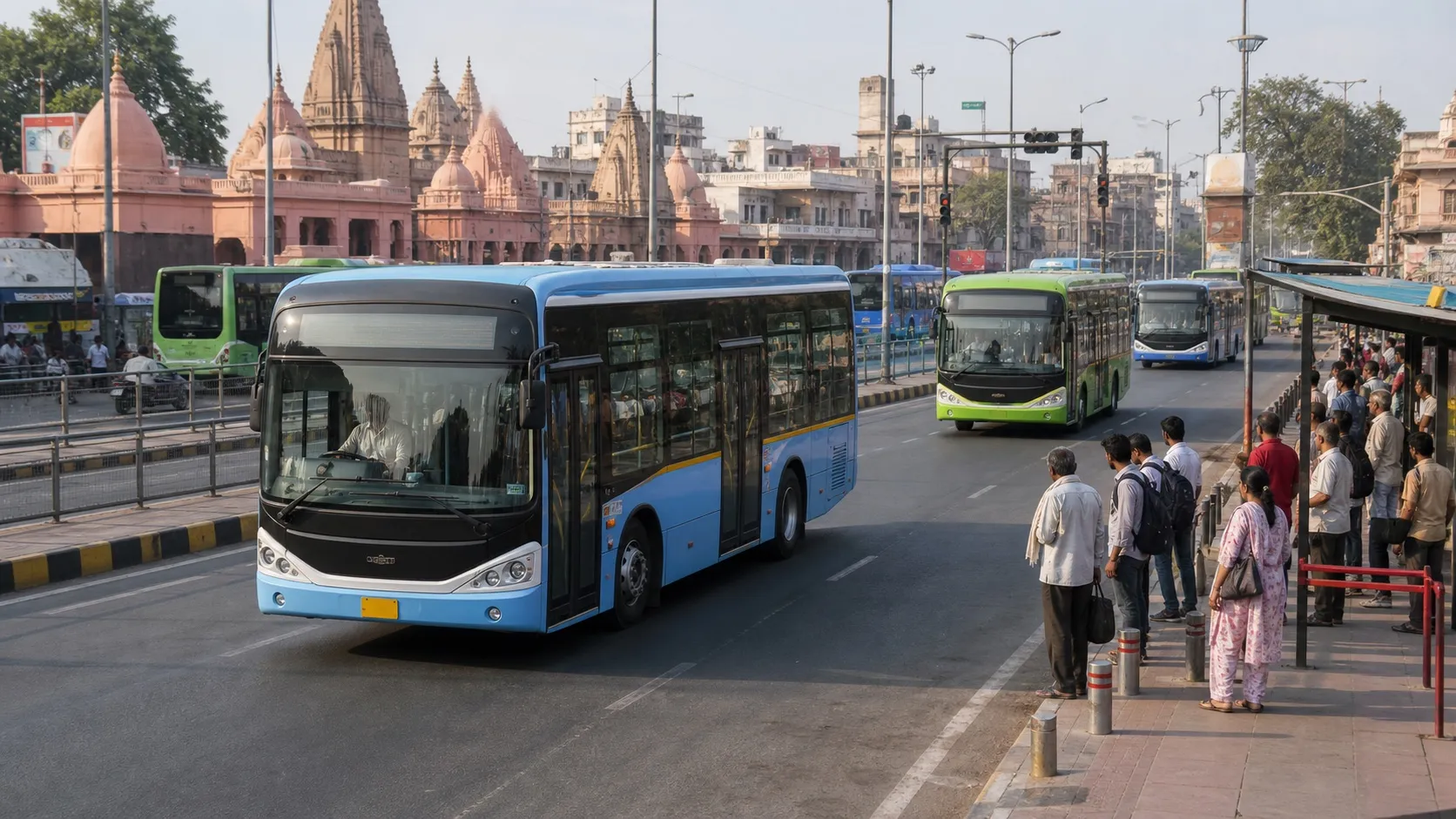
Varanasi City Transport Services Limited has set out a plan to add 250 buses to the city network, a fleet increase that could reshape daily travel if routes, depots and staffing keep pace with the vehicles. The proposal was reviewed at the company’s 34th board meeting, alongside e-bus operations, parking, QR-based ticketing and links between the Kashi Darshan service and IRCTC.
The board approved operations on routes connecting Mirzamurad with Babatpur, Markandey Mahadev and Pandit Deen Dayal Upadhyaya Nagar. The municipal commissioner has been authorised to arrange land for 175 of the 250 allocated buses, while the traffic police have been asked to determine routes. Those two assignments are central: buses cannot improve mobility if they have nowhere to park and charge, or if their paths duplicate existing services while leaving working neighbourhoods untouched.
Officials also discussed funding for electric-bus charging stations at Sarnath and Pareth Kothi. Charging capacity determines how many vehicles can stay in service through the day and how reliably they meet a timetable. A bus announced for a corridor but repeatedly withdrawn to charge will quickly lose commuters’ trust. Depot planning therefore needs power connections, maintenance bays, spare vehicles and realistic turnaround times before the fleet arrives.
Digital payment is already gaining ground. The meeting recorded about ₹6 lakh received through UPI, with roughly 14,000 passengers using it each month. QR ticketing can reduce cash handling and provide better ridership data, but cash must remain available for passengers without smartphones or reliable connectivity. A public system works best when technology adds a choice rather than creating a new barrier.
For residents, the most important information is still missing from the headline number: the delivery schedule, vehicle mix, fares, frequencies and last-mile links. Women travelling early or late need well-lit stops and predictable service. Students and workers need buses at the hours they actually move. Older passengers and people with disabilities need level boarding and drivers trained to use accessibility features.
The 250-bus plan is an opportunity to shift some trips away from private cars and overcrowded e-rickshaws, easing pressure on Varanasi’s narrow roads. That benefit will not emerge automatically from procurement. It requires a published network, live service information, enforcement against illegal parking at stops and performance data after launch. The success metric is not how many buses are photographed together, but how many reliable journeys they make every day.
Route planning should use evidence from existing travel patterns rather than only the easiest roads to operate. Passenger counts at railway stations, hospitals, campuses, industrial areas and peripheral markets can reveal journeys now made through multiple costly transfers. Publishing a draft network for comment would let drivers, conductors and regular commuters identify gaps before new buses are locked into an inefficient timetable.
Sources and reporting
Based on decisions recorded at the 34th board meeting of Varanasi City Transport Services Limited on May 19, 2026.
Related Stories
Festive Special to Gorakhpur Gets Gurugram Halt
Fifth Accused Held in Rs 25 Lakh Sector 47 Robbery

Courier Staffer Booked Over 105 Missing One8 Returns

HC Sets Rs 50 Lakh Costs for Accused's Return to India

Gurugram Swimmer, 20, Crosses English Channel