Varanasi Airport Plans Biometric Cameras and Contactless Security Upgrade
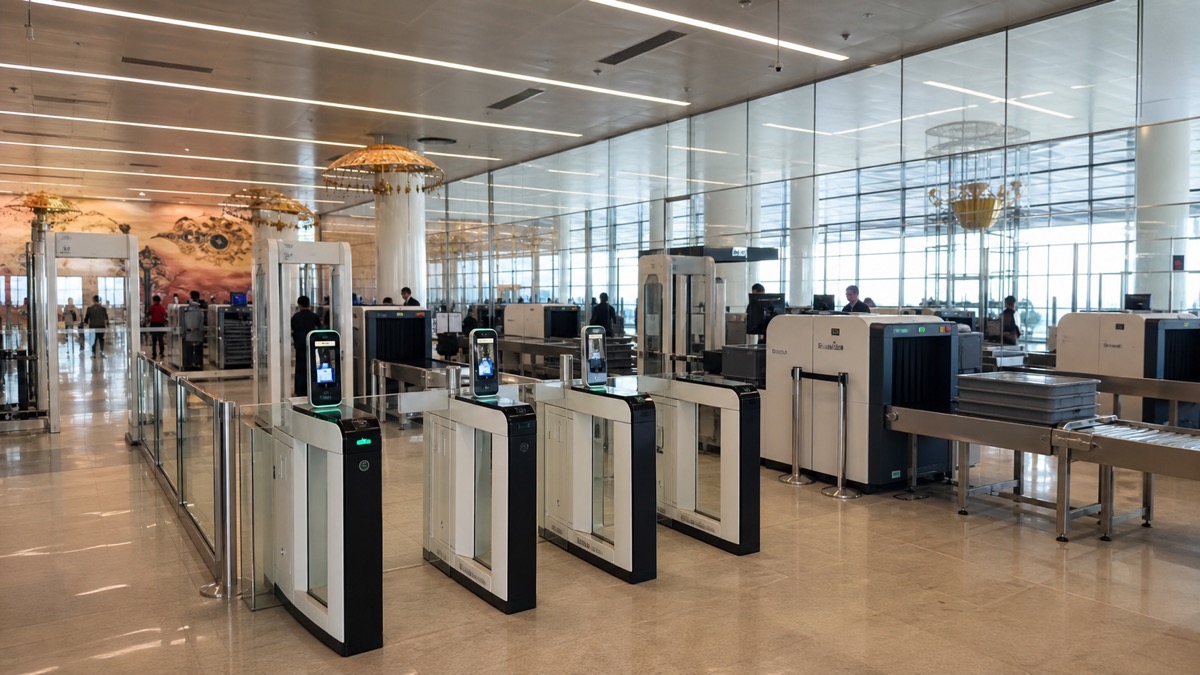
VARANASI: Lal Bahadur Shastri International Airport is preparing a technology-led security upgrade that includes biometric cameras, contactless checks and artificial-intelligence-assisted monitoring as passenger facilities expand.
The plan has been described through comparisons with major international airports in London and Dubai. Those comparisons are useful as shorthand, but they should not be treated as proof that Varanasi will copy another airport’s full system. The practical questions are which equipment is procured, how it integrates with Indian aviation databases and what alternatives remain for passengers who cannot or do not use biometric processing.
What contactless security can change
Biometric gates can match a traveller’s face with an approved journey credential at selected checkpoints, reducing repeated presentation of documents. Contactless screening can also speed the movement of trays and bags and allow staff to focus on anomalies rather than routine handling.
The technology does not eliminate human judgement. Security personnel must remain able to intervene when a match fails, a passenger requires assistance or equipment flags an object. Redundancy matters because a network or power failure cannot be allowed to bring an entire terminal to a halt.
Privacy is part of security
Airport authorities should publish how images and journey data are collected, how long they are stored and which agencies can access them. Passengers need a clear route to correct an error and a non-biometric option consistent with applicable rules.
AI-assisted cameras can help identify unattended baggage, perimeter breaches or unusual crowding. They can also produce false alerts. Systems should be tested for accuracy across age groups, skin tones, head coverings and mobility needs before they become a default gatekeeper.
A bigger terminal needs better flow
Varanasi’s airport is undergoing a major expansion intended to handle rising tourism, pilgrimage and business travel. Technology will help only if the physical layout—queues, signage, accessible lanes, seating and baggage movement—is designed around real passenger behaviour.
Staff training should begin before the equipment goes live. A sophisticated gate with no visible assistance can create a new bottleneck, especially for elderly pilgrims or first-time flyers. Multilingual instructions and manual help desks will remain essential.
The upgrade has the potential to make travel smoother while strengthening monitoring. Its success should be measured in shorter, safer and more inclusive journeys, not the number of cameras installed. Transparent privacy rules, independent security testing and a reliable fallback process are the conditions that will turn a high-tech promise into a workable Varanasi airport system.
Passengers should be told in advance when a trial phase begins and which checkpoint is affected. Collecting feedback during that phase can expose confusing instructions or accessibility barriers before full deployment. A secure airport is strongest when travellers understand the process and staff can explain it without delay.
Sources and reporting
Based on an Amar Ujala report published August 13, 2026. Comparisons with London and Dubai describe planned capabilities; final equipment, procurement and operating procedures remain subject to official implementation.
Related Stories

Kashi Marks Baba Lat Bhairav’s Wedding Day After Tilak and Haldi Rituals

Over 800 Doctors Converge as API UP Chapter Conference Opens in Rohania
Chitaipur Arrests Two After Homeguard Anuradha Tiwari’s Alleged Suicide
Lanka Registers Assault Case After Narottampur Youth Dies During Treatment

Storm Uproots Electric Pole in Cholapur’s Jagdishpur; Local Supply Cut