Students planning a master's in physiotherapy or occupational therapy will no longer find a general M.PT or M.OT on offer from the 2026-27 academic year. Under the latest change to the University Grants Commission's official list of degree titles, both degrees must now carry a named specialisation.
UGC sent the change to universities with a letter dated 16 September 2026 from its Secretary, Prof. Shyama Rath, enclosing the UGC (Specification of Degrees) Fifth Amendment published in the Gazette of India on 27 August 2026. The amendment came into force on publication, and universities offering these programmes have been told to restructure them.
Why the degree list matters
Section 22 of the UGC Act allows universities to award only the degrees that UGC has specified. The specification lists each degree's short form, full name, level, duration and minimum entry qualification, so a change here flows into the course list of every university that teaches the subject.
This amendment brings degrees regulated by the National Commission for Allied and Healthcare Professions (NCAHP) into the list under the head covering medicine, surgery, AYUSH, allied and healthcare, pharmacy, paramedical and nursing degrees. It follows a letter from NCAHP dated 3 July 2026.
M.PT and M.OT: specialisation only
According to the NCAHP letter quoted by UGC, the generalised Master of Physiotherapy and Master of Occupational Therapy will not be awarded from 2026-27. Students admitted earlier will still receive their degrees under the previous notification.
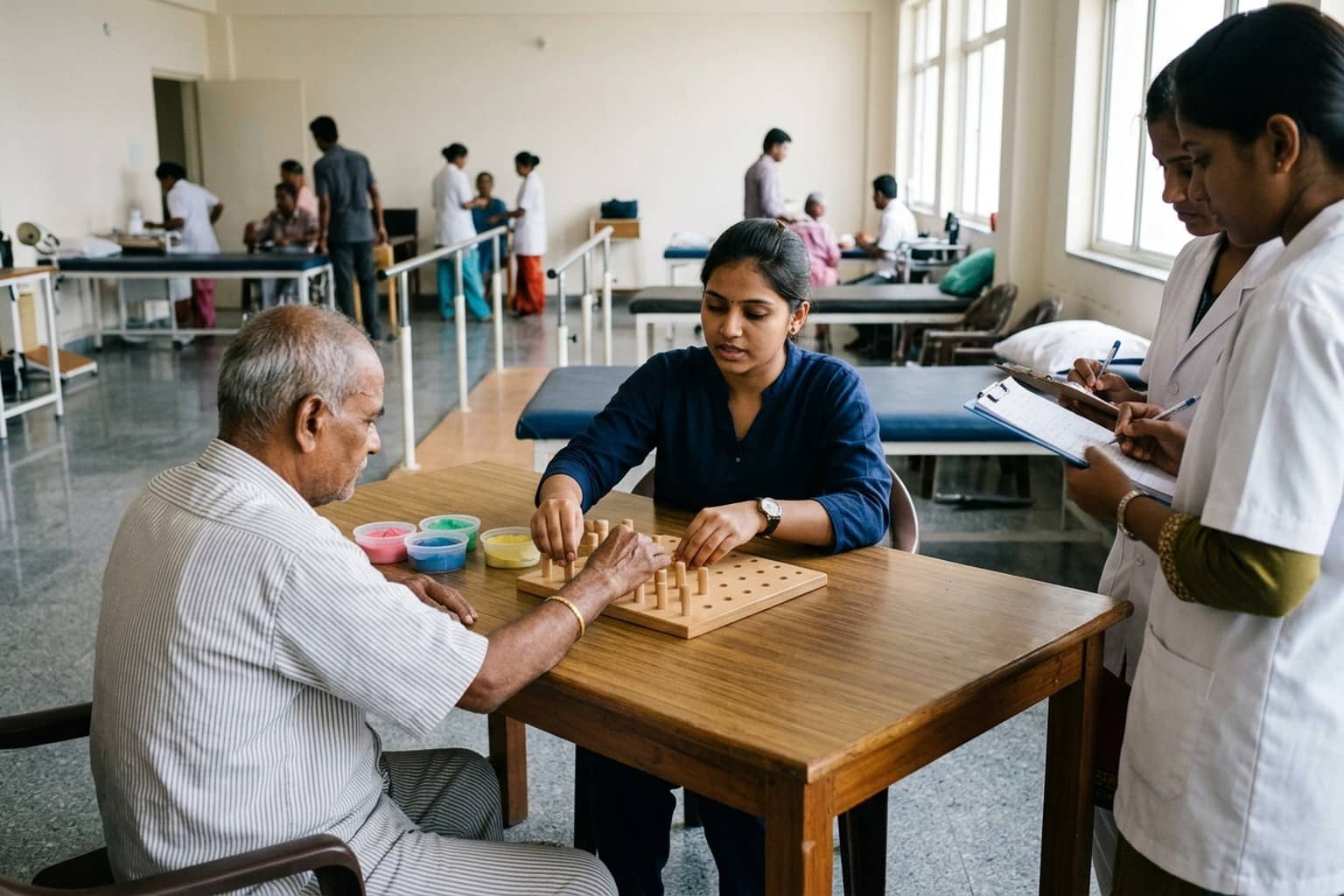
The M.OT can now be awarded in nine specialisations: musculoskeletal sciences, paediatrics and neonatology, neurosciences, mental health, cardiovascular and pulmonary sciences, rehabilitation, geriatrics, hand, and oncological sciences.
The M.PT has eight: musculoskeletal sciences, neuro sciences, cardio-pulmonary sciences, sports sciences, paediatrics and neonatal sciences, obstetrics and gynaecology sciences, oncology sciences, and community rehabilitation sciences. Both remain two-year master's degrees after a bachelor's.
Longer bachelor's courses
The amendment also changes durations. The Bachelor of Physiotherapy and the Bachelor of Occupational Therapy now run five years, up from four and a half. The Bachelor of Optometry goes to five years from four, and the abbreviation of the Master of Optometry has been modified.
For a Class 12 student choosing between these courses this year, the practical point is that the degree now takes longer to finish. Prospective students should check whether a college's 2026-27 prospectus reflects the new duration before they lock a choice.
33 new degree titles
The largest part of the amendment adds 33 new degree titles, numbered 158 to 190 in the list. Most of the new bachelor's degrees are four years after Class 12, and most of the new master's degrees are two years after a bachelor's. They include:
Medical laboratory science: a Bachelor of Medical Laboratory Science (B.MLS) and a Master of Medical Laboratory Science (M.MLS) in medical biochemistry, medical microbiology, haematology and transfusion medicine, and histology and cytopathology.
Emergency and operation theatre care: a Bachelor of Emergency Medical Technologist (Paramedics), a Master of Advance Care Paramedics, and bachelor's and master's degrees in anaesthesia and operation theatre technology.
Nutrition and social work: a Bachelor of Nutrition and Dietetics (Honours) with a matching master's, a Bachelor of Medical and Psychiatric Social Work, a Master of Medical Social Work and a Master of Psychiatric Social Work.
Imaging and radiation: a Bachelor of Medical Radiology and Imaging Technology, with master's degrees in CT imaging, MR imaging and breast imaging technology; bachelor's and master's degrees in radiation therapy technology; and B.Sc and M.Sc degrees in nuclear medicine technology, along with an M.Sc in medical physics.
Other fields: degrees for physician associates, dialysis therapy technology, respiratory technology (with master's options in adult respiratory care and neonatal and paediatric respiratory care), and a B.Sc and M.Sc in health information management.
Fields such as laboratory technology and radiology have often been taught under general B.Sc titles. Listing each course as a specified degree gives it a fixed name, level and duration that universities have to follow, so two students in the same subject in different states should end up with the same degree title. Universities will have to align their course names with this list when they admit new batches.
Admission season in other states
The change lands while several states are still admitting students to these courses. Maharashtra's State CET Cell, in Notice No. 01 dated 6 October 2026, has opened registration for its entrance tests for the Master of Physiotherapy and Master of Occupational Therapy, along with M.Sc courses in speech language pathology, audiology, and prosthetics and orthotics. Registration runs till 11.59 pm on 12 October, the fee is Rs 2,200, and the test is tentatively set for Friday, 30 October, according to the notice, which points candidates to www.mahacet.org.
In Tamil Nadu, the selection committee has already published prospectuses for these courses, covered in our reports on the Master of Physiotherapy prospectus, the Master of Occupational Therapy prospectus and the Master of Optometry admissions.
What students should do
Anyone applying for an M.PT or M.OT this year should make sure the seat they choose names one of the specialisations in the new list, since a generalised degree will not be awarded to the 2026-27 batch. Students already enrolled need not worry about their own degree title, which stays under the earlier notification.
Those looking at the newer allied health courses can use the list as a check: if a college advertises a degree under a different name or duration from the one UGC has specified, it is worth asking the college why before paying a fee.