Two Board Exams: A Second Chance or Double the Stress?
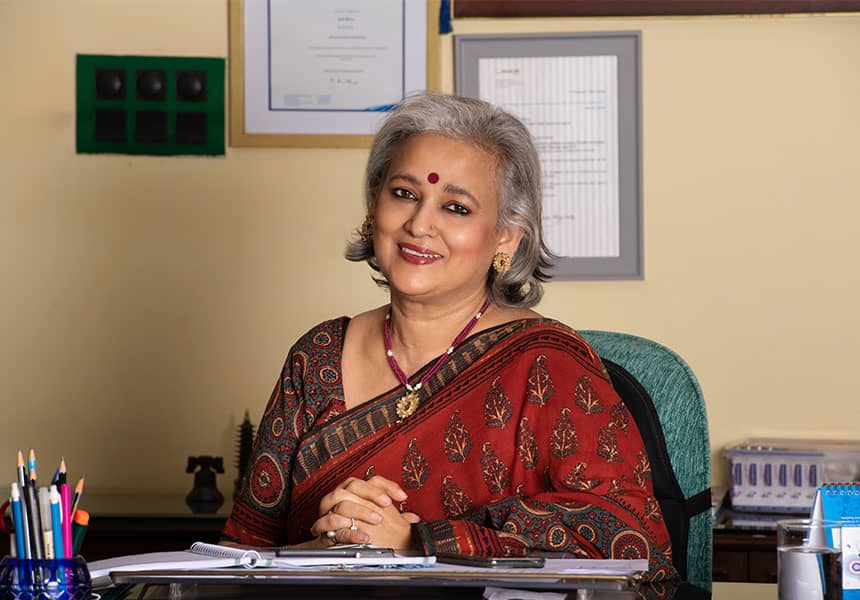
Dr Aditi Misra raises concerns over academic disruption, student pressure and teacher workload under the two-exam approach.
By Dalimss News Education
The idea behind offering students two opportunities to take their board examinations appears reassuring on paper was to reduce the pressure of a single high-stakes examination and give students another chance to improve their performance. But does a second opportunity necessarily translate into less stress?
For Dr Aditi Misra, Director, Delhi Public School Gurgaon, the experience raises an important concern: two examinations can potentially mean double the stress rather than reduced stress.
Speaking to Dalimss News Education, Dr Misra said she was not particularly keen on the two-examination approach, especially after considering its practical implications for students, teachers and the academic calendar.
Her concerns go beyond the examination itself. They raise a larger question about whether repeated opportunities to improve marks can unintentionally keep students tied to Class 10 examinations when they should already be moving forward with Class 11.
Most Students Want to Finish Their Boards in One Go
One of Dr Misra's key observations is that most students would prefer to complete their board examinations in the first attempt and move ahead.
A second opportunity can certainly be valuable for a student who is dissatisfied with their performance and wants to improve. Indeed, according to Dr Misra, many students showed an interest in improving their scores.
But that opportunity also comes with a trade-off.
By the time the second examination arrives, schools have already begun their Class 11 academic programmes. Students appearing again may consequently have to divide their attention between improving their Class 10 board scores and keeping pace with a completely new academic year.
This is where a policy intended to provide flexibility can begin creating another form of pressure.
What Happens to Class 11?
The transition from Class 10 to Class 11 is academically significant. Students enter new streams, encounter a substantially different syllabus and begin preparing for the next stage of their education.
Dr Misra pointed to the disruption that can arise when some students move ahead with Class 11 while others remain occupied with another board examination.
Students choosing the second opportunity could miss classes and portions of their Class 11 curriculum, leaving them with additional academic work to catch up on later.
The difficulty becomes particularly apparent around the period when the new academic session is already underway but some students are still focused on their previous board examination.
Instead of reducing pressure, students can find themselves managing two academic priorities simultaneously: improving their Class 10 result while ensuring they do not fall behind in Class 11.
Counselling Before Choosing a Second Attempt
This makes counselling an important part of the process.
According to Dr Misra, students were made aware of the implications before deciding whether to pursue another attempt. The conversation was not simply about whether a student could improve a board score, but whether that improvement was worth potentially missing part of the Class 11 academic programme.
Parents were also part of this conversation, and Dr Misra indicated that many parents understood and agreed with the concerns once the academic implications were explained.
This highlights an important distinction: having a second opportunity does not necessarily mean every student needs to use it.
For some students, another attempt may provide a genuinely valuable opportunity to improve. For others, moving forward and concentrating on Class 11 could ultimately prove more beneficial.
The Hidden Impact on Teachers.
Students are not the only ones affected by an additional examination cycle.
Schools also have to consider its impact on teachers.
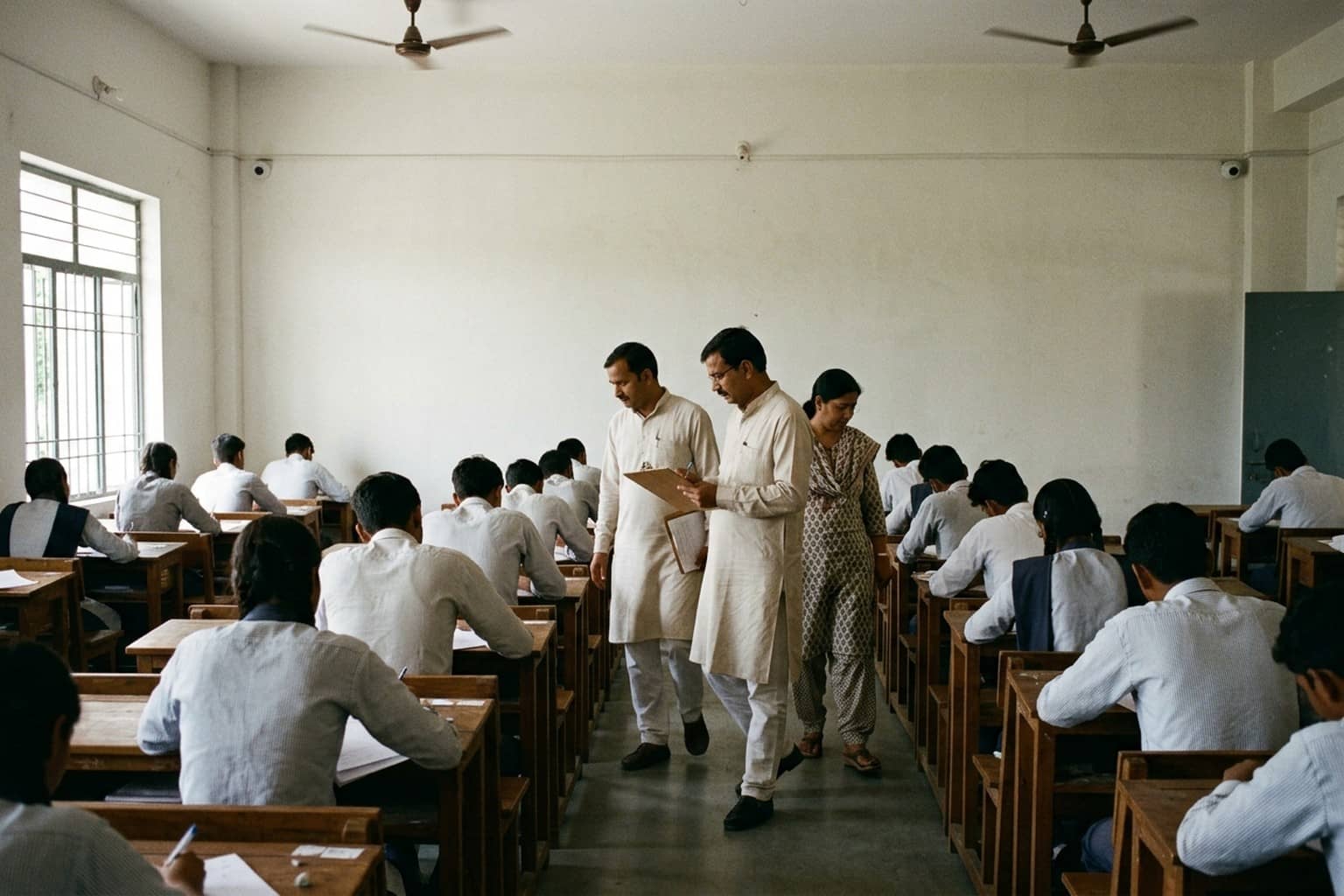
A second examination means another round of examination-related responsibilities, including evaluation and correction work. These responsibilities can overlap with a period traditionally associated with schools' summer schedules and vacations.
Teachers may consequently have to return to examination-related duties while also preparing for the new academic session.
The concern, therefore, is not simply about conducting another examination. Schools must accommodate the second cycle within an already demanding academic calendar involving teaching, assessments, evaluation, training and preparation for the next session.
Are We Adding Too Much, Too Quickly?
Dr Misra's concerns also extend to the wider direction of school education.
Schools today are expected to accommodate several changes simultaneously—from examination reforms and curriculum changes to skill development initiatives and new approaches to teaching.
While initiatives such as Kaushal Vikas and skill-based education can have educational value, implementation requires time.
Teachers need adequate training before new expectations are introduced in classrooms, and schools need sufficient time to integrate changes meaningfully.
Otherwise, well-intentioned reforms can translate into an expanding list of responsibilities for teachers and an increasing academic burden for children.
Her broader argument is therefore not necessarily against educational reform, but for ensuring that reforms are paced, prepared for and implemented with the realities of classrooms in mind.
She also stressed the importance of preserving student choice, including options such as foreign languages, rather than unnecessarily narrowing the range available to learners.
Second Chance or Second Pressure?
The strongest argument in favour of another board examination is easy to understand.
One bad examination should not determine a student's academic outcome. A student could be unwell, experience anxiety, make mistakes on the day of the examination or simply perform below their actual ability. Giving such a student another opportunity can provide a valuable safety net.
But Dr Misra's observations highlight the other side of that equation.
If students begin seeing the second examination not as a safety net but as another expected opportunity to maximise their marks, the system risks creating a new cycle of competition.
Instead of thinking, “I have another chance if something goes wrong,” students may begin thinking, “I have to sit for another examination because I might be able to score a few marks more.”
At that point, a reform designed to reduce examination anxiety could inadvertently extend it.
“Do Really Well in the First Exam”
Dr Misra's advice to students is straightforward:
“Study hard and do really well in the first exam.”
The second opportunity can remain available when genuinely needed, but students should not begin their board year assuming that they will necessarily depend upon it.
That may ultimately be the most important lesson from the debate.
Giving students another opportunity can provide flexibility, but flexibility alone does not guarantee reduced stress. Policymakers and schools must also consider how the examination calendar interacts with Class 11, how much academic time students lose, how teachers are affected and whether the pursuit of marginally higher marks is worth extending the board-examination cycle.
The real measure of the reform, therefore, should not simply be how many opportunities students receive.
It should be whether those opportunities make education less stressful, more flexible and academically healthier for students.
And on that question, the experience from schools suggests that the conversation is far from over.