From Eight to Seventy: Tulsi Ghat Akhara Marks Nag Panchami Across Generations
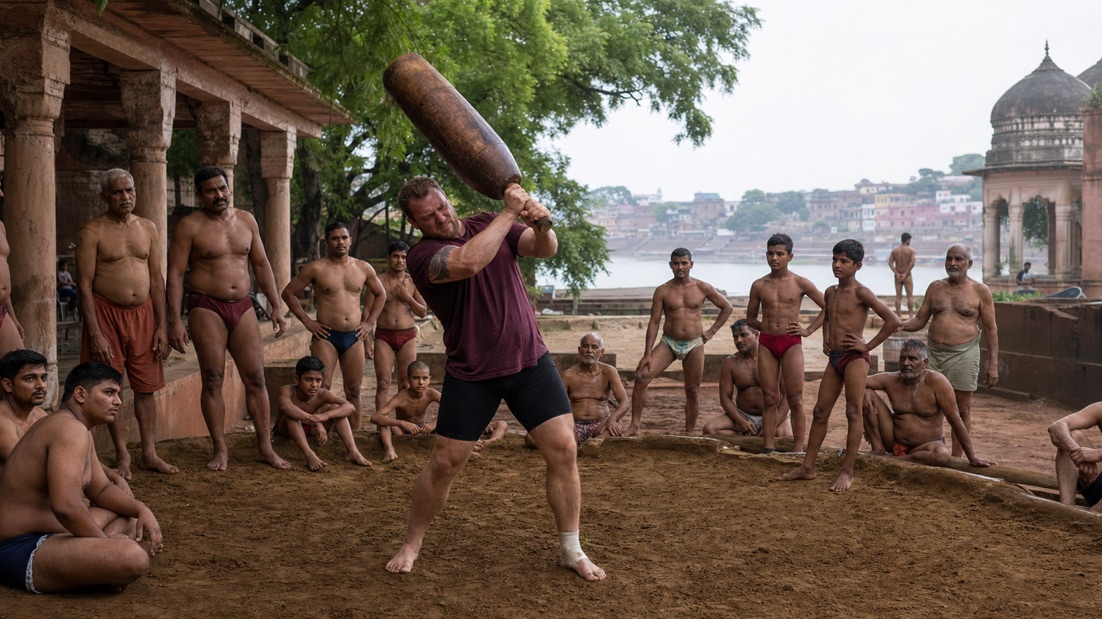
VARANASI: The mud at Tulsi Ghat received wrestlers from eight to about 70 years old on Monday, turning Nag Panchami into a rare meeting of children, active competitors and men who have spent decades around the akhara. Rain reduced the crowd, but it did not erase the ritual of worship, exercise and friendly bouts that gives the festival a distinctive sporting rhythm here.
The programme began with prayers to Hanuman before participants entered the pit. In Varanasi’s akhara culture, the ceremony is not separate from training; discipline, respect for the space and care of the body are treated as part of the same practice. Local tradition links this akhara with poet-saint Tulsidas, an association that adds historical weight even though the details belong to community memory rather than a modern institutional record.
The range of ages mattered more than the number of bouts. Children learned how to step onto the prepared earth, senior wrestlers demonstrated holds and older members returned to a routine that has shaped their lives. Girls, admitted to the akhara in recent years, have also widened a tradition once presented almost entirely through men. Their participation is part of how an old institution remains relevant instead of becoming a display piece.
An international visitor added another layer. Herbert, a wrestling enthusiast from the Netherlands who first came to the akhara in 2017, joined the gathering and tried the heavy mugdar and gada used for strength and shoulder work. He told organisers that he continues to practise Indian wrestling exercises in his home country. His presence drew attention, but the deeper story was the local continuity around him.
Traditional equipment can look simple beside a modern gym machine, yet it demands precise technique. A gada swung carelessly can injure the shoulder, wrist or someone standing nearby. Beginners should train only under an experienced instructor, build mobility gradually and keep the practice area clear. The same rule applies to live wrestling: age and size should be matched, the pit maintained and injuries assessed rather than dismissed as toughness.
Rainy Nag Panchami weather can be unforgiving for an outdoor akhara. The earth must be prepared so it is neither slippery nor dangerously compact, and skin hygiene becomes important when many wrestlers share the surface. Clean clothing, covered cuts and prompt treatment of infections protect the group without weakening the traditional character of the practice.
Tulsi Ghat’s gathering was modest compared with a ticketed sporting event, but that is precisely why it carries value. It survives through people turning up, teaching a grip, sharing equipment and returning the next year. On Monday, an eight-year-old and a 70-year-old occupied the same sporting lineage. That is a stronger measure of an akhara’s health than the size of any one crowd.
Sources and reporting
Based on an August 17, 2026 report from the Nag Panchami wrestling programme at Tulsi Ghat. The akhara’s association with Tulsidas is described as local tradition.
Related Stories

Delhi Man Held in Golf Course Road Rage Case

FIR Over Rs 1.71 Crore Cash Gap at Cantonment Hotel

Five Held in Mughalsarai Cyber Fraud Aimed at Japanese Victims

FIR Against Cab Driver After Sector 69 Toddler Hurt

Railways Clears Banaras–Prayagraj Rambagh MEMU Pair