Seven-Kilometre NH-48 Tailbacks Expose Gurugram's Fragile Peak-Hour Traffic Plan
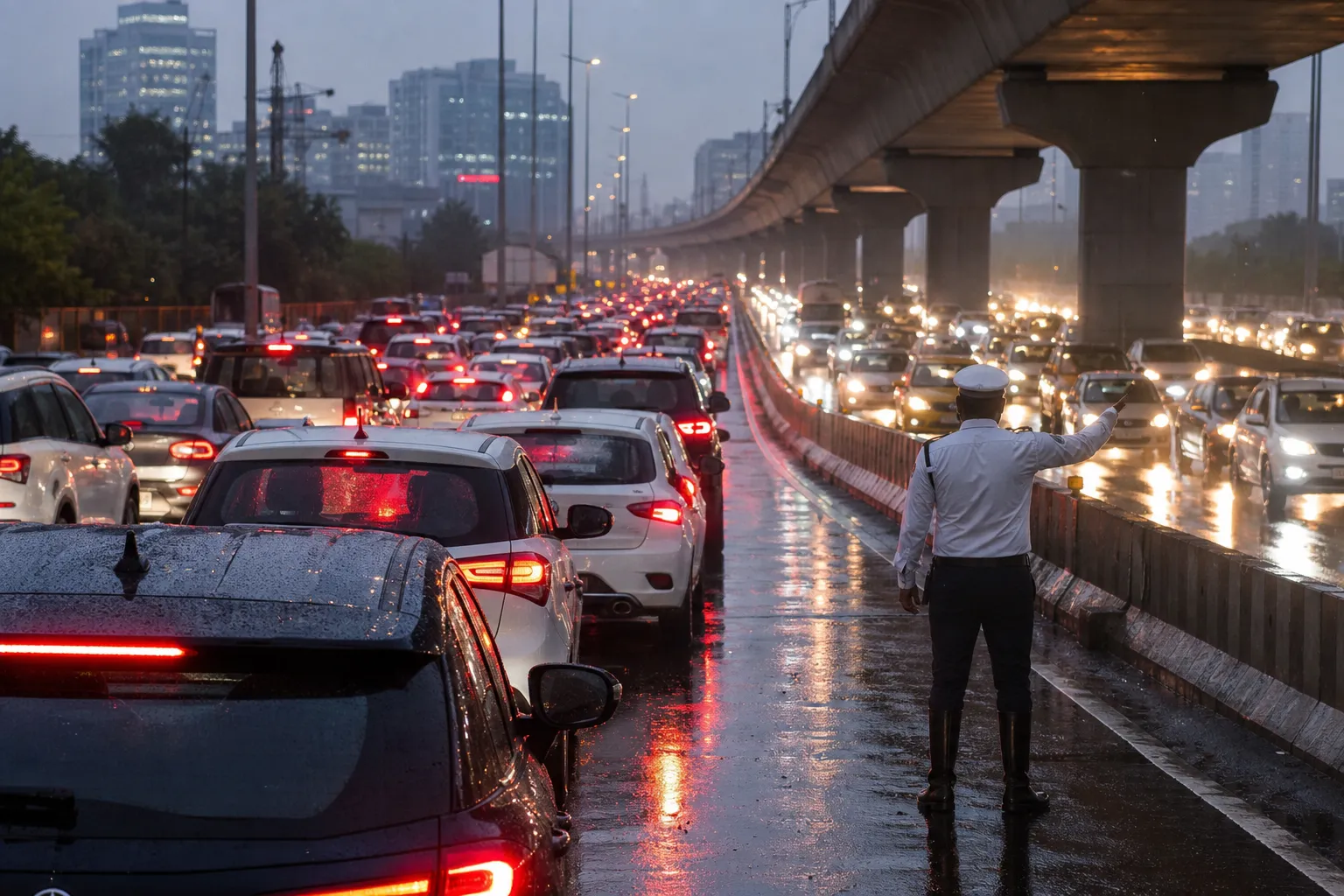
GURUGRAM: Monday evening's traffic breakdown stretched far beyond a routine slow commute. Both carriageways of NH-48 saw queues running up to seven kilometres between Jharsa Chowk and Ambience Mall as the final days of the Kanwar Yatra, peak-hour demand and heavy rain converged on the same road network.
Congestion was reported from Narsinghpur to Sector 34, from Jharsa towards Ambience Mall through the Sector 30/31 junction and Sarhol border, and from Rajiv Chowk to Badshahpur on Sohna Road. Some commuters said the journey between Sarhol and Rajiv Chowk took twice its usual time.
The evening peak absorbed several shocks at once
Traffic police said convoys of pilgrims began entering the highways in larger numbers around 7 pm, overlapping with office traffic. Motorcycles, mini trucks and SUVs accompanying the groups occupied multiple lanes near the Sector 30/31 junction, where one tailback extended towards Leisure Valley Park.
Enforcement teams created separate movement space on service lanes and directed both pilgrim and regular traffic into designated lanes. Conditions returned to normal around 10.30 pm, according to highway traffic officials.
Rain added breakdowns, reduced visibility and local water accumulation. Closures and restrictions in neighbouring districts also redistributed vehicles onto the routes that remained available. Each factor was temporary; together they overwhelmed the limited spare capacity.
A diversion advisory cannot manage the final kilometre
Gurugram had already announced heavy-vehicle diversions for the pilgrimage period. Those measures help at the regional level, but they do not resolve lane conflicts where local commuters, convoys, buses and service-road traffic merge near city junctions.
The city needs a dynamic plan that changes with measured traffic rather than relying only on fixed barricades. Camera feeds and travel-time data can trigger earlier diversions, while temporary holding areas can prevent convoys from entering critical junctions during the office peak.
Communication also matters. Drivers need concise updates naming the congested stretch, the expected delay and a realistic alternative. A generic warning to avoid traffic is of little use once a commuter is already trapped between exits.
Rain resilience is part of traffic management
Every waterlogged edge, stalled vehicle and blocked drain reduces road capacity. Tow trucks and response teams should be placed close to recurring breakdown points before forecast rain, not dispatched from across the city after queues have formed. Service lanes reserved for pilgrims or emergency movement must also remain free of parked vehicles and encroachment.
Monday's seven-kilometre queues cleared the same night, but that is not the only measure of success. Thousands of commuters lost time, buses ran off schedule and emergency access became harder. The episode showed that Gurugram's network can cope with a single planned disruption, yet becomes brittle when rain and peak demand arrive together.
The next plan should be built around that combined risk. Festivals, weather and office traffic are predictable. A city with Gurugram's traffic volume should not need all three to arrive unexpectedly before its agencies begin coordinating in real time.
Sources and reporting
Original Dalimss News report based on 11 August 2026 traffic-police statements, verified congestion locations and commuter accounts from the Monday evening disruption.
Related Stories
Festive Special to Gorakhpur Gets Gurugram Halt
Fifth Accused Held in Rs 25 Lakh Sector 47 Robbery

Courier Staffer Booked Over 105 Missing One8 Returns

HC Sets Rs 50 Lakh Costs for Accused's Return to India

Gurugram Swimmer, 20, Crosses English Channel