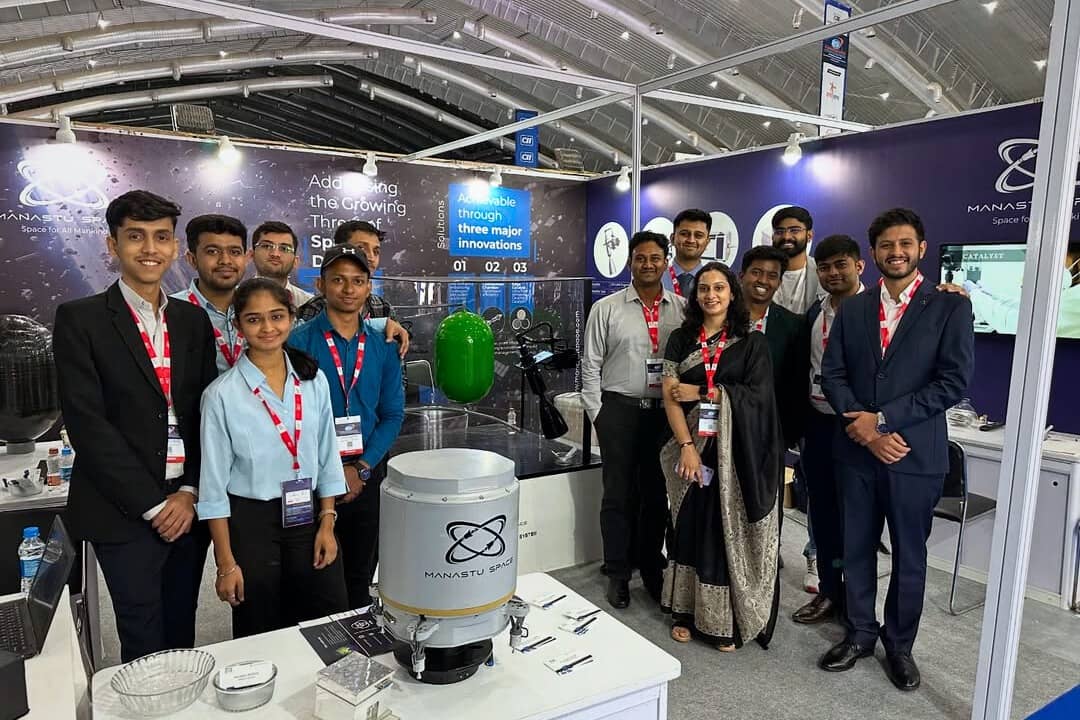
BENGALURU: Seaweed farming in most of the tropics still looks the way it did decades ago. Workers tie seedlings to ropes by hand, wade or paddle out to shallow, sheltered water, and pull the crop back in by hand weeks later. Sea6 Energy, a Bengaluru company that started life at IIT Madras, has spent more than a decade trying to turn that slow, manual work into something closer to mechanised farming at sea.
The company grows tropical red seaweed, which it calls sea plants, and turns the biomass into crop biostimulants, organic fertilisers, animal and shrimp feed products, food texturising ingredients and early stage bioplastics. Its research base sits at C-CAMP on the NCBS-TIFR campus in Bengaluru. Here is a plain guide to what it does, based on the company's own website.
From an IIT Madras team to a seaweed company
Sea6 Energy's story page says the company was incorporated at IIT Madras in 2010. Its timeline begins a year earlier, with a silver medal at the iGEM synthetic biology competition at MIT in 2009. It raised seed funding from IIT Madras alumni and biotech industrialists in 2011, filed a patent for its ocean farming technology the same year, and moved its research base to C-CAMP in Bengaluru in 2013.
The company lists four co-founders. Shrikumar Suryanarayan, the managing director, previously served as president of R&D and chief scientific advisor at Biocon and as president of the Association of Biotechnology Led Enterprises. Nelson Vadassery is the chief executive, Sowmya Balendiran is chief business officer and Sri Sailaja Nori leads research and development as director.
What SeaCombine actually does
The company's central engineering idea is a platform it calls SeaCombine. Its mechanised ocean farming page explains the problem simply: labour makes up a huge share of the cost of seaweed in traditional farming, and most farms are limited to shallow, protected water. That keeps seaweed expensive and supply small.
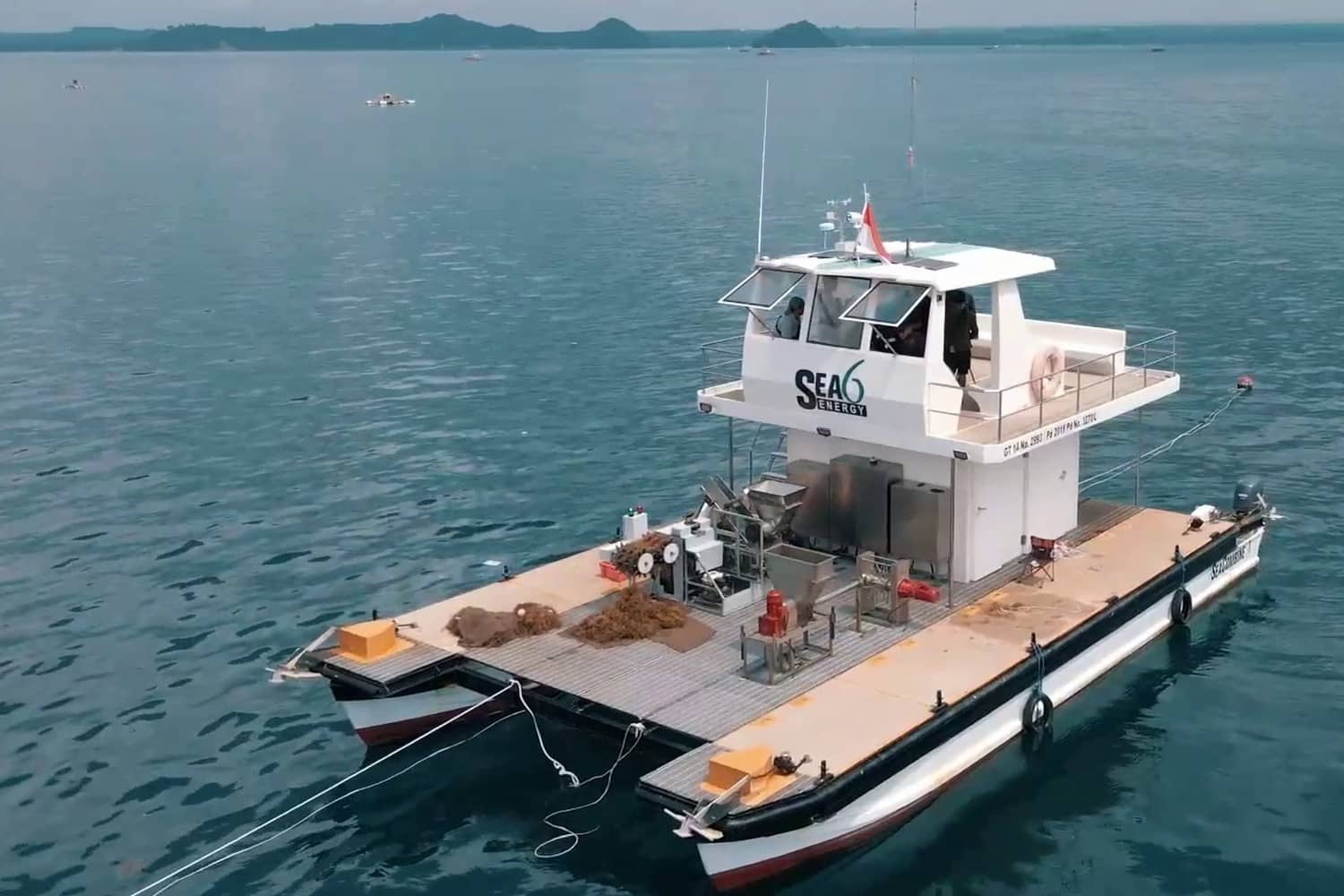
SeaCombine is meant to fix both. According to the company, the platform uses custom workboats, specialised seaweed handling equipment and material handling systems to automate seeding and harvesting so that the process is consistent and repeatable. Sea6 says the system can work in open sea conditions, beyond the shallow and sheltered waters where seaweed is usually grown, and can be customised to local marine conditions.
A company video on the same page shows a twin hulled SeaCombine vessel, harvesting boats, seaweed carriers and an automated machine for tangling seedlings onto lines at a farm in Indonesia. Sea6 says this approach lets it farm seaweed at the scale of square kilometres and turn it into what it describes as a scalable, carbon negative feedstock. That last phrase is a company claim and Dalimss News has not seen an independent carbon audit.
The company also describes a marine agronomy toolkit, which means matching seedlings to each site and season, collecting environmental data across the farm and using it to decide where to intervene. It is the same idea as precision farming on land, applied to rows of ropes in the sea.
Where the facilities are
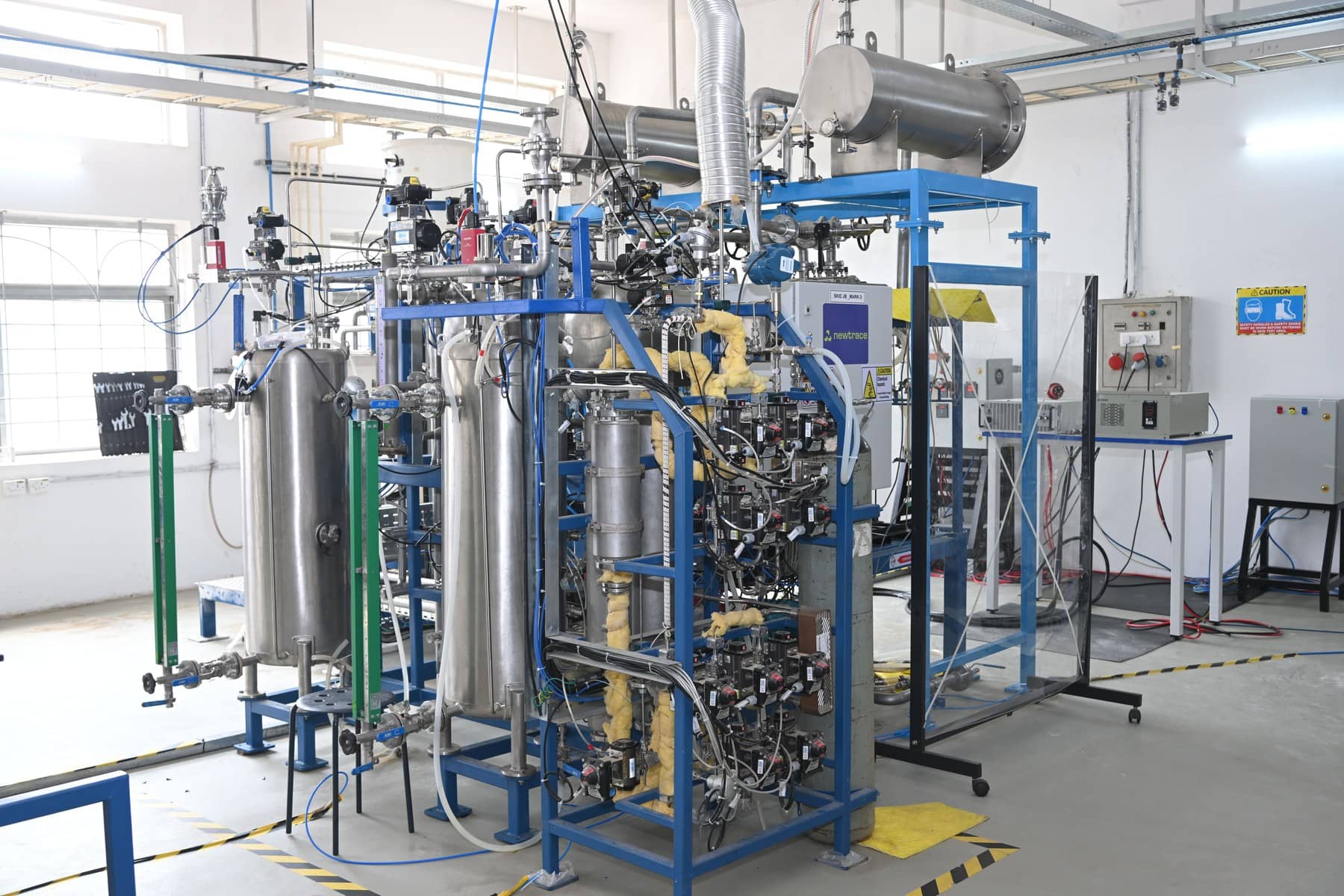
The technologies page lists five main sites. Research happens at C-CAMP in Bengaluru. A plant in Tuticorin, Tamil Nadu makes seaweed based plant biostimulants. A biopolymer pilot plant north of Bengaluru scales up food ingredient and biomaterial processes. A seaweed processing unit in North Bali, Indonesia turns fresh seaweed into ingredients for export, and a Bengaluru unit builds the equipment used on the company's farms. The website also lists an Indonesian office in Nusa Dua, Bali.
Products, mostly for farms
For now, most of what Sea6 sells goes to agriculture. Its product menu lists biostimulant and fertiliser lines such as Agrogain, AG Fort, AG Drip, AG Drench, AG Nutragel and AG Silon, organic fertilisers called Tarma and Spurt, and a fertiliser coating product. It also lists poultry feed and aqua feed products named Shrimplus and Vesigrow, plus food texturising ingredients and novel nutrition ingredients.
The timeline on the story page says the company filed a product patent for its Agrogain bio enhancer in 2015 after trials with agricultural institutes including ICAR and IIHR, received a US patent grant for a biostimulant in 2019 and launched granular and powder products in India, Sri Lanka, Vietnam and the US in 2020. Its partner page says ICAR has worked with Sea6 on testing its bio enhancers, and that FMC, Yara India and the Japanese firm SAI help market or distribute its products. Farmers interested in input efficiency may also find our piece on how Kashi farmers are cutting water use useful.
For fish and shrimp farmers, seaweed based feed additives are part of a wider push to make aquaculture more productive. Uttar Pradesh is expanding its own fisheries base too, as seen in the release of 31 lakh fish seed into Amrit Sarovars in the Varanasi division.
Who has backed it
The partners page lists Sea6 Energy's investors. It says Tata Capital Innovations Fund invested in 2015, Aqua Spark of the Netherlands and Singapore based Silverstrand invested in 2021, and the corporate venture arm of BASF completed the company's Series B in 2022. It adds that Potato Impact Partners and TTV, the corporate venture arm of PETRONAS, invested in 2023. The company's news page also highlights a memorandum of understanding with HPCL on research into fuel from seaweed.
The company was also selected for the UpLink cohort of the World Economic Forum, according to its news and media page.
What to watch
Sea6 Energy's name reflects its original goal of making energy from the ocean, and biofuel and bioplastic still sit on its product menu. Those are the hardest markets to crack, because they compete with cheap fossil fuel based products on price. The company's near term business is clearly in farm inputs, where it already has products and distribution partners.
The bigger question is whether mechanised seaweed farming can scale beyond pilot farms into the open sea at a cost that makes seaweed a common raw material. India has a long coastline and a government push for seaweed cultivation, so a working model from an Indian company would matter. For now, the claims about scale and carbon impact come from the company itself, and independent data will be the real test.