
Sari Artisan Killed, Two Others Injured in Night Attack in Varanasi
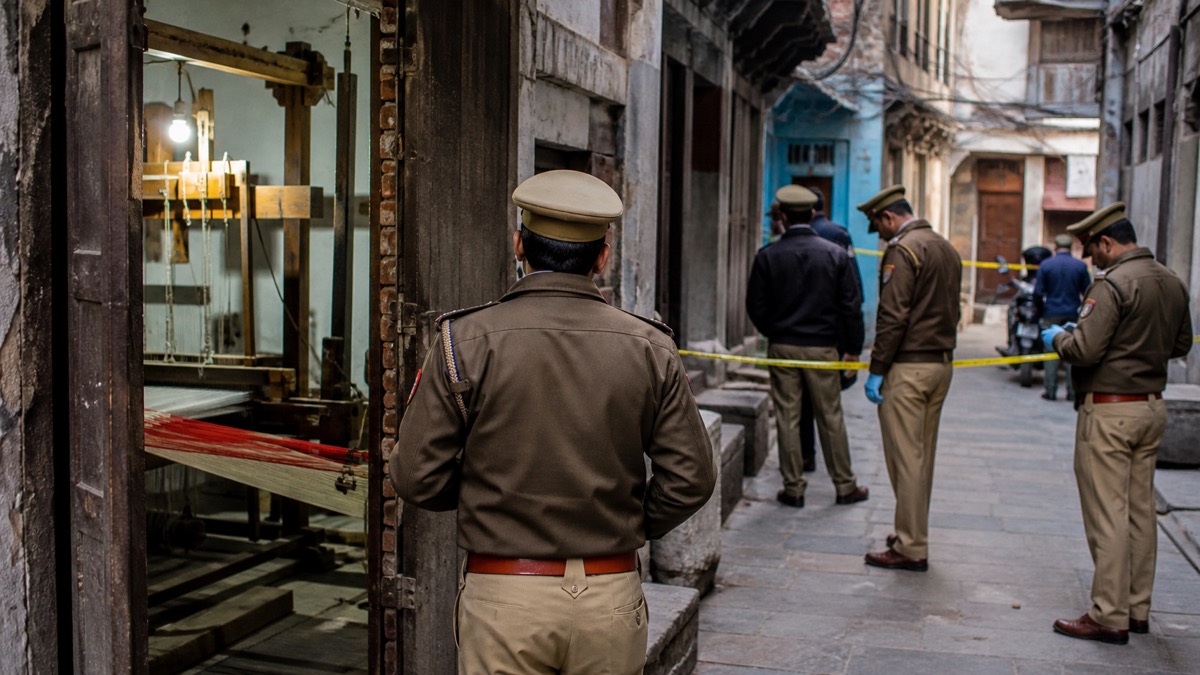
Varanasi: A sari artisan was killed and two other men were injured in a late-night attack in a weaving neighbourhood of Varanasi, prompting a police investigation and renewed concern about safety in the city’s tightly packed artisan localities. The men were reportedly sleeping when the assault occurred. Police are working to establish who carried it out and what led to the violence.
The death has landed heavily in a community where homes, workshops and small trading spaces often share the same narrow lane. Banarasi sari production depends on a web of specialist workers—designers, loom operators, colour preparers and finishers—many of whom work from modest premises and keep irregular hours. An incident outside one such workplace quickly becomes more than a private tragedy because neighbours live and earn in close proximity.
Investigators are expected to rely on statements from the injured men, relatives and residents, along with any available surveillance footage and mobile-phone records. The physical layout of old weaving areas can complicate an inquiry: lanes may have several entry points, cameras may be limited and witnesses may have seen only fragments of what happened. Police have not publicly established a motive, and speculation about personal rivalry, robbery or any other explanation should be treated with caution until evidence is examined.
The two injured men were taken for medical care, according to the initial reporting. Their testimony could become central once doctors consider them fit to give detailed statements. A forensic examination of the scene, the nature of the injuries and the timing of the attack will also help investigators reconstruct the sequence. In cases involving sudden night-time violence, a precise timeline can distinguish verified movement from rumours that spread quickly through a worried locality.
Residents have a legitimate interest in a prompt inquiry, but the pressure to produce an immediate theory should not overtake due process. Police must secure evidence, protect witnesses and communicate confirmed developments without compromising the case. Equally, social-media users should avoid circulating names or images of people who have not been formally accused; doing so can damage reputations and interfere with identification procedures.
The killing also underlines the fragile economics behind the city’s celebrated sari. Artisans often work long hours with limited financial security, and a death can remove a household’s main earner overnight. Beyond the criminal investigation, the family may need access to compensation, legal assistance and community support. For now, the central facts remain stark: one artisan is dead, two men are recovering, and Varanasi Police must establish the truth through evidence rather than conjecture.
Police have not announced a final breakthrough, and that restraint is preferable to premature claims. The next credible update should identify the legal sections invoked, the evidence recovered and the condition of the injured men without exposing private medical details. The artisan’s family also deserves a designated officer who can explain the case process instead of leaving relatives to search for information.
Sources and reporting
Based on local police-linked reporting published on 14 August 2026. The sequence, motive and identity of those responsible remain under investigation; the report avoids naming uncharged individuals and does not present allegations as proven fact.
Related Stories

Ramnagar Day Three Follows Vishwamitra Into the Forest and Mithila
Shivpur Ramlila Stages Narad Moh and Kshirsagar Tableau Through Rain
VMC Puts City on Alert for Navratri and Durga Puja Civic Arrangements
Chowk Becomes Varanasi's First Police Station With ISO 9001 Certificate

World Tourism Day: Guides Welcome Visitors; Namami Gange Cleans Namo Ghat