Rs 50,000 Boat Challan Claim Turns Gurugram Flooding Stunt Into Safety Debate
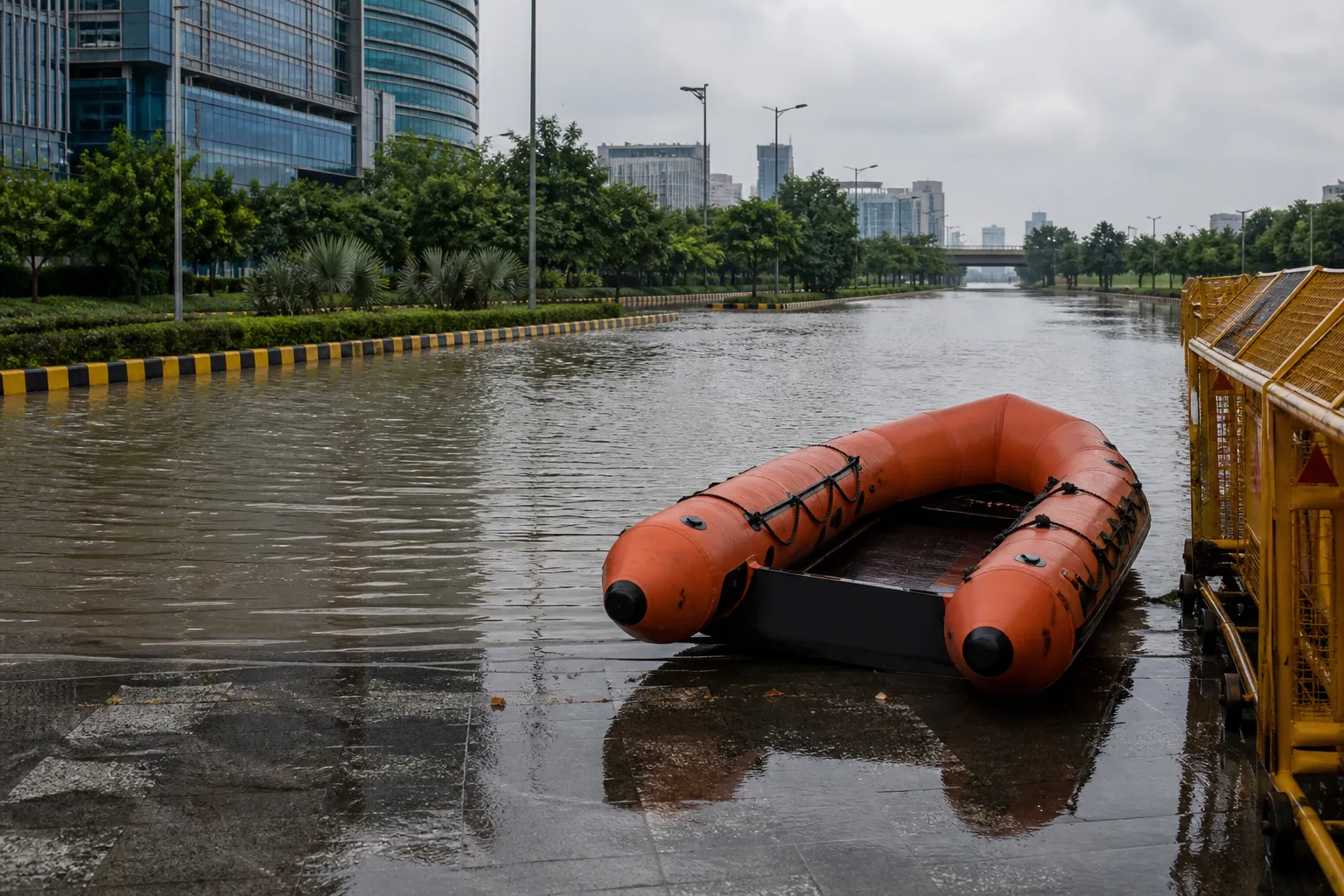
GURUGRAM: A used-car marketplace executive's claim that the company received a Rs 50,000 challan after placing a branded boat on a flooded Gurugram road has turned an advertising joke into a debate about civic failure, public safety and who bears responsibility when waterlogging becomes spectacle.
The executive wrote online that the boat was initially deployed as a joke about the rain, but stranded people began using it to cross the water. She said the challan arrived quickly and contrasted that response with years of flooding. The amount, issuing authority and legal provision had not been independently confirmed at publication, so the claim should not be treated as an established official action.
A useful boat can still create a real hazard
The image of people rowing along a road captures Gurugram's flooding problem with brutal efficiency. It also carries risks that a social-media post can flatten. Floodwater may conceal open drains, broken covers, sharp debris and live electrical equipment. A small craft can capsize or drift into a deeper section, especially when people board without life jackets or trained supervision.
Once stranded commuters were reportedly taken aboard, the activity moved beyond a visual stunt. Questions arise about capacity, rescue readiness, consent and what would happen if someone were injured. Commercial branding does not remove those duties.
That does not erase the civic issue. People should not need an improvised boat to complete an urban commute. Repeated flooding reflects gaps in drainage capacity, maintenance, road levels and emergency communication. Authorities must answer for those systems through data and repair, not merely react to the most viral image.
The challan needs documentary clarity
If a penalty was issued, the notice should identify the offence, location, authority and evidence. Boats do not fit ordinary road-vehicle categories, and the public debate cannot be resolved by a screenshot-free claim or by jokes about registration plates. The company can publish a redacted copy, while the relevant agency can confirm the legal basis without disclosing private information.
Clear documentation also protects against turning enforcement into a marketing asset. A Rs 50,000 claim generates enormous attention; verification separates a genuine civic dispute from promotional storytelling.
Flood communication should not depend on stunts
Gurugram needs official maps showing roads closed by water, safe pedestrian routes, tow points and emergency numbers during heavy rain. Barricades should go up before commuters enter deep stretches. If evacuation boats are genuinely required, they should be operated by trained teams with flotation equipment and access control.
Companies can criticise infrastructure and support residents, but assistance should follow safety standards rather than improvisation. Civic agencies, meanwhile, should not use the risk of a stunt to deflect from the road becoming a channel in the first place.
The viral post succeeded because the visual felt believable to anyone who has watched Gurugram seize up after rain. The responsible next step is less theatrical: verify the challan, publish the flooded location's repair history and explain what will prevent commuters from needing a boat there again.
Sources and reporting
Original Dalimss News report based on a publicly posted company-executive account, verified flooding context and safety guidance available on 11 August 2026; the challan claim was not independently confirmed.
Related Stories
Festive Special to Gorakhpur Gets Gurugram Halt
Fifth Accused Held in Rs 25 Lakh Sector 47 Robbery

Courier Staffer Booked Over 105 Missing One8 Returns
HC Sets Rs 50 Lakh Costs for Accused's Return to India
Gurugram Swimmer, 20, Crosses English Channel