Rising Ganga Slows Crematorium Work at Manikarnika and Harishchandra Ghats
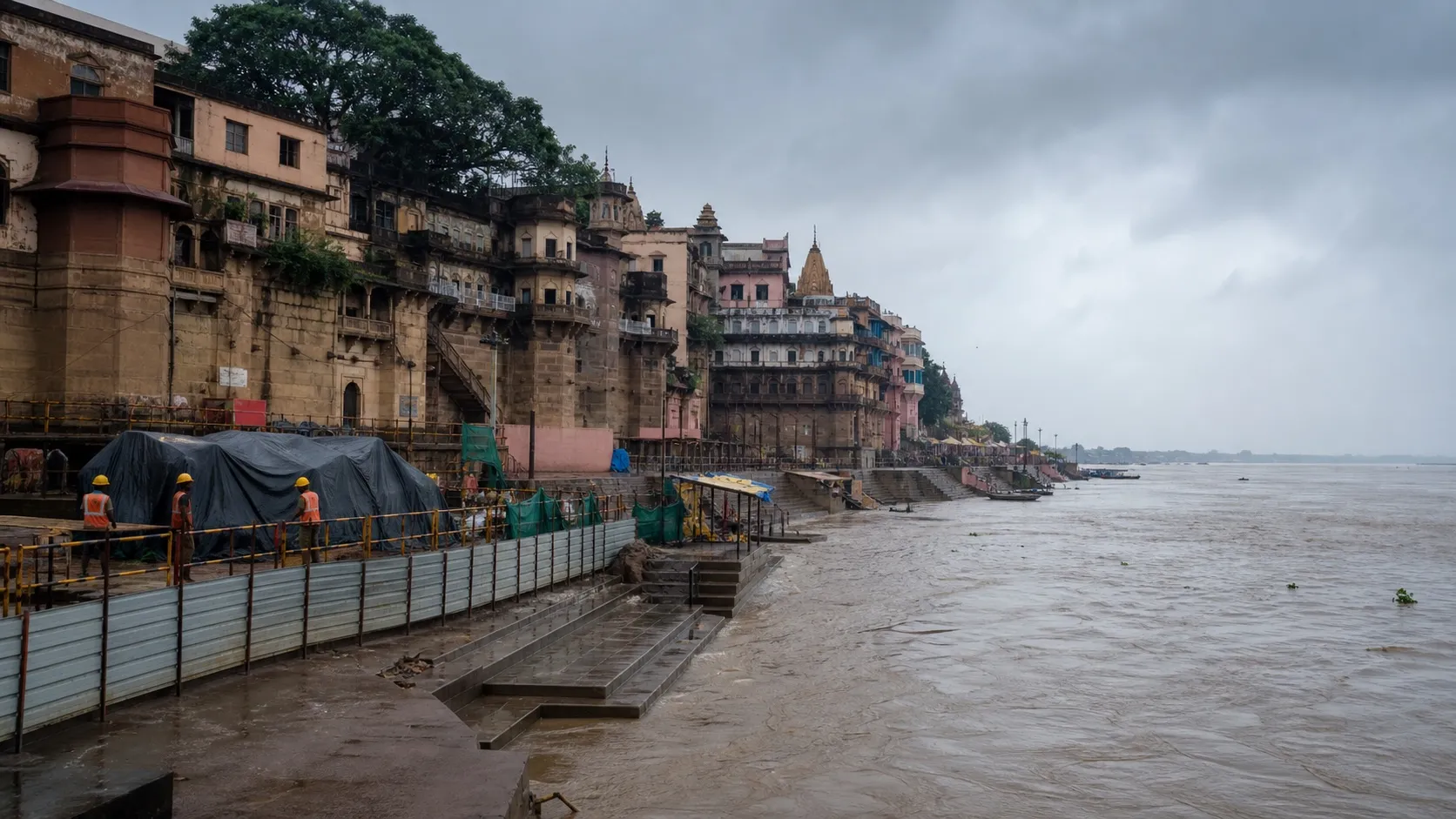
Construction of upgraded crematorium facilities at Manikarnika and Harishchandra ghats has slowed as the Ganga rises through Varanasi, putting the two sensitive riverfront work sites under seasonal pressure. Project officials say more than half of the planned work has been completed and that teams are trying to finish the remaining portions as conditions permit. The Harishchandra Ghat facility is currently expected to begin operating by December, although river behaviour will remain a practical factor in the schedule.
A ghat construction site is unlike an ordinary urban plot. Access routes are stepped and narrow, materials must be moved without blocking worshippers or funeral processions, and active cremation services cannot simply be suspended for civil work. During the monsoon, the working edge shifts as water covers lower platforms. Equipment has to be protected, temporary access reviewed and any activity close to the river adjusted for worker and public safety.
That is why the slowdown should not automatically be read as abandonment, but neither should a target date be treated as guaranteed. Officials need to explain which components are finished, which remain exposed to the water level and what work can continue away from the river. Clear milestones would allow residents to distinguish a weather delay from a contractor or coordination problem.
Modernisation at the two cremation ghats carries unusually high stakes. Families arrive in grief and often from outside the city, depending on priests, boatmen, wood sellers, municipal workers and police to navigate a complex space. Better ventilation, safer platforms, cleaner movement routes and dignified basic facilities can materially improve that experience. At the same time, design and construction must respect long-standing rituals and the people whose livelihoods are woven into them.
The riverfront is also environmentally fragile. Building work requires careful management of debris, fuel, dust and wastewater so that the project intended to improve conditions does not add a new burden to the Ganga. Monsoon pauses can be used to inspect retaining structures, secure materials and review drainage rather than forcing visible activity in unsafe conditions merely to protect a headline deadline.
For now, the most credible update is a measured one: progress has crossed the halfway mark, rising water has reduced the pace, and December is the working expectation for Harishchandra Ghat. The public case for the project will be strengthened by regular status notes and a safe phased opening. At places as consequential as Manikarnika and Harishchandra, completion quality and dignity matter more than an artificially neat calendar.
Sources and reporting
Based on project-status information and locally verified reporting available on August 8, 2026.
Related Stories
Festive Special to Gorakhpur Gets Gurugram Halt
Fifth Accused Held in Rs 25 Lakh Sector 47 Robbery

Courier Staffer Booked Over 105 Missing One8 Returns

HC Sets Rs 50 Lakh Costs for Accused's Return to India

Gurugram Swimmer, 20, Crosses English Channel