Bharata goes home without his brother on Thursday. The fourteenth evening of the Ramnagar Ramlila, according to the day-wise programme of the Shri Ramleela Committee, Ramnagar, Kashi, shows him taking leave of Chitrakoot, returning to Ayodhya and settling at Nandigram, where he will wait out Rama's exile.
It is the evening on which the long Chitrakoot sequence finally lets go. For three nights the lila has stayed in the forest camp, with Bharata pleading, the elders deliberating and Rama holding firm to his father's word. Thursday accepts that answer and turns back towards the city.
In the Ramcharitmanas of Goswami Tulsidas, the text the Ramnagar lila follows, Bharata does not leave empty-handed. He carries Rama's padukas, the wooden sandals his brother gave him, and they become the most important objects in the story for the next fourteen years. Ayodhya gets a ruler in name only, a pair of sandals, while the man who could have taken the crown chooses not to.
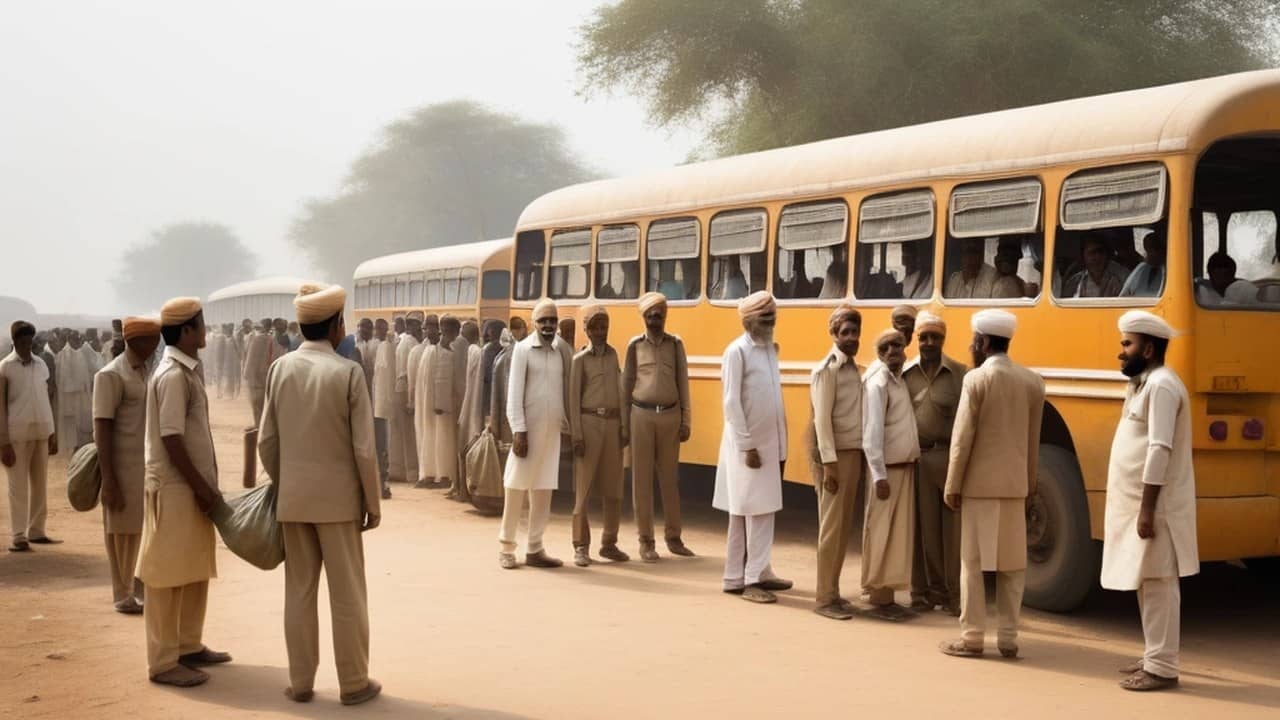
The return itself is a sombre one in the epic. The queens, the gurus and the people who had followed Bharata into the forest travel back with him, and the party from Mithila takes its leave. The city they come home to is still in mourning for Dasharatha, and its rightful king is still in the forest.
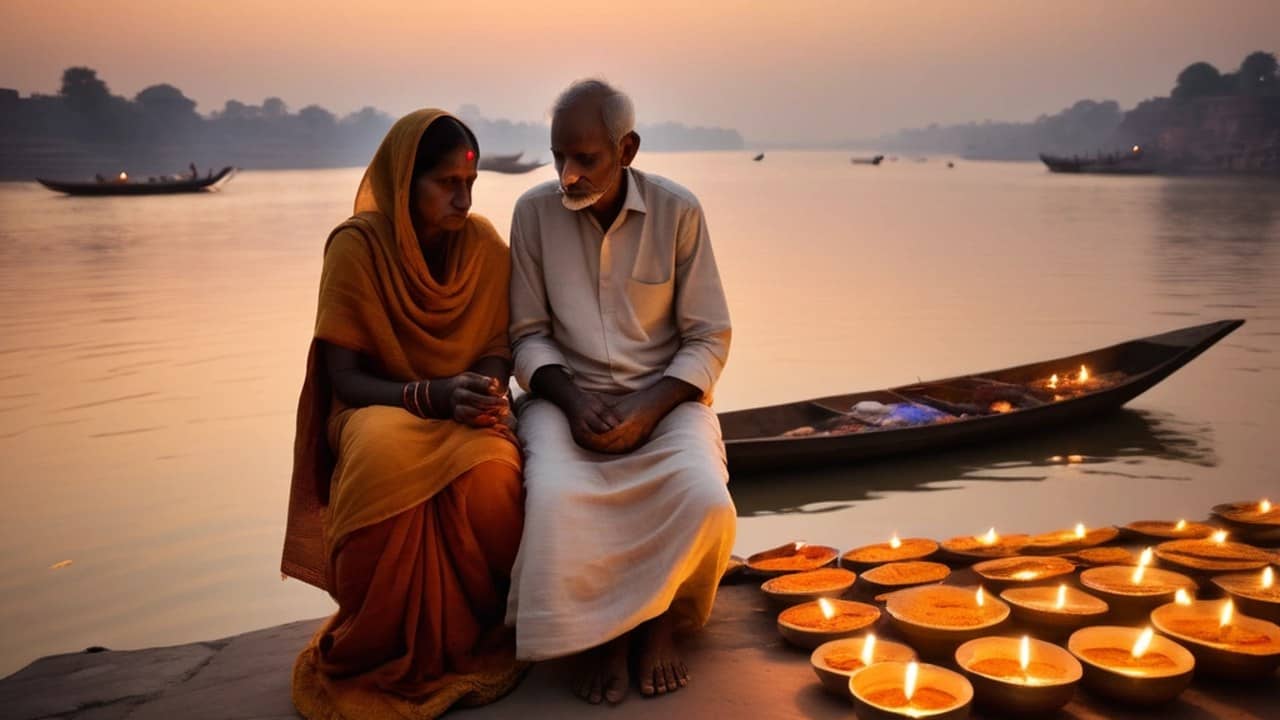
Once in Ayodhya, Bharata places the padukas on the throne and runs the kingdom as their servant. He will not live in the palace. In the Manas he moves to Nandigram, outside the capital, and lives there like a hermit, with matted hair and simple clothes, sleeping on the ground and eating plain forest food, so that his life matches his brother's in exile.
That choice is why the Ramayana tradition remembers Bharata as the model of a devoted brother. Tulsidas gives his love for Rama some of the most tender verses in the Manas. With this episode, the lila also reaches the close of the Ayodhya Kand, the second book of the Ramcharitmanas.
Thursday follows directly from the two evenings before it. On Tuesday, the twelfth day brought Bharata to Chitrakoot and the gift of the paduka. On Wednesday came Vashistha's assembly and King Janaka's arrival at Chitrakoot, the counsel that settled the question of who would rule.
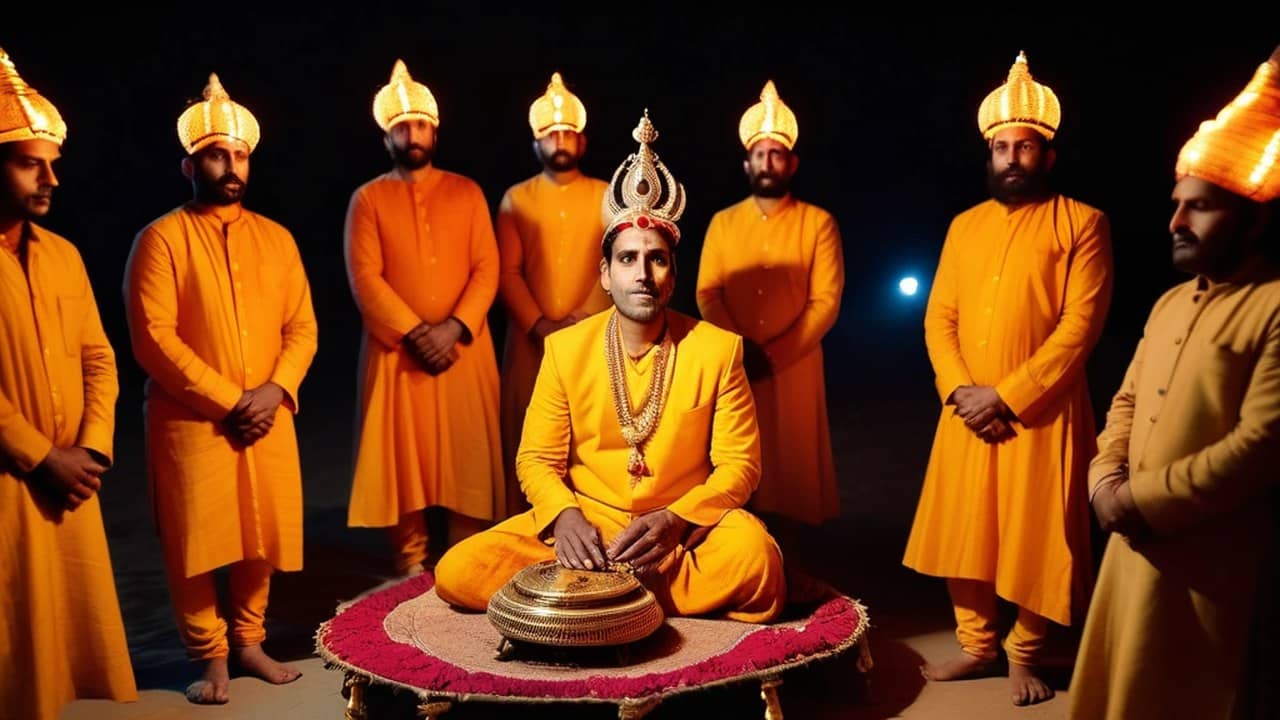
For anyone going to Ramnagar for the first time tonight, it helps to know that the lila asks something of its audience. There is no sound system and no single fixed stage. The verses are chanted by the Ramayanis, the swaroops deliver their lines in their own voices, and much of the action is lit by lamps and torches, so the crowd follows the characters from one site to the next and keeps quiet to hear them.
The committee's table moves the story out of Ayodhya almost at once. Friday, the fifteenth evening, opens the forest chapters proper with the meeting with the sage Atri, the slaying of the demon Viradha, encounters with other sages and the counsel to settle at Panchavati. Saturday brings a darker turn: Surpanakha's disfigurement, the slaying of Khara and Dushana, the abduction of Sita and Jatayu's fight with Ravana.
The full cycle began on 25 September, after the fort administration completed its preparations for the month-long lila, and runs for 31 evenings until 25 October. The committee has fixed Ravana vadh for 20 October, the Bharat Milap for 23 October and Rama's coronation for 24 October.
Outside the lila grounds, the festival season is about to begin. Sharadiya Navratri starts on Sunday, 11 October, and Vijayadashami falls on Tuesday, 20 October, the same evening Ramnagar has set aside for Ravana's end.
There is a thread that runs from Thursday to the last week of the cycle. The brother who walks back to Ayodhya tonight with a pair of sandals will not be seen embracing Rama again until the Bharat Milap on 23 October, more than two weeks of lila evenings away. For the regulars at Ramnagar, Nandigram is where that long wait begins.