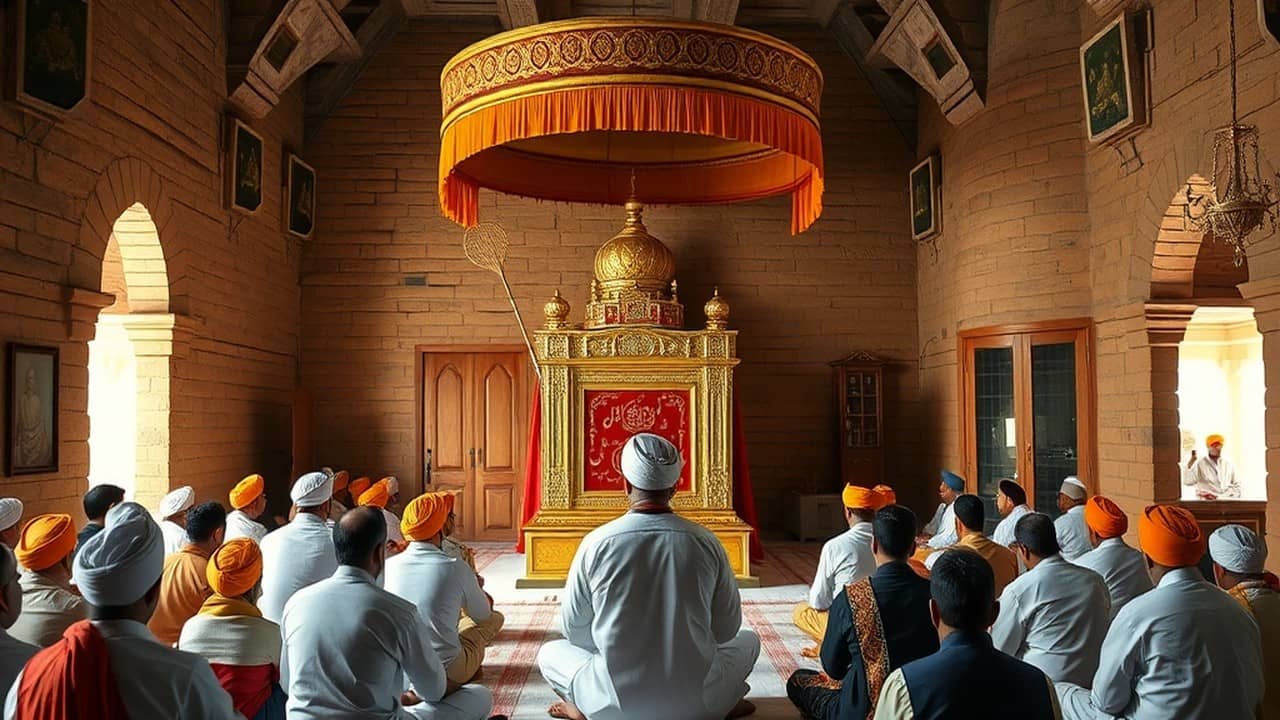
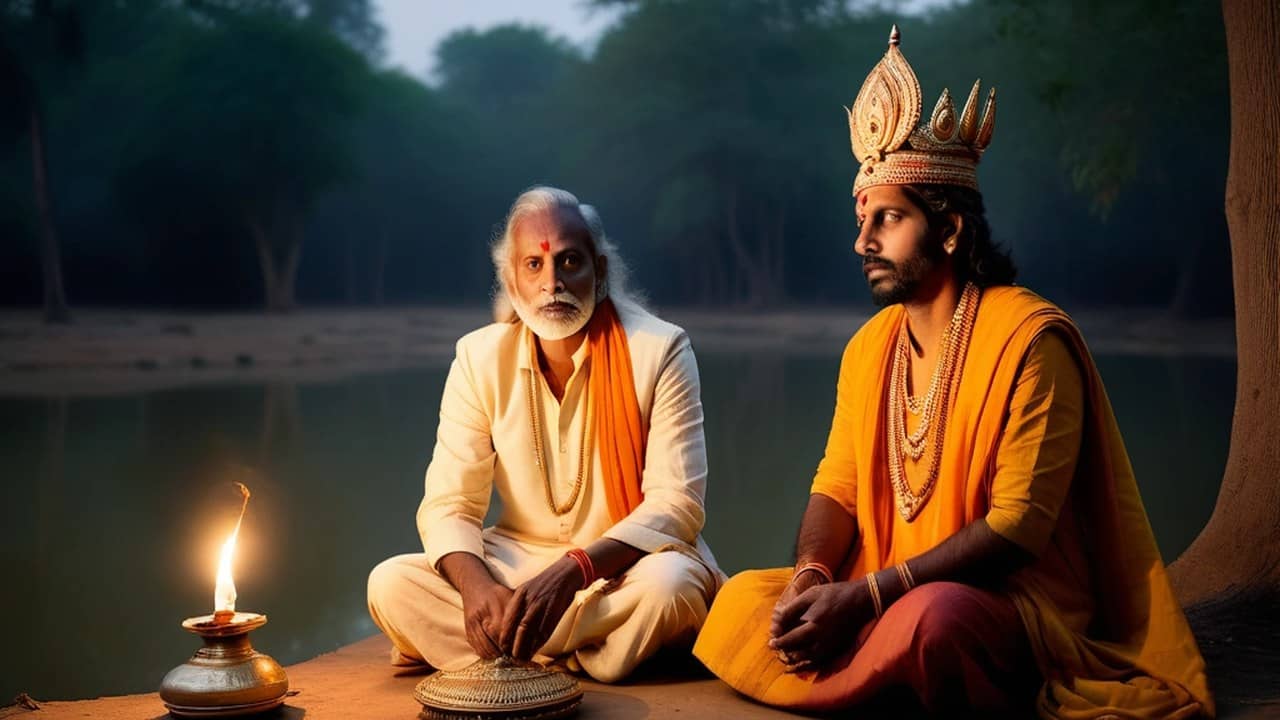
Sita's father reaches the forest on Wednesday evening at Ramnagar. The thirteenth day of this year's Ramlila, according to the programme of the Shri Ramleela Committee, Ramnagar, Kashi, is given over to the assembly called by the sage Vashistha and the arrival of King Janaka at Chitrakoot.
The two items belong together. By this point in the story, Ayodhya has followed Bharata into the forest to beg Rama to come home, and the question of who should rule is still open. Wednesday is the evening when the elders sit down to settle it, and the king of Mithila joins them.
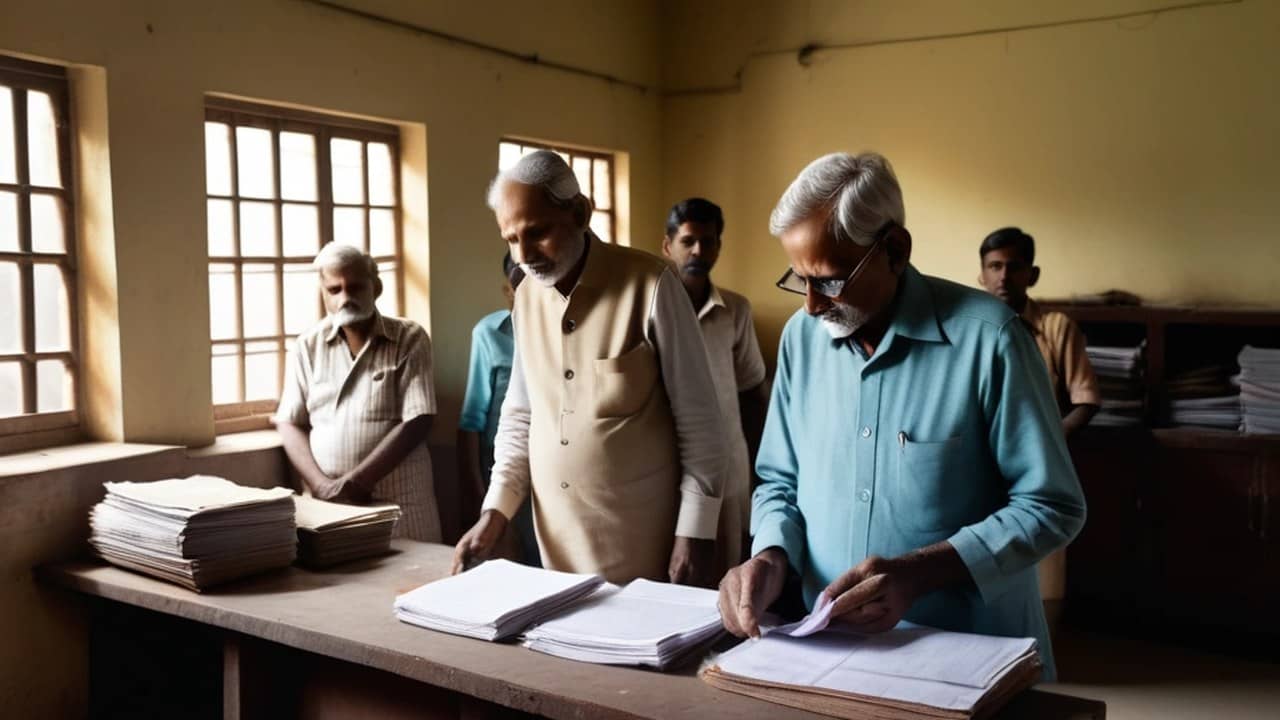
Vashistha is the royal guru of the Raghu clan, the teacher who has guided Dasharatha's household for a lifetime. In the Ramcharitmanas of Goswami Tulsidas, which the Ramnagar leela follows, he is the voice of law and custom among the people gathered at Chitrakoot, and his assembly is where Bharata's plea, Rama's vow and the wishes of the court are weighed against each other.
The outcome is well known to anyone who grew up with the Manas. Rama will not set aside the word his father gave, even with Dasharatha now dead, and no argument in the assembly changes that. What makes the episode moving is less the decision than the manner of it: every party at Chitrakoot wants the same thing for Rama, and each is unwilling to force it on him.
Janaka's arrival adds a second family to the scene. In the epic, the king of Mithila hears of Dasharatha's death and of the exile, and comes to Chitrakoot with his queen and the people of his city. He is a ruler famous for his detachment, yet here he arrives as a grieving relative and as a father who finds his daughter living as a forest dweller.
His presence also changes the weight of the discussion. Janaka is an elder whom both Vashistha and Rama respect, and the Manas gives him a part in the counsel over what Bharata should do. The meeting between Sita and her parents, and her choice to remain at her husband's side in the forest, is among the gentler passages of the Ayodhya chapters.
Wednesday continues a run of forest evenings that began over the weekend. On Monday the leela followed Bharata from a mourning Ayodhya to the Ganga, as set out in our preview of Day 11 and Bharata's meeting with Nishad. Tuesday's programme brought him to his brother's camp, covered in the Day 12 account of Bharata at Chitrakoot and the paduka.
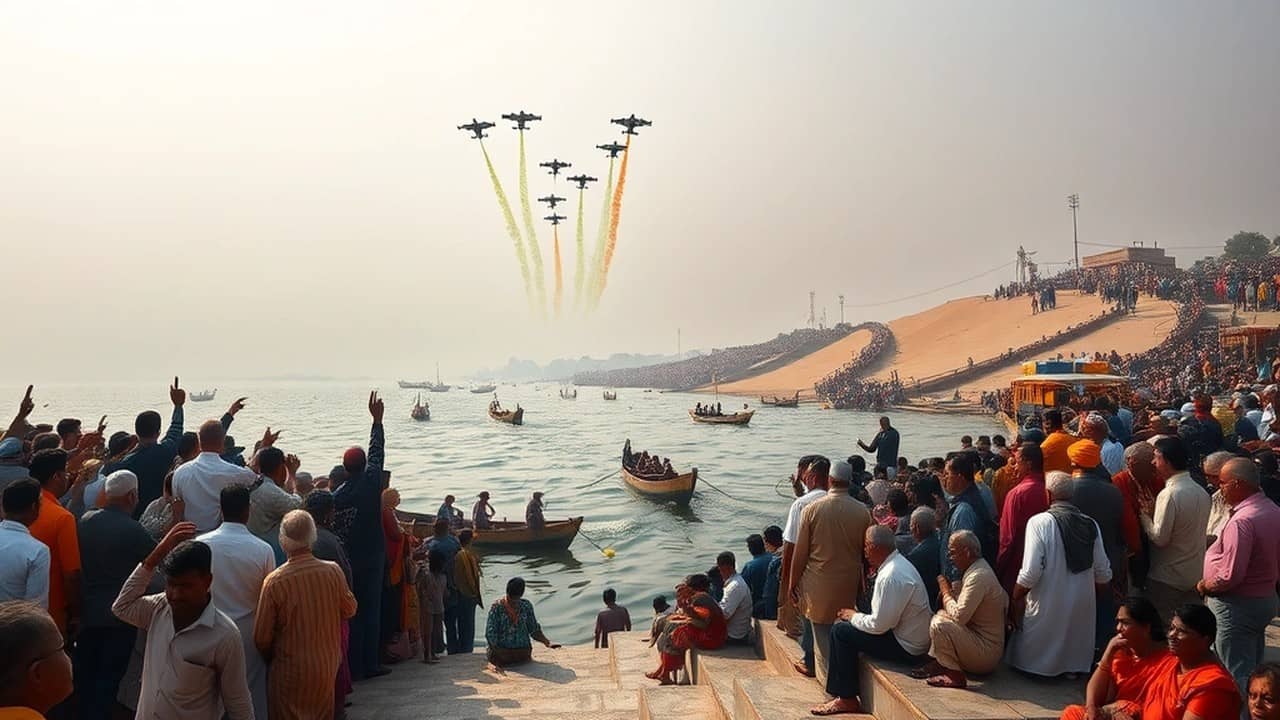
How Ramnagar stages all this is part of the draw. There are no microphones and no fixed stage. The Ramayanis chant the verses, the swaroops speak their lines unamplified, and lamps and torches light much of the action. The sets are spread across the township, so the audience moves with the story, and an assembly scene like Wednesday's asks the crowd for patience and silence rather than spectacle.
The programme moves quickly after this. On Thursday, the fourteenth evening, Bharata takes leave of Chitrakoot, returns to Ayodhya and goes to Nandigram. On Friday the story turns south into the deeper forest, with the meeting with the sage Atri, the slaying of the demon Viradha, encounters with other sages and the advice to make a home at Panchavati.
The wider calendar is set too. The cycle began on 25 September, after the fort administration finished its preparations at the lila sites, and runs for 31 evenings to 25 October. The committee's table places Ravana vadh on 20 October, the Bharat Milap on 23 October and Rama's coronation on 24 October.
The city's own festival season is about to meet the leela. Sharadiya Navratri starts on Sunday, 11 October, and Vijayadashami falls on Tuesday, 20 October, the same date the committee has fixed for Ravana's end at Ramnagar.
For the families who come back to Ramnagar year after year, the Chitrakoot evenings are often the ones remembered longest. There is no war yet and no villain on the field. Wednesday belongs to the elders, a royal guru and a grieving king among them, trying to persuade one young man to come home, and to his quiet refusal.