
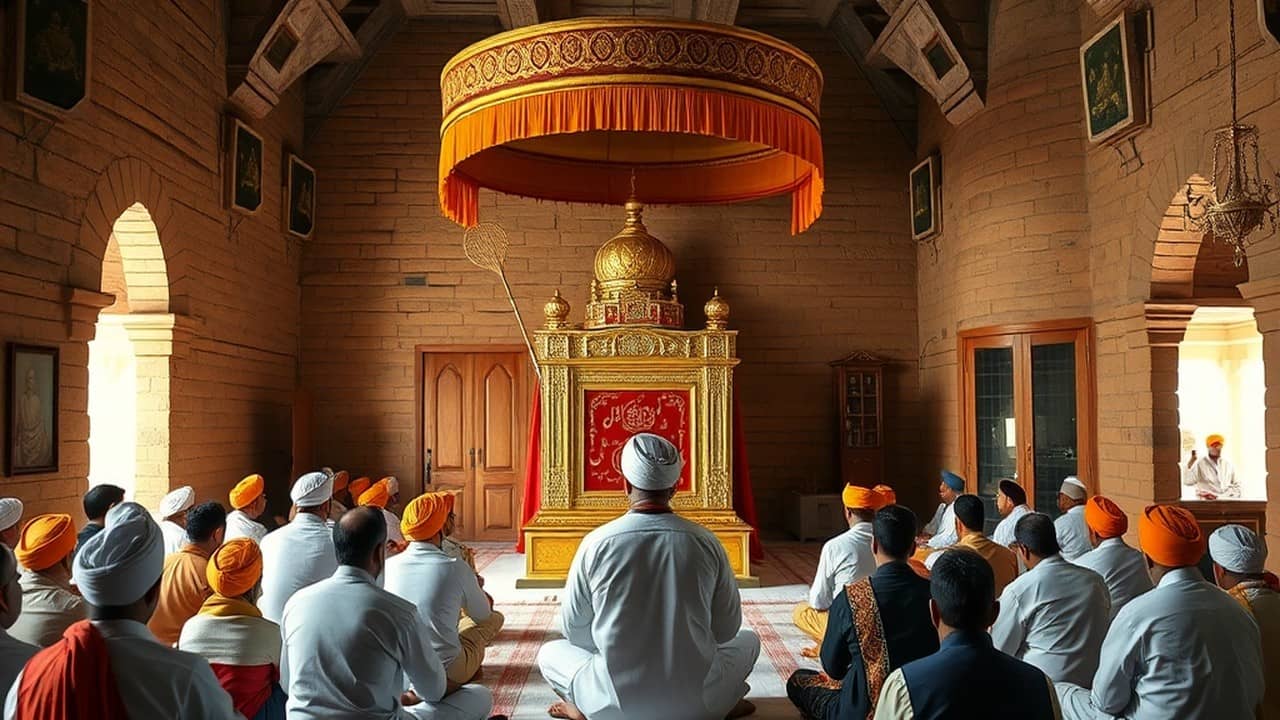
Members of Ramnagar's Sikh sangat gathered at Ramnagar Fort on Monday to offer ardas before a rare handwritten Guru Granth Sahib kept there, marking the Jyoti Jot Gurpurab of Guru Nanak Dev. The prayer was held at the invitation of Dr Anant Narayan Singh of the Kashiraj family, in a building near the fort's Darbar Hall.
The Jyoti Jot day remembers the passing of the first Sikh Guru, who left his mortal body at Kartarpur in 1539. This year's observance was the 487th. Every year on this day the sangat in Ramnagar goes into the fort to pray before the scripture kept there. The ardas is the standing prayer with which Sikh congregational worship is offered and concluded.
Guru Nanak was born in 1469 at Talwandi, now Nankana Sahib in Pakistan. His teaching rests on remembering one God, earning by honest work and sharing with others, and his hymns form the opening of the scripture the sangat honoured on Monday.
The gathering opened with shabad kirtan by Gyani Baldev Singh. The programme lasted about an hour and a half, with the sangat seated in prayer as the hymns were sung. Dr Anant Narayan Singh was present for the prayer.
At the close, the Sikh community presented Dr Singh with a siropa, the robe of honour that the sangat offers as a mark of respect. The fort, in turn, served halwa to everyone as prasad.
Gurdwara Singh Sabha president Manjeet Singh attended along with Ravinder Singh Laddu, Amolak Singh, Ranjeet Singh, Gurcharan Singh, Vicky Singh and Happy Singh. Many others from the Sikh community joined them.
The manuscript is the reason the gathering takes place inside the fort rather than at a gurdwara. Handwritten copies of the Guru Granth Sahib are rare, since the scripture has been printed for more than a century, and the sangat describes the Ramnagar copy as centuries old. Dalimss News could not establish when it was written or how it came into the care of the Kashiraj family.
Some context helps place any such manuscript. The Adi Granth, the first compiled form of the scripture, was put together by the fifth Guru, Guru Arjan Dev, in 1604. The tenth Guru, Guru Gobind Singh, later added the hymns of his father, Guru Tegh Bahadur, and in 1708 declared the Granth the eternal Guru of the Sikhs. Before printing became common, the scripture was copied by hand, and the manuscripts that survive are held by gurdwaras, libraries and families.
Guru Nanak's own link with Kashi is old and well remembered. He visited the city during his travels, and Gurdwara Gurubagh in Varanasi marks the place associated with his stay. The Ramnagar ardas adds a smaller, quieter thread to that history, one kept alive by a single family's invitation each year.
Ramnagar Fort, the 18th-century seat of the Kashiraj family on the eastern bank of the Ganga, is busy this month for another reason. The town's month-long Ramlila, which opened on 25 September after the fort administration finished its preparations, is now in its Ayodhya chapters, and on Monday evening it was on the night Bharata sets out for Chitrakoot. The household that presides over the Ramlila also opens its doors each year for the Sikh prayer.
Old handwritten texts in Varanasi have drawn fresh attention this year. In August the Union tourism secretary toured the new heritage galleries at the Nagari Pracharini Sabha, where rare manuscript pages of Hindi writers are now on display.
The Ramnagar copy sits in a different category. It is not an exhibit for visitors but a scripture that Sikhs regard as the living Guru, and for the sangat the annual visit is an act of worship rather than a heritage tour.
Monday's ardas ended with halwa handed out by the fort to the sangat. If the custom holds, the same invitation will go out from the fort to Ramnagar's Sikh families when the next Jyoti Jot day comes round.