Rajiv Chowk Slip Roads Plan Trades Four Underpasses for More Traffic Capacity
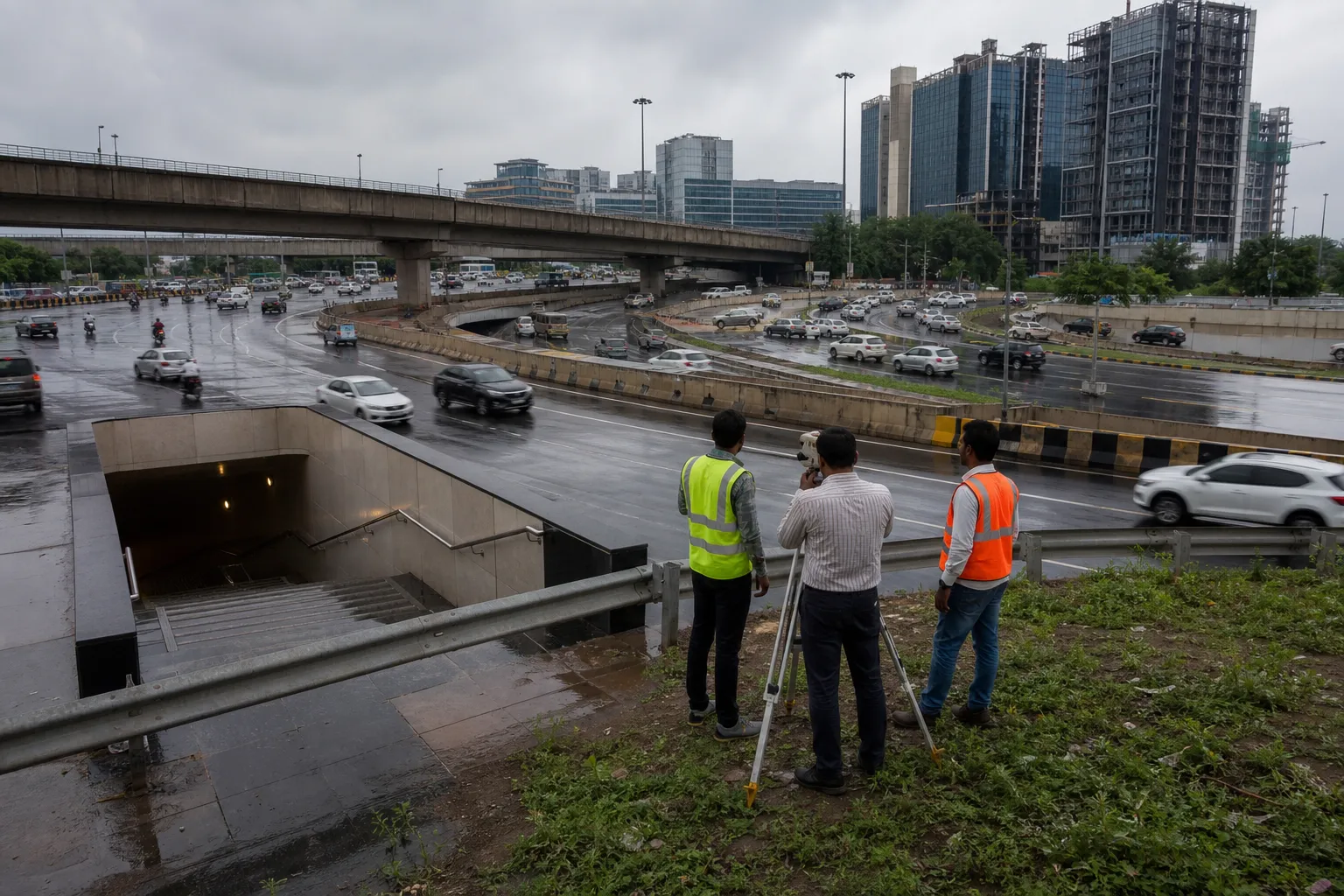
GURUGRAM: Rajiv Chowk is heading for another redesign. The National Highways Authority of India plans to close four underground lanes built for pedestrians, cyclists and rickshaws, fill the hollow passages and use the recovered space to construct slip roads for motor traffic. Work is expected to begin as early as next month.
The stated goal is straightforward: add road capacity at a junction where Delhi-Jaipur traffic meets thousands of daily city trips. Yet the plan also exposes an uncomfortable planning failure. Infrastructure created to keep non-motorised users away from fast vehicles saw limited use, recurring waterlogging and encroachment. Instead of being made safer and more accessible, it is now set to disappear.
Four passages did not work as intended
The underground lanes were built during Rajiv Chowk's redevelopment alongside the vehicle underpass. They were meant to connect all sides of the junction without forcing pedestrians, cyclists and rickshaws across high-speed carriageways. Officials say the passages remained sparsely used and were repeatedly occupied or encroached upon. Water accumulation further reduced their reliability.
Those outcomes matter because low usage does not automatically mean there was no need. A dark, flooded or poorly connected underpass can repel the very people it was designed to serve. The relevant test is whether users received a safe, visible and continuous route from the surrounding streets to the underground crossing.
Highway officials said the four passages will be closed within two months and filled before slip roads are built. The additional lanes are expected to distribute turning traffic and reduce queues at the junction.
More structures are already on the drawing board
The redesign is not limited to slip roads. Alignments for two additional underpasses have been finalised and a detailed project report is being prepared. Two flyovers above the existing NH-48 flyover are also planned for Delhi-Sohna and Sohna-Delhi movements.
That is a substantial amount of new concrete at one junction. Each layer may solve a particular traffic conflict, but it can also push congestion to the next merge, signal or service road. The design therefore needs traffic modelling that includes peak-hour lane changes, bus stops, auto stands and access to nearby government offices.
Pedestrian safety cannot be the leftover item
Before the four passages are sealed, NHAI and the city agencies should publish the replacement walking and cycling routes. They should show where a person can cross, how far the detour will be, whether the path is step-free and how it will remain usable during construction. Surface crossings need signals, refuges, lighting and speed control if underground access is removed.
Rajiv Chowk is not used only by motorists passing through. Workers change buses there, residents walk to offices and hospitals, and rickshaw passengers complete the final part of their journey on foot. A traffic project that saves cars several minutes but exposes these users to faster lanes would simply transfer the cost.
The slip-road plan may improve capacity, especially at turning points. Its credibility, however, will depend on whether the city learns why the original passages failed. Closing underused infrastructure is defensible only when a safer alternative is ready, funded and visible before the barriers go up.
Sources and reporting
Original Dalimss News report based on the 11 August 2026 project statements of highway officials and verified details of the proposed Rajiv Chowk redesign.
Related Stories
Festive Special to Gorakhpur Gets Gurugram Halt
Fifth Accused Held in Rs 25 Lakh Sector 47 Robbery

Courier Staffer Booked Over 105 Missing One8 Returns
HC Sets Rs 50 Lakh Costs for Accused's Return to India

Gurugram Swimmer, 20, Crosses English Channel