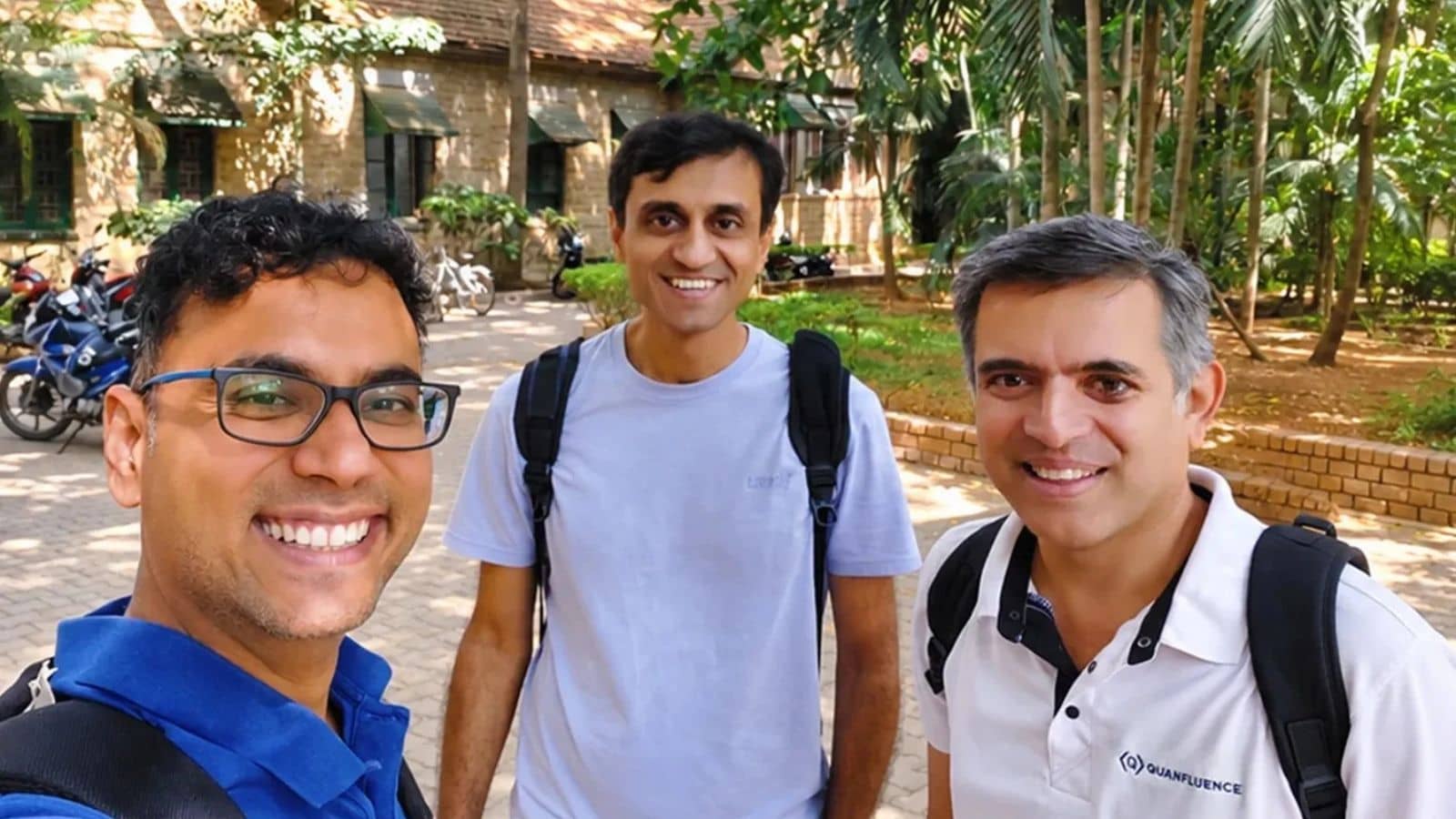
BENGALURU: Quanfluence, a Bengaluru company trying to build a quantum computer that runs on light, has raised US$10 million in a round led by Chiratae Ventures. The company announced the funding on 7 October 2026.
Pi Ventures, which led Quanfluence's seed round in 2024, came back as a co-investor. Rainmatter, the investment arm of Zerodha, joined as a new backer. The company has not disclosed its valuation or how the round was split between investors.
What the money is for
Quanfluence says the funds will go into its full-stack photonic quantum computer. Full stack here means the company is trying to build every layer itself: the photonic chips that create and steer light, the control electronics that drive them, and the software that sits on top. Its stated roadmap is early processors by 2027 and larger, scalable machines by 2029.
Most quantum computers people have heard of use superconducting circuits that must be cooled to a few thousandths of a degree above absolute zero. Photonic machines use particles of light instead. Quanfluence's product page says its approach needs far less extreme cooling, which it argues makes the system cheaper and easier to run. That is the company's own case for photonics, and like every quantum roadmap it still has to be proven at scale.
The design it is chasing is a continuous-variable photonic machine using what is called measurement-based quantum computing. The company's site describes a target of thousands of qubits. No processor from that line has been shown publicly yet.
What it has built so far
According to the announcement, since its last round the team has designed and fabricated several photonic integrated circuits and electronic integrated circuits, worked out low-loss ways to couple chips to optical fibre, and demonstrated the generation of quantum light states. These are building blocks, not a working computer, but they are the parts that usually take the longest.
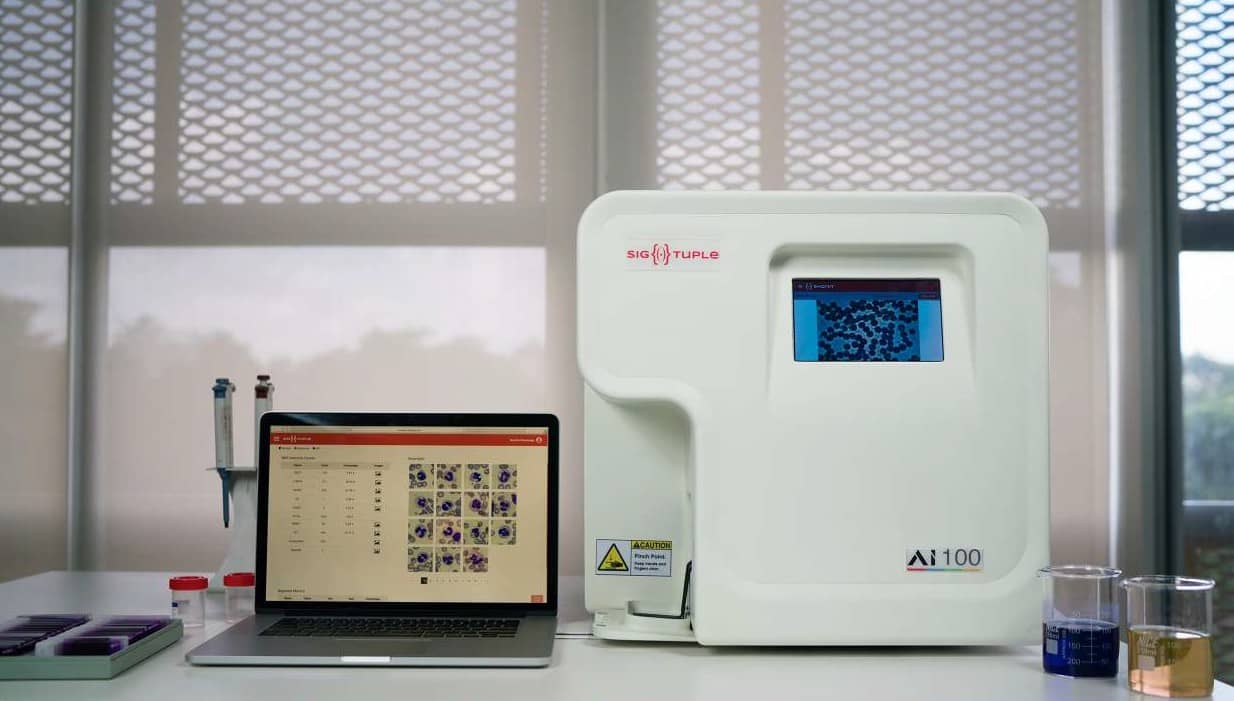
The company also sells hardware today. Its photonic Ising machine, a quantum-inspired optimiser, has been turned into a product. Quanfluence says the time-multiplexed machine combines electronic multiply-and-accumulate with photonic non-linearities and can handle optimisation problems with up to 100,000 variables, the kind of maths behind route planning, logistics and some machine learning tasks. Its catalogue also lists a homodyne detector, a single photon detector and a quantum random number generator.
"Our goal at Quanfluence has never been to build a better experiment. It has been to build a useful quantum computer," co-founder and CEO Sujoy Chakravarty said in the release. He said the team had built the integrated circuits, electronics, optics and algorithms, and that the funding would let it bring those pieces into one system.
The team and the investors
Quanfluence was started in 2021 by Sujoy Chakravarty, Ravi Mehta, Biman Chattopadhyay, Aditi Vaidya, Prof. Anil Prabhakar of IIT Madras and Prof. Sandeep Goyal of IISER Mohali. It is incubated at the IIT Madras Incubation Cell. Three of the founders previously built Silicon and Beyond, a semiconductor IP company that was acquired by Synopsys, and the company leans on that chip design history.
Chiratae managing director and partner Venkatesh Peddi said the fund wants to back indigenous deep tech bets and sees photonics as one of the more credible routes to a quantum machine that scales outside the lab. Shubham Sandeep, partner at Pi Ventures, said the follow-on investment reflects the progress the team has made since the seed round. Abhinav Singh Negi, who leads climate and deep tech at Rainmatter, said the company is reducing long term hardware risk with near-term revenue from its existing devices.
The round adds to a busy year for Indian quantum hardware startups, many of them tied to IIT Madras. Dalimss News recently reported on Quanastra, which builds superconducting single photon detectors, and on the IIT Madras deep tech fund that reached a Rs 450 crore first close in September.
What to watch
A US$10 million cheque is modest by global quantum standards, where large players spend far more each year. The real test for Quanfluence is the 2027 target: whether it can show an early photonic processor built from its own chips, and publish numbers on how many qubits it runs and how well it holds errors in check. Until then, its Ising machine and detectors are the parts of the business that customers can actually buy.