Potholes and Monsoon Mud Leave Bhikharipur’s Rural Link Road Difficult to Navigate
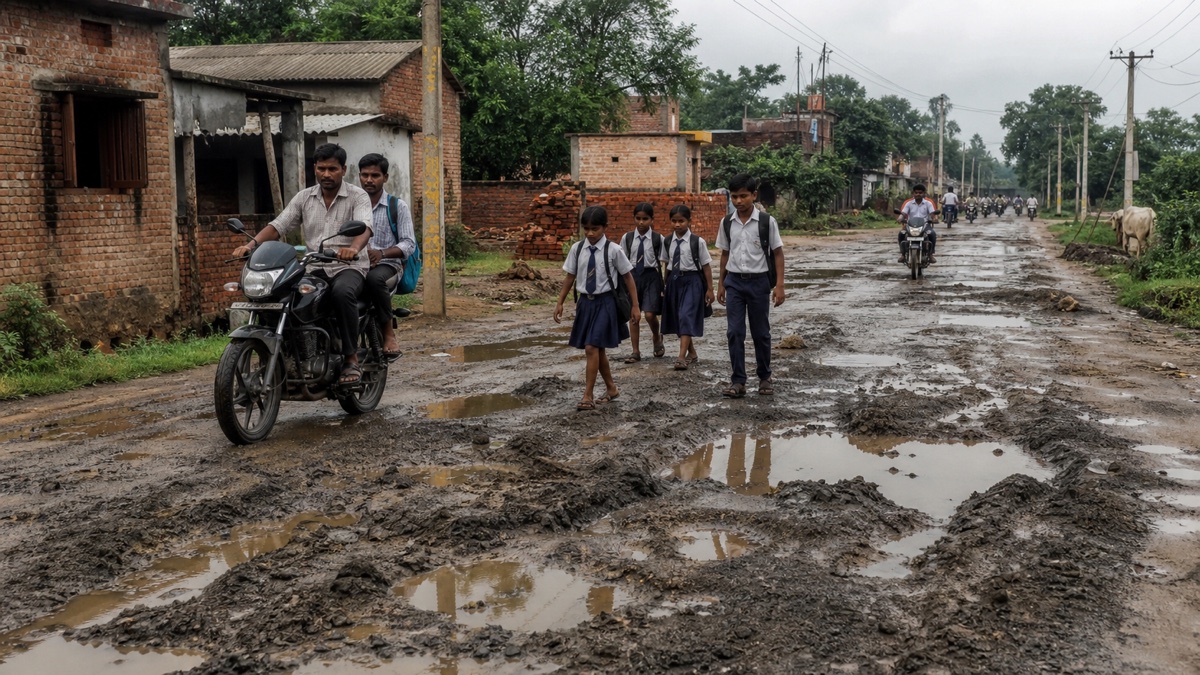
A rain-damaged road through Bhikharipur village in Varanasi’s Araji Line area has become a daily obstacle course of potholes, standing water and mud, residents say. The route links the Varanasi and Mirzapur sides through the rural Jamua road and is used by hundreds of people, including schoolchildren, patients, farmers and two-wheeler riders.
Sections of the surface have lost visible bitumen and aggregate, according to the ground report, leaving depressions that fill after rain. Water hides the depth and edge of a pothole, forcing riders to choose between braking suddenly, entering the mud or moving towards oncoming traffic. At night, when contrast is poor, even a familiar road can catch a commuter out.
Villagers said the deterioration has continued for several months and that the monsoon has made it substantially worse. They have asked the administration and Public Works Department to arrange repairs but said no work had begun when the latest report was filed. The report did not include a departmental response, so the responsible authority’s schedule and assessment remain unknown.
For a rural link, the damage has effects beyond an uncomfortable journey. A school bus or bicycle takes longer, a patient’s ride becomes rougher, and farmers moving produce risk delay or damage. Mud can also narrow the usable carriageway, causing a line of vehicles to form behind the slowest rider. When people begin using an unpaved shoulder as an alternative lane, its edge can break down too.
Immediate work need not wait for a full resurfacing contract. Officials can first mark the worst cavities, clear blocked drainage and place safe temporary filling where water is not still flowing through the road base. A technical inspection should identify whether the failure comes mainly from an exhausted surface, weak shoulders, poor drainage or repeated heavy loads. Patching without fixing the water path often means repairing the same spot after the next rain.
The longer solution requires a scope and a public timeline. Residents should be able to see which agency owns the stretch, when it was last renewed, whether funds have been sanctioned and whom to contact if temporary repairs fail. Photographs taken with a recognisable location and date can support a complaint, but they should not require villagers to stand in live traffic.
Road complaints are sometimes dismissed as routine monsoon inconvenience. Bhikharipur’s case shows why that is too casual. A pothole is a small infrastructure defect until a motorcycle falls, an ambulance slows or a child steps into the traffic stream to avoid it. The district administration should inspect the link, publish its findings and secure the surface before repeated waterlogging turns a repairable road into a larger reconstruction job.
Sources and reporting
Based on an August 16 ground report and accounts from Bhikharipur residents. No response from the Public Works Department was included in the source report.
Related Stories

Dalimss 20 Under 40 Varanasi 2026: Meet the 20 Young Achievers Making Their Mark on Banaras

Biker Dies After Thar Hit on Golf Course Road

Court Orders Probe Into Body Handling Lapses
Two Held After Rs 54,000 Robbery Near Rampura
Manduadih Fan Warehouse Fire Burns for Hours; No Deaths Reported