Police Halt Funeral After Questions Arise Over Woman’s Drowning Near Chaubepur
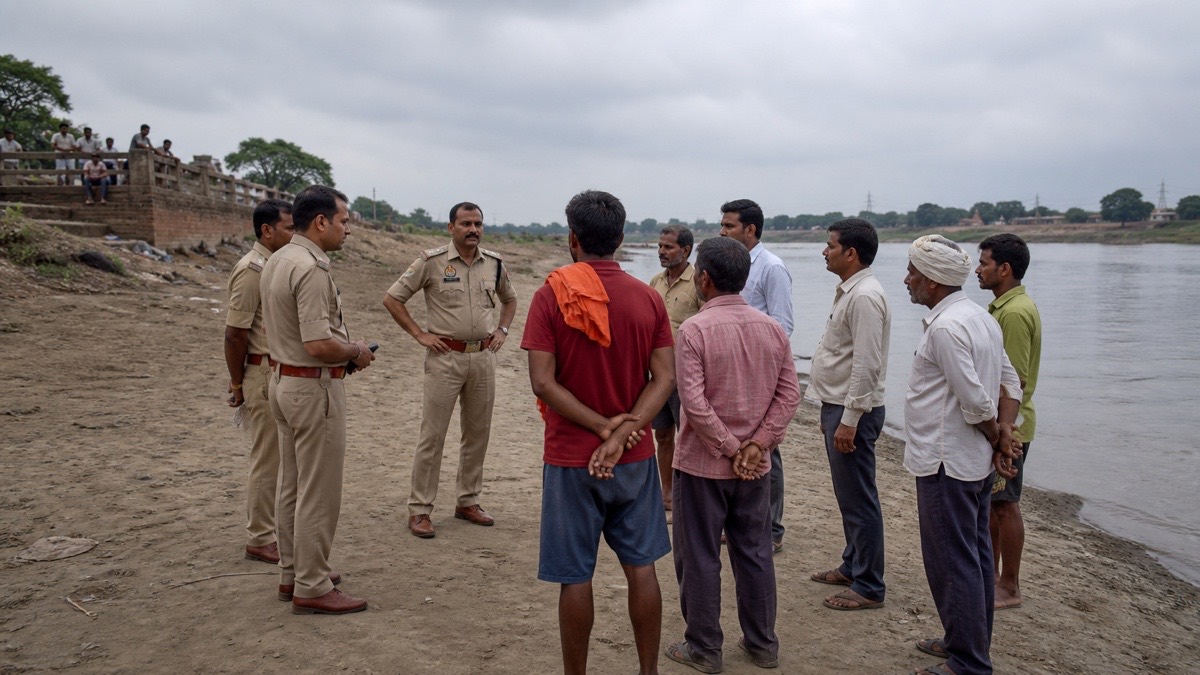
VARANASI: Police intervened before the funeral of a 48-year-old woman who died after drowning in the Nad river near Dhaurahra village in the Chaubepur area, asking the family to explain the circumstances and allowing the death to be examined before the last rites proceeded.
The action does not by itself indicate that a crime occurred. When a sudden or accidental death reaches police after preparations for cremation have begun, officers may need to secure medical and witness information that cannot be recovered later. The family provided an account of how the incident happened, according to the report.
Why police may pause a funeral
An unexplained death requires documentation of the place, time and circumstances. If the body has not undergone a legally required examination, police may seek an inquest or post-mortem to rule out injury, foul play or another cause inconsistent with the initial account.
That process can be deeply distressing for relatives who believe the death was accidental and are trying to complete funeral rites. Officers must explain the legal requirement respectfully, avoid treating the family as suspects without evidence and complete formalities without unnecessary delay.
What the inquiry should establish
Investigators should record who last saw the woman, why she was near the river, the depth and current at the location, how she was recovered and whether medical assistance was attempted. Statements should be compared with any visible injuries and the medical opinion.
The Ganga and connected rivers and drains in the district have been carrying more water following upstream rain. Even smaller river stretches can become hazardous when banks are slippery or familiar paths are submerged. If the location lacks a barrier or warning, the district should assess whether a basic safety intervention is required.
No allegation of wrongdoing had been established in the information available at publication. The purpose of the police step was to preserve the possibility of a proper finding before evidence was lost.
Once the required examination and paperwork are complete, the family should be able to proceed without avoidable administrative obstruction. Authorities should communicate the result promptly and correct rumours that often spread when police arrive at a funeral.
The case is a reminder that verification after an unexpected death is not a verdict against the family. Done properly, it protects both the deceased and relatives by creating an official account of what happened and preventing later suspicion from replacing evidence.
Riverbank communities can help prevent similar uncertainty by reporting accidental deaths immediately, even when the family believes the cause is obvious. Early information allows rescue attempts, medical assessment and lawful documentation. It also prevents a painful interruption later, when relatives have already gathered and every procedural question feels like an accusation.
Sources and reporting
Based on an Amar Ujala report published on August 12, 2026. The circumstances of the 48-year-old woman’s death remained under police examination; no wrongdoing had been established.
Related Stories

Kashi Marks Baba Lat Bhairav’s Wedding Day After Tilak and Haldi Rituals

Over 800 Doctors Converge as API UP Chapter Conference Opens in Rohania
Chitaipur Arrests Two After Homeguard Anuradha Tiwari’s Alleged Suicide
Lanka Registers Assault Case After Narottampur Youth Dies During Treatment
Storm Uproots Electric Pole in Cholapur’s Jagdishpur; Local Supply Cut