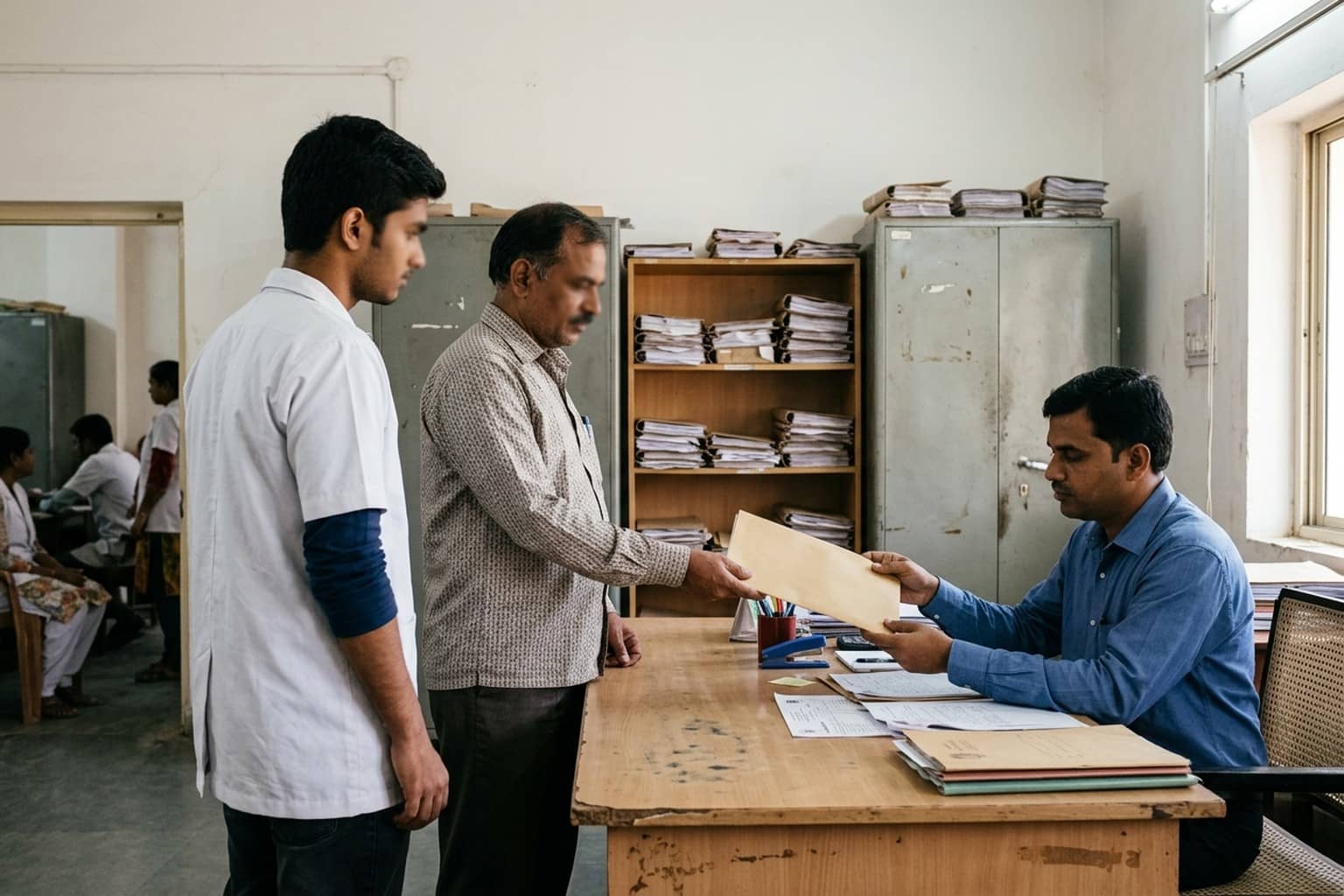

Doctors in India can no longer promote themselves as the "best", "No.1" or "100% successful", under guidelines the National Medical Commission (NMC) issued on Tuesday, 6 October 2026. The rules also cover hospitals and medical institutions, and they reach into social media, influencer tie-ups and content made with artificial intelligence.
The Guidelines on Ethical Advertising and Public Communication by Hospitals/Medical Institutions and Registered Medical Practitioners were issued by the NMC's Ethics and Medical Registration Board under public notice No. R-13014/01/2024-Ethics, signed by NMC Secretary Dr Raghav Langer. They came into force immediately.
The notice refers to Writ Petition (Civil) No. 1160/2023 in the Supreme Court and to the Indian Medical Council (Professional Conduct, Etiquette and Ethics) Regulations, 2002. Its stated aims include protecting patients from misleading claims and keeping health communication factual and ethical. Copies have gone to state health secretaries, state medical councils, directors of medical education and the dean or principal of every medical college.
What doctors cannot do
The list of banned practices is long and specific. A registered medical practitioner cannot use phrases such as "Guaranteed cures", "Best doctors", "No.1 Specialist", "100% success", "painless treatment", "Miracle treatment" or "Exclusive cure". Doctors cannot endorse a drug, device or commercial product, or take part in promotional campaigns, whether or not they are paid for it.
Before-and-after photographs, publicity about celebrity patients and promotional case results are barred, except where published strictly for scientific or educational purposes with anonymised patient consent. Discounts, limited-period offers, coupons, cashbacks, free procedures and referral benefits are out. Commissions, referral fees and lead-generation fees linked to patients are prohibited, and so is buying or arranging fake followers, likes or reviews.
Comparative claims such as "best", "leading", "most trusted" or "top" are allowed only if they can be objectively verified through a transparent and independent method. Any award or ranking used in publicity must be independently verifiable, with the awarding organisation and date disclosed where needed.
AI content and patient privacy
AI-generated promotional campaigns for commercial interest are prohibited. Any AI-generated content that is otherwise allowed must carry a source mark stating plainly that it was made with AI. AI cannot be used to create or alter a patient's image, testimonial or clinical outcome.
Patient photographs, clinical images, treatment details and other identifiable information can be used only where the law allows it and proper consent has been taken. The guidelines add that consent by itself does not make a banned testimonial, before-and-after picture or success claim acceptable.
What is still allowed
Doctors may give talks on public health on television, radio and electronic media in their own name and designation, as long as they do not promote their employer. They may hand out health education pamphlets that make no claim of cure or superiority. Formal announcements are permitted on starting a practice, changing its type or address, temporary absence and a public declaration of charges. Case studies published in reputed medical journals are also allowed.
Hospitals and medical institutions may publish factual details such as departments, facilities, equipment, emergency services, accreditation status and charges. Campaigns on central and state government health programmes are exempt from the guidelines.
Penalties and appeals
State medical councils will act against doctors in graded steps: a warning and compulsory ethics training for a first violation, censure and a monetary penalty for a second, and suspension of registration for three to six months for a third. Serious violations can bring a suspension of 6 to 12 months, and repeated violations removal from the register for one to three years. A show-cause notice must come first, and a doctor can appeal to the Ethics and Medical Registration Board within 60 days. Hospitals are to be dealt with under the clinical establishments law that applies to them.
What it means for medical colleges
Medical colleges run teaching hospitals and are on the circulation list, so the rules apply to their own publicity and to faculty who post about their work online. For MBBS students and interns building an online presence, the guidelines set the terms they will practise under once registered.
The NMC has sent colleges several instructions in recent weeks, including on updating faculty NMR numbers on AEBAS and the 2026-27 PG seat matrix. The full advertising guidelines, with their definitions and explanations, are on the NMC website.