Only Nine of 122 Complaints Resolved On-Site at Rajatalab Samadhan Diwas
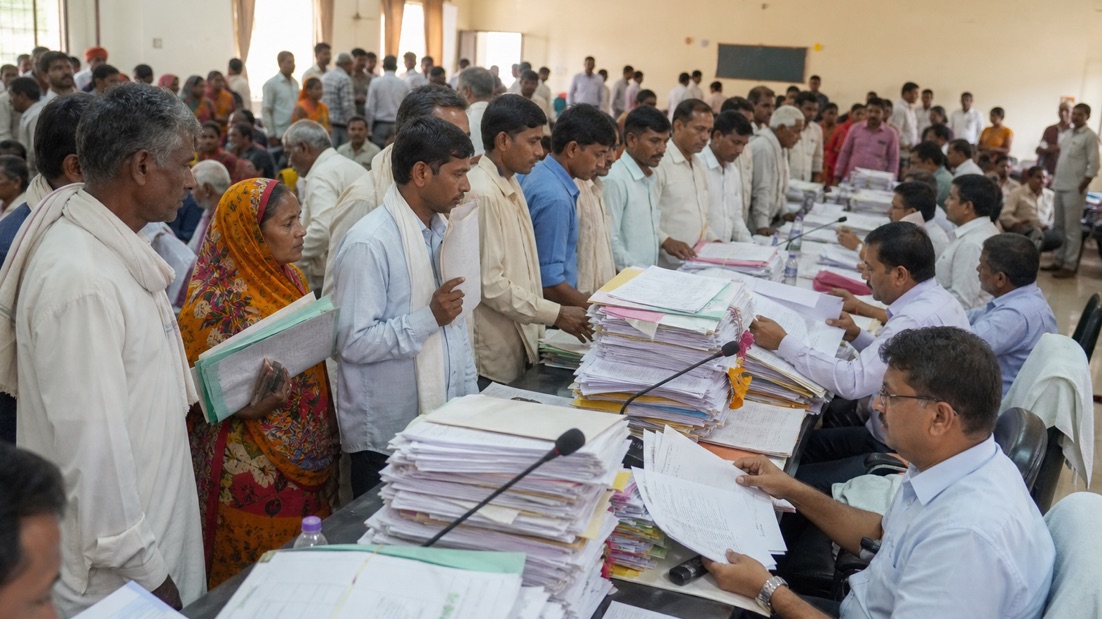
VARANASI: Rajatalab Tehsil received 122 applications at Samadhan Diwas on Monday, but only nine could be resolved while the complainants were present. The remaining matters were sent to the relevant departments with instructions for time-bound action, placing the emphasis on what happens after the public hearing rather than the size of the day’s register.
The programme was held on Monday because the usual Saturday schedule coincided with Independence Day observances. Additional District Magistrate for Finance and Revenue Sadanand Gupta heard complaints involving electricity, drinking water, roads, drains, chak routes, encroachment and money disputes. Revenue, police and development officials were present to route the applications.
One resident, Bharat Lal Yadav of Gaur, sought a foot overbridge at Banglachatti. He said four schools in the area create regular pedestrian movement across a busy route, making a safe crossing a daily concern rather than a one-time infrastructure request. Such a proposal will require a traffic assessment, identification of the road-owning agency and a realistic decision on location and accessibility.
In another case, a resident of Kaali Pur alleged that a person from the Kapsethi area had not returned money. The complaint was referred to police. That referral is not a finding that an offence occurred; officers will have to examine documents, messages, witnesses and whether the disagreement is criminal or a civil transaction.
The nine on-site disposals represent about seven per cent of the applications received. That does not automatically mean the hearing failed, because boundary disputes and engineering requests cannot always be settled across a desk. The more useful measure is the final disposal rate after one or two weeks: how many applicants received a reasoned order, a site visit, a repair or a documented explanation.
Departments should avoid marking a case “disposed” simply because it has been forwarded. Every application needs a responsible officer, a deadline and a result visible to the complainant. Repeat petitions should be linked to their earlier file so that senior officers can see whether a direction was ignored. For infrastructure requests, an interim response should state who owns the asset and when a feasibility decision will be made.
Residents can strengthen a grievance by bringing copies of earlier orders, photographs, plot or account details and a working phone number, while keeping the originals. Officials, in turn, should issue a legible receipt and avoid asking people to restart the process in another register without explanation.
Monday’s turnout shows that Rajatalab residents still see Samadhan Diwas as a route to the administration. The institution will justify that confidence only when the 113 applications that left the room are tracked to outcomes—not merely moved from one table to another.
Sources and reporting
Based on figures and cases reported from the August 17, 2026 Samadhan Diwas at Rajatalab Tehsil.
Related Stories

Dalimss 20 Under 40 Varanasi 2026: Meet the 20 Young Achievers Making Their Mark on Banaras

Biker Dies After Thar Hit on Golf Course Road
Court Orders Probe Into Body Handling Lapses
Two Held After Rs 54,000 Robbery Near Rampura
Manduadih Fan Warehouse Fire Burns for Hours; No Deaths Reported