NGT Keeps Construction Off 6.93-Acre Naharpur Kasan Pond Plot
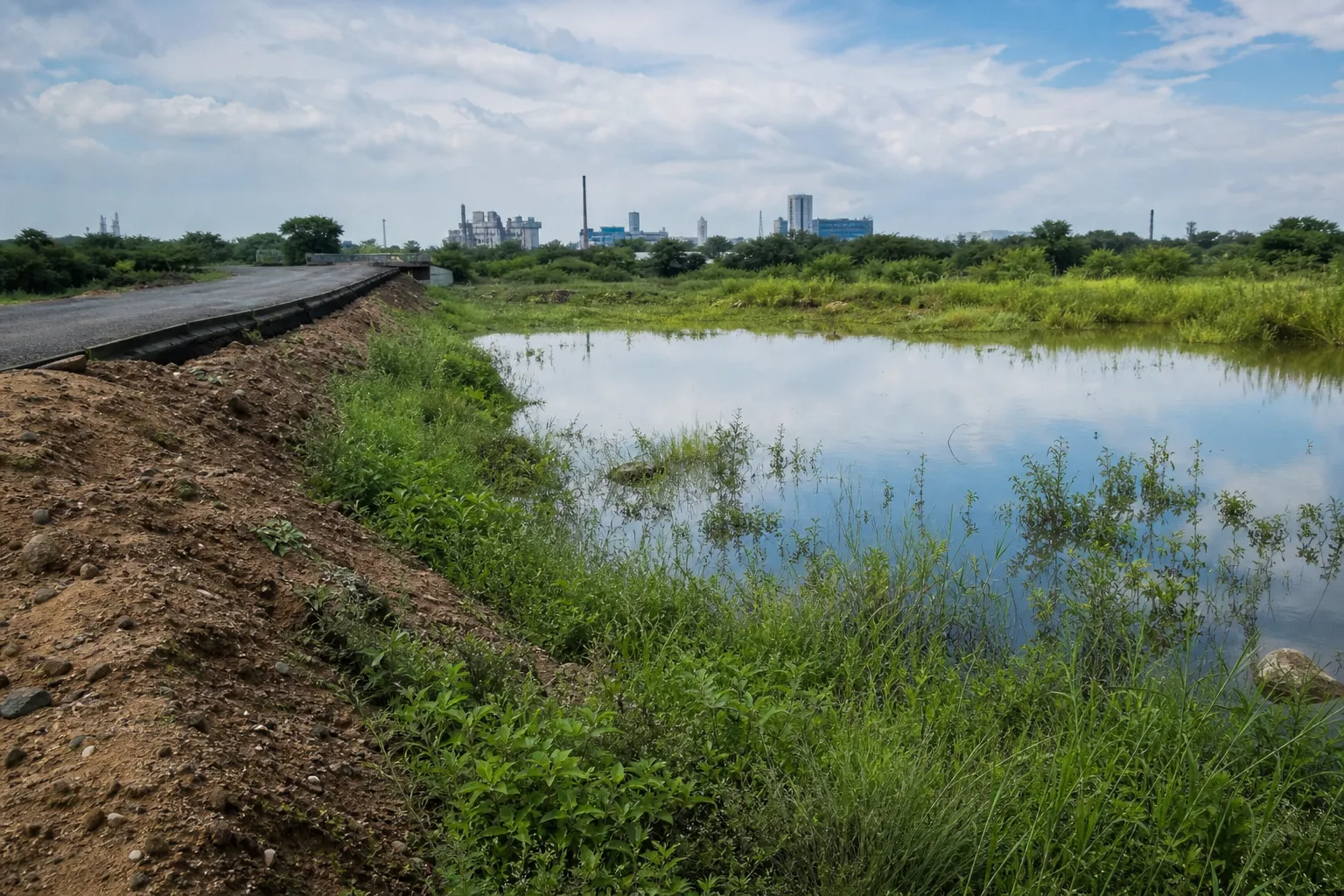
Construction must remain halted on a 6.93-acre parcel in Naharpur Kasan after the National Green Tribunal found that the land is recorded as a pond in revenue documents. The interim protection covers the plot identified as Khasra No. 41 in the Manesar municipal area and is to continue at least until the matter returns for hearing on October 5.
The proceeding began with an application alleging that an old wetland and johad had been dried, filled with soil and prepared for mechanical or commercial activity. The applicant also pointed to road construction on the site. The tribunal did not treat those allegations alone as proof; it relied on a joint committee's survey, document review and physical inspection before directing that work stop.
That committee brought together the state pond and wastewater authority, the regional office of the Union environment ministry and district officials. Its material included a differential GPS survey, revenue papers and observations from the site. The record cited before the tribunal classifies the land as “gair mumkin johad”, or non-cultivable pond, from the 1968-69 entries through the current jamabandi.
During inspection, the committee found that the pond area had been filled and a metal road was under construction. The direction restrains new activity and the continuation of existing work while the respondents place their position on record. It is an interim environmental safeguard, not the final disposal of ownership, restoration or liability questions.
The distinction matters in fast-growing Manesar. Land can be acquired or earmarked for an industrial purpose, but a revenue description identifying a natural waterbody triggers separate environmental and public-trust concerns. A paved surface does not erase the land's recorded character, and filling a depression can shift monsoon water into neighbouring roads, homes or fields.
For Gurugram district, small ponds are part of flood infrastructure even when they do not resemble scenic lakes. They hold local runoff, slow peak flows and allow some recharge. Once filled, the same catchment still receives rain; only the storage space disappears. The result is often visible several kilometres away as waterlogging that appears to have no obvious source.
The October hearing will be important for more than the stay. The parties may have to address the site's legal status, the work already carried out and whether the pond must be demarcated and restored. Any restoration plan would need levels, drainage connections and protection from renewed dumping, not merely removal of a surface layer before the next inspection.
Until then, enforcement is straightforward: no construction should proceed on the restrained parcel. District and municipal teams should preserve dated site records so the tribunal can see whether its order was followed. In a region where land changes faster than maps, a clearly marked boundary and public compliance record are the minimum safeguards for a pond that official papers have recognised for decades.
Sources and reporting
Based on the National Green Tribunal's interim direction, the joint committee inspection and revenue classification cited in the proceedings.
Related Stories

Mayor Announces Stricter MCG Drive Against Stray Cattle

Court Stays Further Eviction at Baba Balak Nath Temple Complex
HRERA Orders Rs 19.28 Lakh for Delayed Sector 82 Flat Possession

STF Arrests Agra Man With Six Country-Made Pistols in Sohna

FDA and Police Seize Codeine Syrup, Alprazolam in Sohna Raid