Nagepur Male Kajri Festival Turns Folk Music Into a Conversation on Public Life
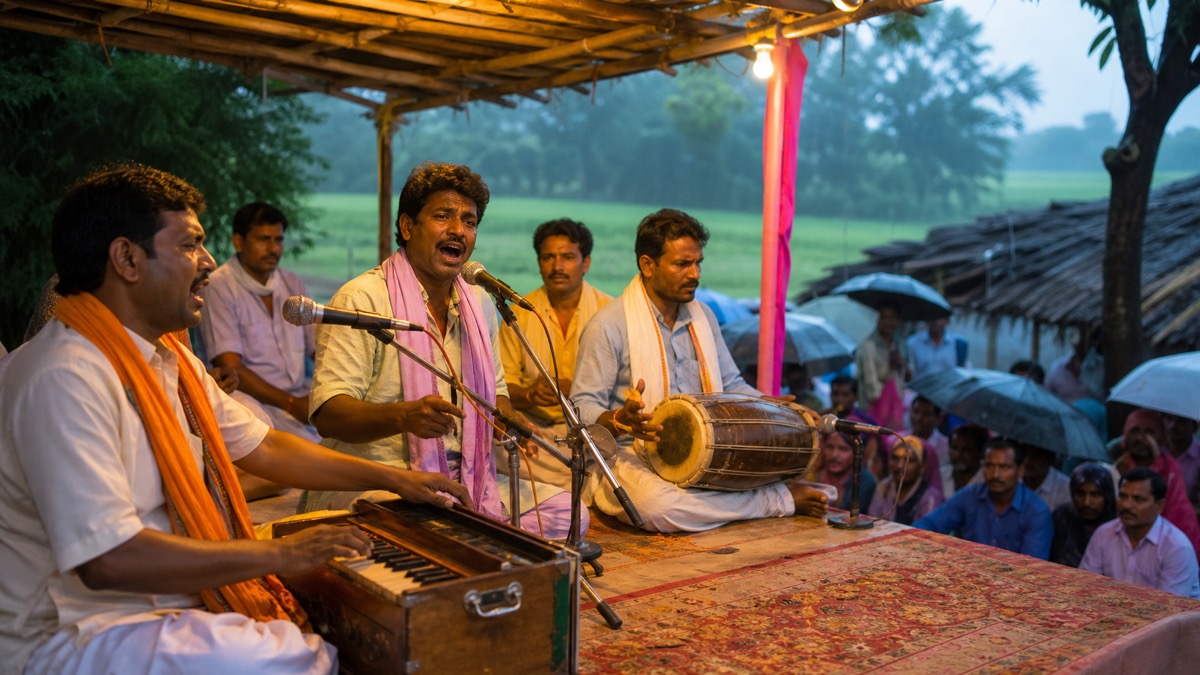
The monsoon song of eastern Uttar Pradesh became a vehicle for both memory and current affairs in Nagepur, where village performers gathered for a male Kajri festival on the eve of Independence Day. Organised in the Prime Minister’s model village by Lok Samiti and the Daily Wage Workers Organisation, the evening brought together singers from several settlements around Rajatalab.
The performers did not restrict themselves to familiar lyrics about rain, separation and the countryside. Their sets also addressed patriotism, corruption and the condition of society, using the conversational directness of folk music to connect public questions with everyday rural life. For the audience, that mix gave the event a character different from a formal cultural programme: entertainment came with commentary, humour and reminders to remain connected to local language and soil.
Teams arrived from Nagepur, Benipur, Kallipur, Ganeshpur, Harsos, Mehdiganj and Pratappur. The festival opened with a lamp-lighting by Surendra Bhai of Sanjhi Virasat, Srishti Jan Kalyan president Rajesh Singh and Lok Samiti coordinator Nandlal Master. Organisers later honoured the participating singers with angavastrams and mementoes, recognising people who often keep a tradition alive without the infrastructure available to professional performers.
Former minister Surendra Singh Patel told the gathering that Kajri has a distinctive place in Purvanchal and survives because rural singers continue to practise it. Mahendra Singh Patel, representing the block pramukh, described the form as part of the region’s cultural identity and argued that community events recreate the sense of belonging that can disappear when village life becomes fragmented.
Kajri is especially suited to that role. Its melodies are rooted in the rainy season, but the form has always travelled through homes, fields, fairs and neighbourhood gatherings. A festival in which different villages answer one another through song is also an informal archive: pronunciation, local references and performance styles are passed to younger listeners in a setting more alive than a textbook or recording.
The programme will have a second chapter on August 22, when a women’s Kajri festival is scheduled at 11 am at Lok Samiti Ashram in Nagepur. That announcement matters because women have been central to the domestic and community life of Kajri, even when public stages were dominated by men. Organisers now have an opportunity to record both festivals so future performers can study the lyrics and village variations. Taken together, the two events show how a living tradition can hold space for celebration, criticism and intergenerational learning without losing its distinctly Banarasi-Purvanchal voice.
Sources and reporting
Based on reporting from Nagepur on the male Kajri festival organised by Lok Samiti and the Daily Wage Workers Organisation.
Related Stories
Sarnath Police Bring Two From Punjab in Fake GST Firm Case
Lohta Hit-and-Run: Hardoi Truck Driver Ankit Pal Arrested
Magic Van Hit-and-Run Kills Security Guard Near Mohansarai
DGP Flags 15-20 Overseas Gangsters, Opens New PS
Puja Specials via Varanasi: Amritsar, Ahmedabad and Kolkata Paths Listed