
Nag Koop Opens for Nag Panchami as Kashi Keeps Shastrartha Tradition Alive
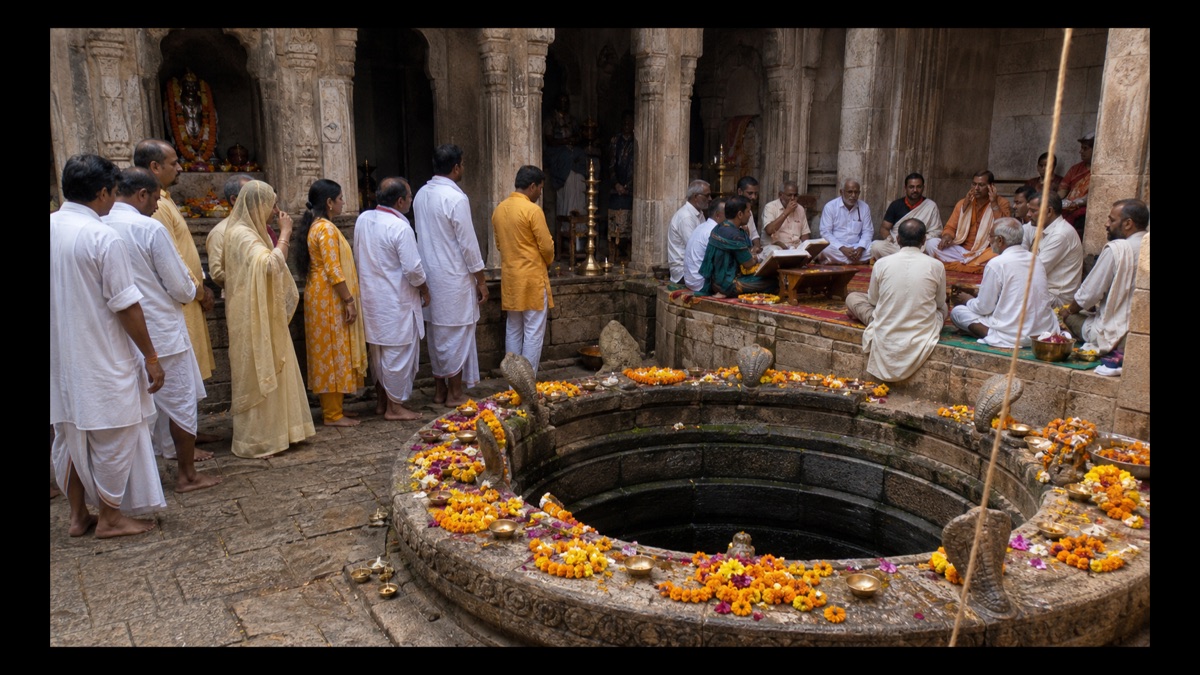
VARANASI: The gates of Nag Koop in Jaitpura opened on Monday for the one day of the year when most devotees can enter for Nag Panchami worship. Marigolds, lamps and a queue around the old stone well transformed the compact courtyard, while Sanskrit scholars gathered nearby for shastrartha—the disciplined exchange of arguments that has long been part of Kashi’s intellectual life.
Local accounts describe the well as about 80 feet deep and identify the shrine with Nageshwar or Karkoteshwar. Traditions connect the place with the serpent king Karkotak, King Janamejaya and the scholar Patanjali. Some devotees also associate it with relief from kaal sarp dosh. These are religious beliefs and oral histories; they are not scientific claims or a substitute for medical or personal advice.
The Patanjali connection is especially important to the site’s scholarly identity. Community narratives hold that instruction or debate linked with grammar, yoga and texts such as the Mahabhashya took place here. The exact chronology is difficult to establish from festival retellings alone, but the shastrartha hall remains a living feature rather than only a story about the past.
In a shastrartha, participants are expected to define terms, cite recognised sources, respond to objections and maintain decorum. That method explains why Kashi’s learning traditions cannot be reduced to recitation. The ability to test an interpretation in public is part of the inheritance. Keeping the annual session accessible to students, with recordings and translations, could make the practice understandable beyond a circle of specialists.
The well also demands careful crowd management. An old, deep structure surrounded by worshippers needs secure railings, controlled entry and a clear rule against leaning over the opening. Oil lamps and wet stone can create additional hazards. Organisers should separate the ritual queue from the discussion area so neither safety nor scholarship is compromised.
Conservation requires more than cleaning before one festival. Stonework should be assessed by heritage professionals, drainage kept away from foundations and modern paint or cement avoided where it may damage original material. A basic sign distinguishing documented history from devotional tradition would enrich rather than weaken the site.
Nag Panchami brought the expected devotion to Nag Koop, but the more unusual sight was scholarship continuing beside worship. In a city crowded with claims of antiquity, a living practice offers stronger evidence of continuity than an exaggerated date. The well may open to the public once a year; the habit of reasoned debate it represents should remain open far more often.
Sources and reporting
Based on an August 17, 2026 report from Nag Koop in Jaitpura. Origin stories and religious effects are explicitly presented as tradition and belief, not established history or medicine.
Related Stories
Ramnagar Stages Barat and Ram–Sita Vivah on Day Six

FIR Over AI Video Claiming to Show Police at Lat Bhairav Event
Manchanda Case: SHO, ASI Face Departmental Action
Manduadih Fan Warehouse Fire Reignites After 48 Hours

Delhi Man Held in Golf Course Road Rage Case