Murky Water Complaints Spread Across Five Gurugram Neighbourhoods, 15,000 Families Affected
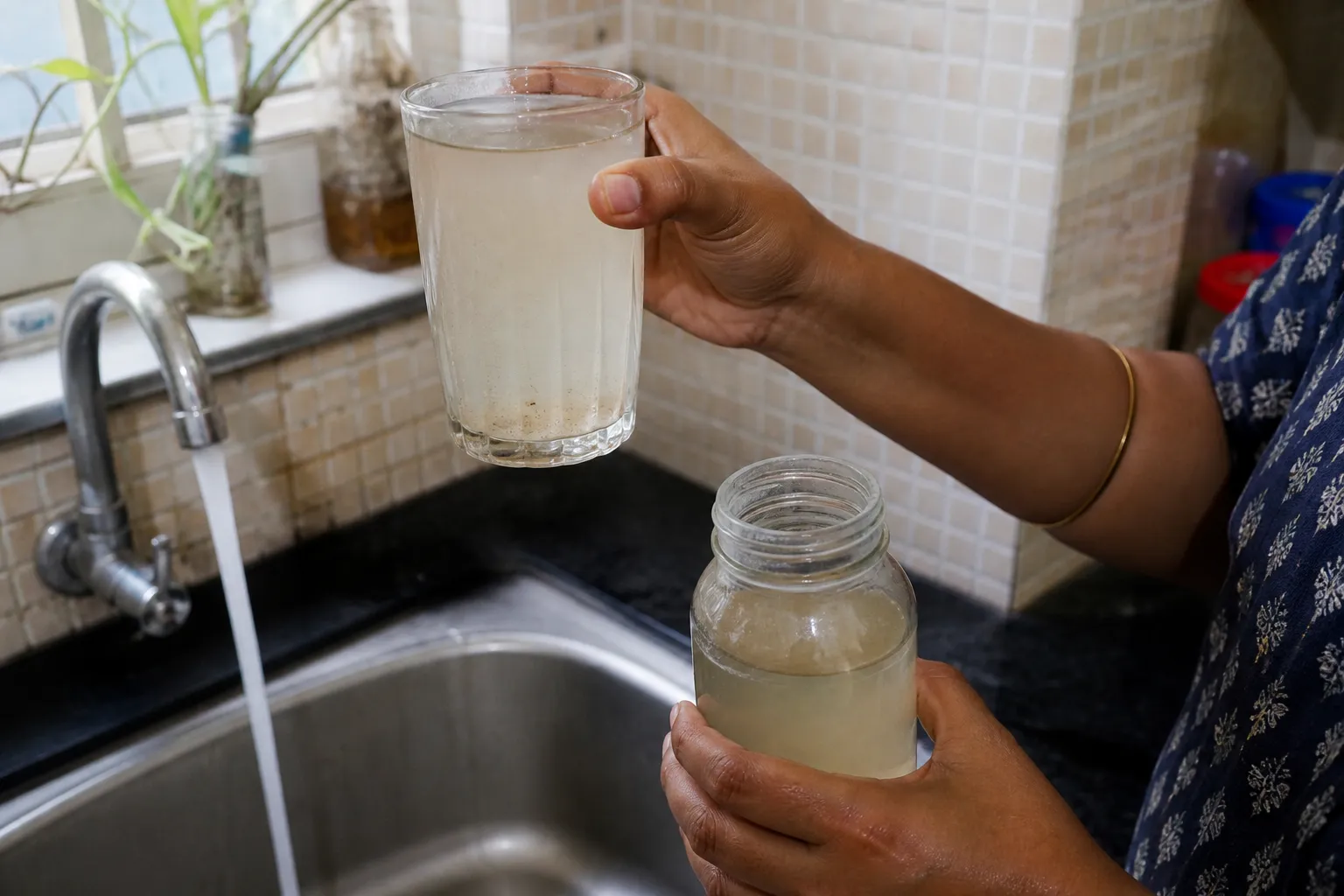
GURUGRAM: Residents across sectors 21, 22A, 23, 23A and Palam Vihar say discoloured, foul-smelling water has been entering their homes for more than two weeks, affecting an estimated 15,000 families. Civic teams have inspected connections and collected samples, but households say the supply has remained muddy even after two broken links were repaired.
The complaints are not identical in every pocket. Some residents report brown or cloudy water, others describe a strong smell, and families in one part of Palam Vihar say they receive water only once in three days. That variation makes a single explanation unlikely and increases the need for testing at multiple points in the network.
Initial tests and household experience do not match
A metropolitan authority official said samples taken after complaints from sectors 21 and 22 did not show contamination at that time. A team was sent again on Sunday to inspect and collect fresh samples. Municipal officials also said earlier checks had not found contamination and promised another examination.
Residents argue that the problem continued during those checks. In Sector 21, the RWA says more than 5,000 people have been affected. Teams repaired two broken connections on Saturday, but muddy water was reported again the following day. The local booster station was also described as muddy during an inspection.
In Sector 23A, residents have alleged that some supplies contained insects and carried a smell strong enough to make the water unsuitable even for household use. The RWA estimates about 2,000 families there are affected. Palam Vihar residents estimate another 3,000 families face quality or shortage concerns.
Sampling must follow the water's complete route
A clean result at one point does not rule out contamination farther downstream. Water can deteriorate at a booster station, through a cracked distribution line, at an illegal connection or inside a poorly maintained local storage tank. Intermittent supply can worsen the risk by allowing polluted water to enter when pressure falls.
Teams should collect paired samples from the source, booster, street line and selected homes at the same time. Results should test bacteriological quality as well as turbidity, residual chlorine and other basic parameters. The sample location, collection time and laboratory result should be shared with RWAs instead of reduced to a verbal assurance.
Safe interim supply is part of the response
Until the source is identified, residents need a clear do-not-drink advisory wherever quality is doubtful, along with tanker points that are themselves tested and cleaned. Vulnerable households with children, older residents or illness cannot be expected to judge safety from colour and smell alone.
The city also needs one incident map joining complaints received by GMDA, MCG and local RWAs. Separate inspections can miss a pattern that becomes obvious when five adjoining neighbourhoods are viewed together.
This is not merely a service-quality dispute. Drinking-water complaints require a public-health response with traceable samples, repair logs and a date for safe restoration. After more than two weeks, families deserve evidence they can read and water they can use without first wondering what is flowing from the tap.
Sources and reporting
Original Dalimss News report based on resident and RWA accounts, civic-agency inspection statements and verified water-sampling details available on 11 August 2026.
Related Stories
HSVP Plans International-Board School in Sector 44
Police ID Suspect, Probe Delay in Road-Rage FIR

GMDA Hires Consultant for Recycled Water Links
HSNCB Holds Nigerian Man With 15g MDMA
Four Held After Scorpio Attack Near New Colony