More Than a Game: How Mahjong Builds Memory, Focus and Strategic Thinking in Students
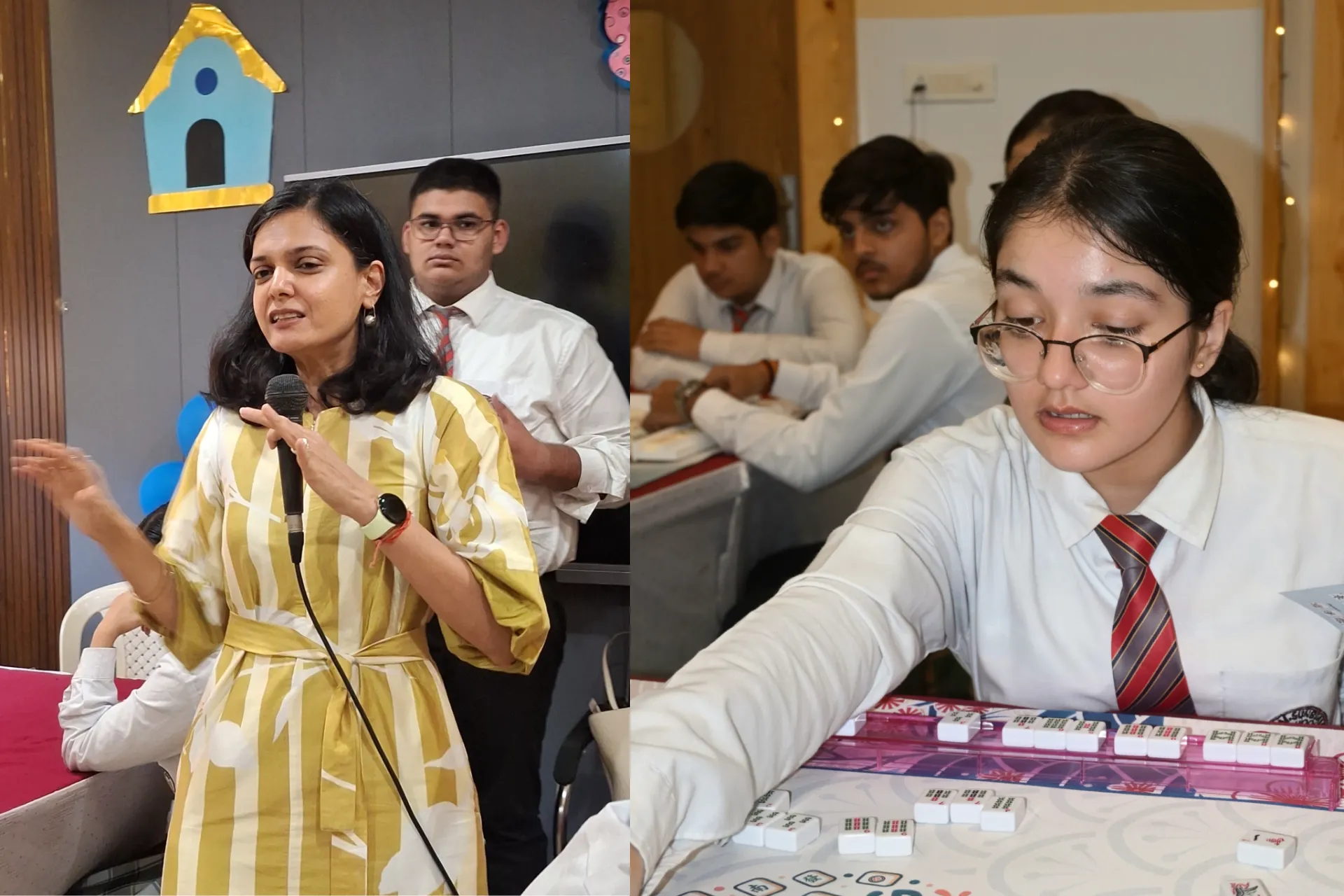
Learning does not always have to begin with a textbook, a worksheet or a classroom lecture. Sometimes, a carefully chosen game can place students in situations where they must observe closely, remember information, make decisions and respond to changing circumstances.
Mahjong, a traditional tile-based game, is one such activity. Although it is commonly seen as a recreational or social game, the skills required to play it can make it an engaging addition to a student’s broader learning experience.
A typical Mahjong game requires players to collect and arrange tiles into particular combinations. To do this successfully, they must recognise symbols, identify patterns, remember previous moves and decide which tiles to retain or discard. The rules may initially appear complex, but that complexity is also what makes the game mentally stimulating.
Encouraging sustained concentration
Mahjong demands attention throughout the game. A player cannot focus only on the tiles in front of them. Every tile drawn or discarded by another participant can affect the possibilities available on the table.
For students, this creates an exercise in sustained concentration. They must remain alert, follow the progress of the game and process new information before taking their next turn.
Unlike activities in which the answer remains fixed, Mahjong changes constantly. A promising plan may become less useful after a single move, requiring the player to reconsider the situation. This encourages students to stay mentally involved rather than act mechanically.
Strengthening memory through active play
Memory is central to Mahjong. Players benefit from recalling which tiles have already appeared, which ones have been discarded and which combinations may still be possible.
This does not involve memorising information for an examination. Instead, students use memory immediately to guide a decision. That active use of information can make the exercise more engaging than conventional recall-based tasks.
As students become familiar with the game, they begin to remember tile symbols and combinations more easily. They also learn to connect what they have already seen with what may happen next.
Developing pattern-recognition skills
Mahjong is built around identifying relationships between tiles. Players look for matching sets, sequences and combinations while reorganising their hand as the game develops.
Pattern recognition is useful far beyond the game itself. It plays a role in mathematics, language, coding, science and everyday problem-solving. When students learn to notice similarities, differences and recurring structures, they become better equipped to organise complex information.
Mahjong offers repeated practice in this process without presenting it as a formal academic exercise.
Learning to think strategically
A good Mahjong move is not simply about choosing the most attractive tile available at that moment. Players must consider how a decision may affect their position later in the game.
Students are encouraged to compare options, assess risks and think beyond the immediate turn. They may have to choose between completing one combination quickly or waiting for a stronger possibility.
This helps introduce an important principle of strategic thinking: the best decision is not always the most obvious one.
The game also shows students that planning must remain flexible. A strategy may need to change when new information appears. Learning to revise a plan, rather than holding on to it stubbornly, is a valuable part of problem-solving.
Improving decision-making under uncertainty
Mahjong does not give players complete information. Students know what is in their own hand, but they cannot always be certain about the plans of others or which tile will appear next.
They must therefore make decisions with limited information. This can help them become more comfortable with uncertainty and understand that not every choice comes with a guaranteed outcome.
Even a thoughtful move may not produce the desired result. The value lies in evaluating the situation carefully and making the most reasonable decision at that moment.
Teaching patience and emotional control
The game also offers lessons in patience. Players may have to wait several rounds for a useful tile, abandon a promising combination or accept that another participant has completed the game first.
For students, such moments can become opportunities to practise emotional control. They learn to manage disappointment, remain respectful and begin again without allowing frustration to take over.
Games can provide a relatively safe environment in which students experience both success and failure. When guided appropriately, these experiences can help them develop resilience and a healthier response to setbacks.
Supporting social interaction
Mahjong is usually played in a small group, making communication and cooperation part of the experience.
Students must wait for their turns, follow shared rules and remain aware of the other players. They learn that competitive activities can still be respectful and enjoyable.
The game can also bring together students with different levels of confidence. Some may quickly recognise patterns, while others may be more observant or patient. Over time, they can learn from one another’s approaches.
A useful supplement, not a substitute
Mahjong should not be viewed as a replacement for classroom teaching. Its educational value lies in supporting skills that students use across subjects, including focus, memory, logical reasoning and adaptability.
The benefits also depend on how the activity is introduced. Clear instructions, age-appropriate rules and thoughtful supervision are important. The aim should not be to create pressure to win, but to encourage students to observe, experiment and reflect on their decisions.
When used in this way, traditional games can become valuable tools for experiential learning. They allow students to practise complex thinking while remaining curious and actively involved.
A Mahjong training and playing session was recently organised for students at Dalimss Sunbeam School. The session was conducted by Ms Shachi Sah, the Varanasi-based founder of Mahjong Madness, who introduced students to the tiles, rules and strategic elements of the game.
Sources and reporting
Based on details and photographs from the Mahjong training session conducted by Ms Shachi Sah of Mahjong Madness at Dalimss Sunbeam School, along with background research on the cognitive, social and strategic-learning benefits of Mahjong for students.
Related Stories

Karan Madhok's MONKEY! opens for preorder with Aleph Book Company

BHU Opens Bharat Innovation Conclave 2.0 at Swatantrata Bhawan

GRP Cantt Arrests Woman With 72 Quarters of Alleged Illegal Liquor

NER to Pilot Mobile UTS General Tickets at Banaras and Four Stations

Varanasi Municipal Corporation Shifts Adampur Zone Office to Rajghat