Mirzamurad Rescuer’s Snake Mission Draws Praise—and a Safety Reminder
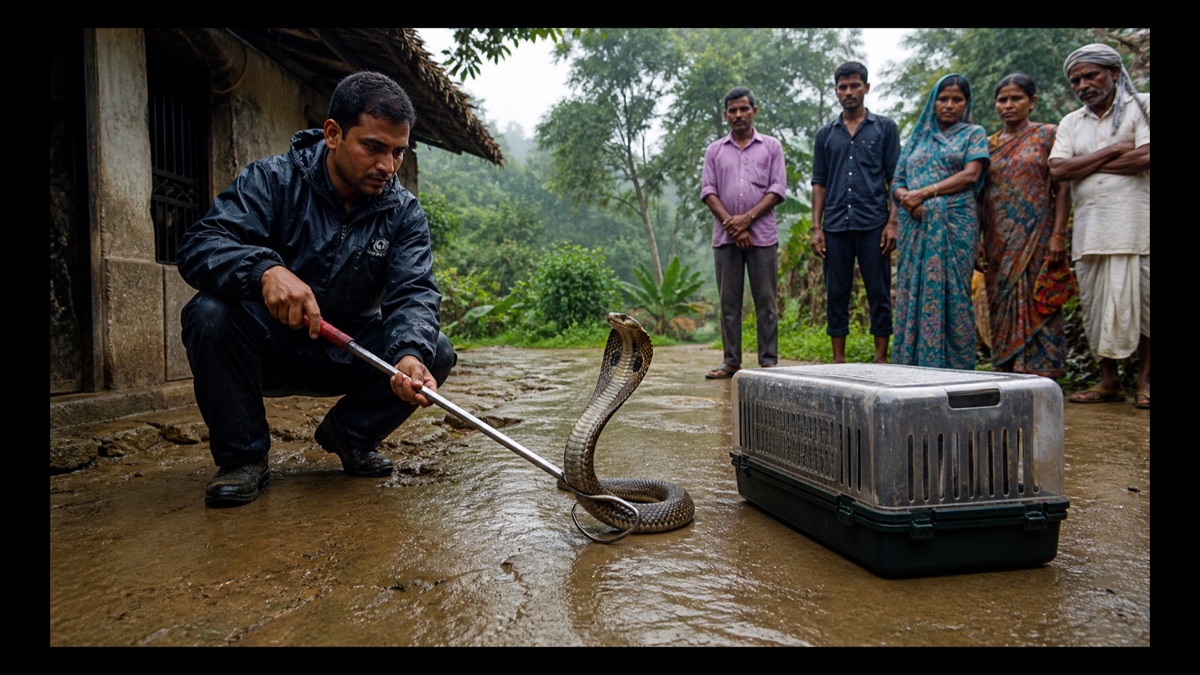
VARANASI: Ratan Gupta is known around Mirzamurad as “Ratan Cobra”, a shopkeeper residents call when a snake appears in a home, field or workplace. He says he has spent 22 years rescuing snakes and estimates that he has handled about 25,000. The figure is his own account and has not been independently audited, but the calls point to a real monsoon need: moving wildlife away without killing it.
Gupta, 42, told the reporter that he uses a steel rod to control and collect snakes before releasing them in batches in remote forest areas of Mirzapur and Sonbhadra. His 14-year-old son has shown interest in the work. Public admiration has followed his willingness to respond, yet the images and descriptions also require a firm safety warning.
Nobody should copy bare-hand handling, teasing, posing or improvised capture seen in a video or local demonstration. A cobra can strike faster than a person can react, and even an experienced handler can be bitten. Children should never be trained through exposure to an unsecured venomous snake. Responsible rescue uses species-appropriate hooks, tongs where lawful and suitable, secure ventilated boxes, protective distance and a pre-arranged medical plan.
Wildlife rescue is also more than taking an animal far away. Snakes are protected under Indian wildlife law, and capture, transport and release should be coordinated with the Forest Department or an authorised rescuer. An unsuitable release point can harm the animal, move conflict into another community or spread disease. Location, habitat, species and the snake’s condition all matter.
Residents who find a snake should keep people and pets away, close internal doors if it can be done safely and watch the animal from a distance until help arrives. Do not hit it, pour chemicals, offer milk or try to trap it under a light container. Snakes do not drink milk as a ritual requirement, and crowding an animal increases the chance of a defensive strike.
If a bite occurs, the patient should be kept calm and still and taken immediately to a hospital equipped to manage snakebite. Cutting the wound, sucking venom, applying ice or tying a tight tourniquet can worsen injury and waste time. Trying to catch the snake for identification creates another victim; a safe-distance photograph may help but is not worth delaying transport.
Gupta’s long record, as he describes it, shows how one local responder can replace fear with a rescue call. The next step should be formal training, protective equipment, documented handover and mentoring that puts safety before spectacle. Varanasi needs people willing to save snakes. It also needs that work carried out in a way that protects the rescuer, the public and the animal.
Sources and reporting
Based on an August 17, 2026 profile of a Mirzamurad resident. Rescue totals are his claims; safety guidance reflects responsible wildlife-response practice.
Related Stories
Ramnagar Stages Barat and Ram–Sita Vivah on Day Six
FIR Over AI Video Claiming to Show Police at Lat Bhairav Event
Manchanda Case: SHO, ASI Face Departmental Action
Manduadih Fan Warehouse Fire Reignites After 48 Hours
Delhi Man Held in Golf Course Road Rage Case