BENGALURU: When silk is reeled from cocoons, what is left behind is the silkworm pupa, and for most of India's silk industry that has long been a low-value by-product. Loopworm, a Bengaluru startup, has built a business on turning it into protein ingredients for fish, shrimp, pets and livestock. It is now trying something harder: using live silkworms as tiny factories for the specialised proteins used in diagnostics and research.
Here is how the company works, what it sells and which of its claims are its own.
Where Loopworm came from
According to the company's about page, Loopworm was started in 2019 by two IIT Roorkee engineers, Ankit Alok Bagaria and Abhi Gawri. They came across a United Nations report on insects as the future of food and feed, piloted several insects, and settled on the silkworm, Bombyx mori.
Their reasoning was practical. Silkworms have been domesticated for thousands of years, they are well studied, and India already has a large network of farmers who rear them. Loopworm's homepage says sericulture supports more than 7 million livelihoods across 22 states and over 50,000 villages, which gives the company a supply chain it did not have to build from scratch.
What it sells today
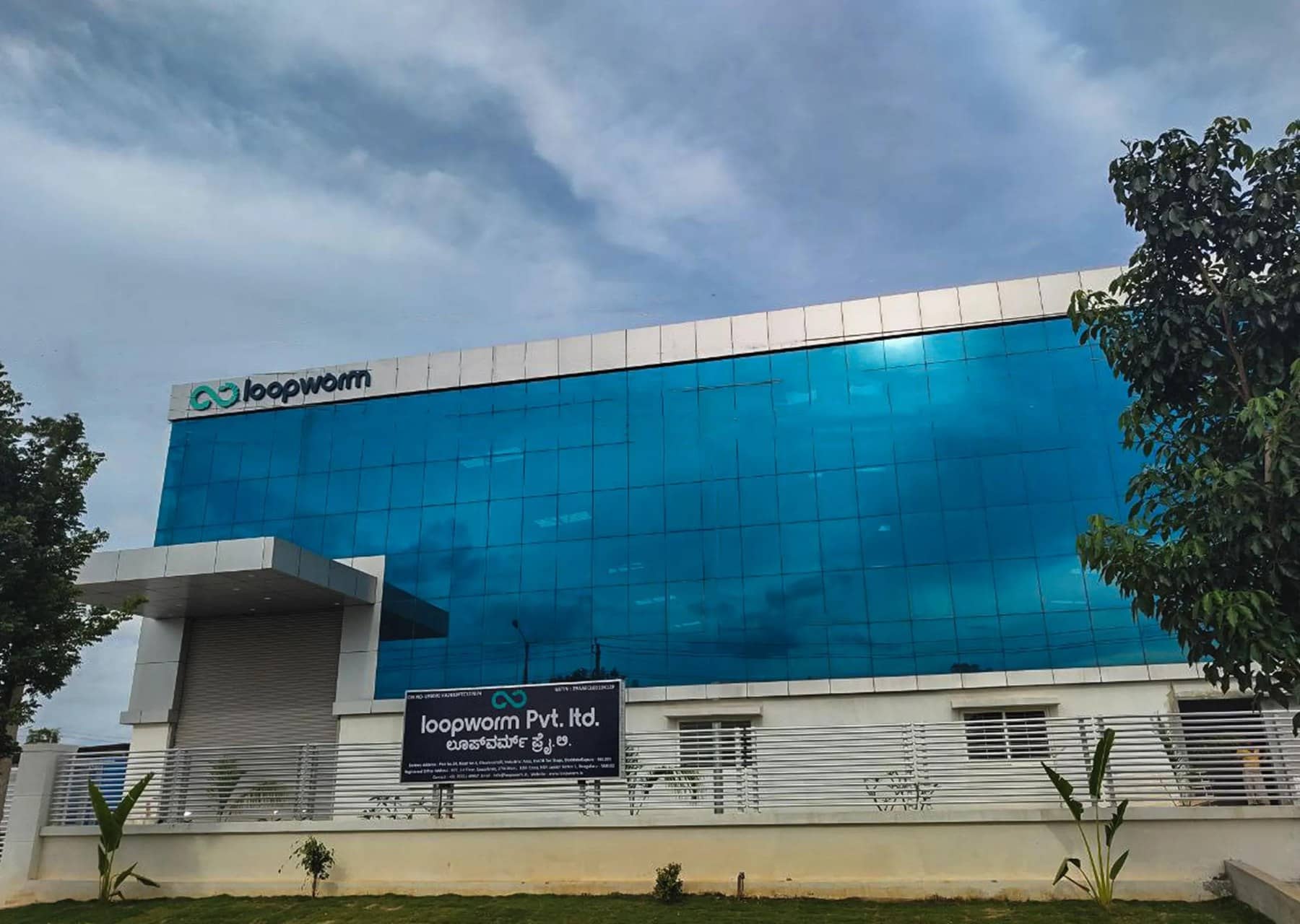
The first business is animal nutrition, which the company says is now profitable. Loopworm says it runs the world's largest industrial-scale silkworm processing facility, in Bengaluru, where pupae are turned into three main ingredients.
LoopMeal Pro is a protein concentrate that the company says contains at least 62% protein and all 18 amino acids. LoopOil is a fat extracted from the pupae, which Loopworm says is rich in omega 3, 6 and 9 fatty acids along with sterols and phospholipids. LoopGrubs are whole, slowly dried pupae, which it says carry more than 80% protein and fat combined.
These go into feed for shrimp, salmon and trout, specialty fish, dogs and cats, exotic pets, poultry and pigs. The company stresses that its silkworms eat only fresh mulberry leaves, unlike some insect farms that feed larvae on mixed organic waste, and argues that this gives more consistent quality batch to batch.
Why the silkworm, specifically
Loopworm's homepage makes a biological case for its choice. It says about half of a silkworm's body mass is protein, and that the insect turns up to 98% of what it spins into pure protein in the form of silk. It also notes that silkworms are classed at biosafety level 1, meaning they are not known to cause disease and are considered safe to handle at scale.
The company links its timing to policy as well. It points to support for biomanufacturing from the Department of Biotechnology, the government's BioE3 policy, the Central Silk Board and the Ministry of Textiles, and says more than 40 universities offer sericulture programmes, which gives it a pool of trained people to hire from.
Why feed makers care
Aquaculture feed depends heavily on fishmeal, much of it made from wild-caught fish. Loopworm's homepage says 70% of global fishmeal comes from wild pelagic fish, and that an El Nino event in early 2024 caused a sharp drop in fishmeal output and a price spike. Soy, the other big feed protein, is linked to forest clearing in some regions.
An insect protein made from a by-product, in a country that already produces a lot of silk, is pitched as a way around both problems. Whether it can match fishmeal on cost at large volume is the key commercial question, and Loopworm does not publish its prices or volumes on its site.
The second bet: silkworms as bioreactors
The more ambitious part of the business is recombinant protein production. Proteins used in diagnostic kits, vaccines, research and industrial enzymes are usually made in steel bioreactors using bacteria, yeast or mammalian cells. Those setups are expensive to build and run.
Loopworm says its plug-and-play gene delivery technology lets it introduce the gene for a desired protein into silkworms, which then produce that protein inside their bodies. The company describes each silkworm as a precision mini bioreactor and says the approach can deliver antigens, antibodies and enzymes faster, with less infrastructure and higher yield, including proteins that are hard to make in other systems.
Silkworms have been studied for this kind of work by researchers for years, so the idea is not new. What Loopworm is trying to do is turn it into a commercial service with custom order sizes, from research batches up to industrial quantities. It has not named customers for this line on its website.
Backers and recognition
Investor logos on Loopworm's about page include Omnivore, WaterBridge Ventures, Titan Capital and Enrission India Capital. The page also lists support links with the Department of Biotechnology, BIRAC and the Central Silk Board, and awards including the Aegis Graham Bell award for innovation in agriculture.
The company also says its products are GMO-free and antibiotic-free, and that working with sericulture communities creates extra income for farmers. These are company statements and have not been independently audited in public.
The bigger picture
Loopworm sits in a small but growing group of Indian companies using biology as a manufacturing tool. Dalimss News has covered Sea6 Energy's work on mechanised seaweed farming and Carbelim's microalgae carbon capture towers, both of which, like Loopworm, start from a living organism rather than a chemical plant.
The things to watch are named customers for its recombinant proteins, export growth in aquafeed, and whether the silkworm platform can hold quality as volumes rise.