
Local Produce Keeps Varanasi Vegetable Prices Steady Through Monsoon
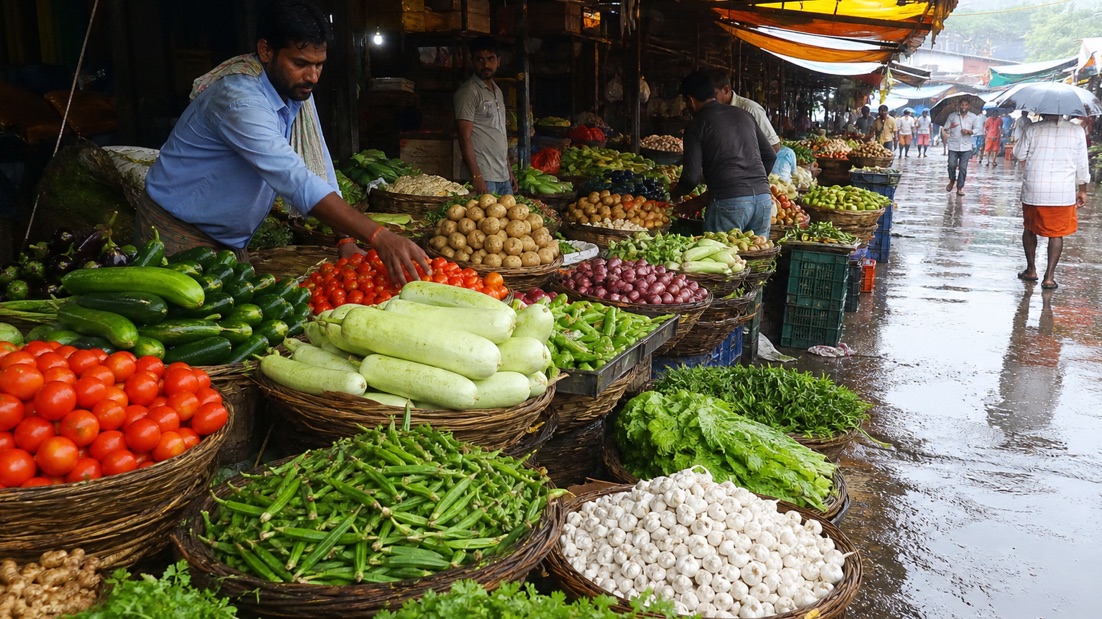
VARANASI: The monsoon has not yet produced a broad vegetable-price shock in Varanasi. Strong local arrivals are keeping most everyday items within a familiar range, traders said on Monday, though a long spell of rain could still interrupt harvesting and transport from both nearby farms and outside markets.
The clearest pressure remains on a smaller group of products. Garlic was quoted at around ₹200 a kilogram, while coriander and ginger were near ₹120. Desi parwal, kheksa and karonda were reported at about ₹80 a kilogram. Parwal arriving from outside the region was cheaper at roughly ₹60, showing how variety and source can matter as much as the name on a price board.
For household staples, the picture was calmer. Onion was selling near ₹40 a kilogram, white potato around ₹15 and red potato about ₹20. Tomato, cucumber, ridge gourd, bottle gourd, radish, cabbage, pumpkin, carrot and beetroot were mostly listed near ₹40 a kilogram in the survey. Cauliflower was around ₹40 per piece and lemon about ₹5 each.
Among other items, bitter gourd was close to ₹60 a kilogram, okra around ₹30 and boda near ₹80. Corn was selling at roughly ₹25 per piece, while small bundles of chaurai and spinach were available for about ₹10. These are indicative retail figures, not a citywide fixed tariff. A buyer in Lanka, Bhojubir or a neighbourhood lane may see a different number depending on quality, bargaining, transport and the hour of sale.
Local cultivation has provided the buffer. Produce reaching the city from its rural fringe spends less time and money in transit, helping vendors replace stock even when long-distance supply lines slow. That advantage can disappear if waterlogging prevents farmers from reaching fields, damages tender crops or blocks market routes. Persistent rain in supplying districts can also lift wholesale prices several days after the weather event.
Consumers can manage short fluctuations without compromising food quality. Comparing rates at two nearby sellers, choosing seasonal alternatives and buying leafy vegetables in quantities that can be used quickly are practical steps in humid weather. Perishable produce should be washed with clean water and stored dry; visibly rotten items should not be bought simply because they are discounted.
The stable Monday list is reassuring, but it is a snapshot. Traders will be watching rainfall, local arrivals and transport conditions through the week. For now, Varanasi’s own produce is doing much of the work of containing prices. If that flow continues, the kitchen budget may avoid the sharp monsoon jump that many families had feared.
Sources and reporting
Based on a Varanasi market-price survey published on August 17, 2026. Prices vary by neighbourhood, quality and time of purchase.
Related Stories
Varuna Reverse Flow Floods Low Homes Near Pulkohna Again

DC Freezes 71 Builders' Accounts Over HRERA Dues

Ganga Steady at 68.36 m; Boat Ban Holds Through Pitru Paksha

Police Arrest Man Posing as Sub-Inspector Near Pandeypur

Dalimss 20 Under 40 Varanasi 2026: Meet the 20 Young Achievers Making Their Mark on Banaras