A revised social-impact assessment for the proposed Kuru to Koilar road widening in Varanasi has set out a land requirement of 2.348446 hectares across five villages, alongside recommendations on compensation and protection of affected assets. The district administration posted the report on October 8, bringing the detailed assessment into the public domain.
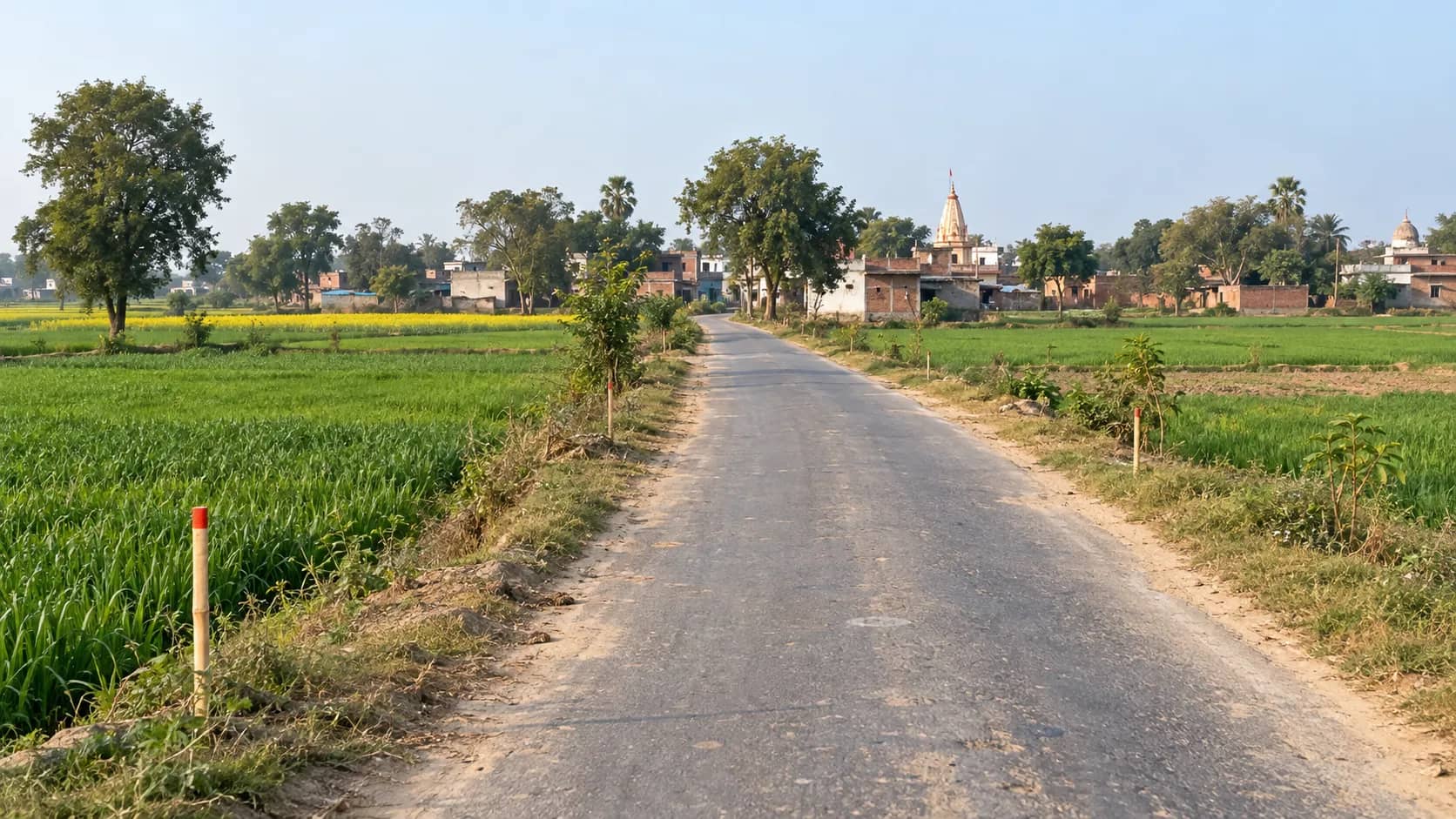
The project concerns the route through Dhokalganj and Sarawan towards Bhadrakali Temple in Pindra tehsil. The report gives a length of 6 km, a width of 9.3 metres and an approximate project cost of Rs 1,808.76 lakh. These are the dimensions and estimate recorded for the proposal, rather than an announcement that construction has started.
The assessment itself is dated September 2026 and was prepared by Agrima for the District Magistrate's office. Its publication follows survey work and a public hearing earlier in the year. The study refers to the 2013 acquisition law and Uttar Pradesh's 2016 assessment rules. Readers can access it through the district's official announcements page or read the full revised assessment.
Survey covered 373 of 413 affected landowners
The study identifies 413 affected landowners and records interviews with 373. The research team began attempts to contact owners on May 26, including telephone contact where possible for people away from the villages. Those figures describe the assessment's coverage; the number interviewed should not be presented as a count of people who have received compensation.
The methodology also drew on village and tehsil records, site visits and discussions with stakeholders. This makes the document more than a statement of engineering dimensions: it examines how the proposed acquisition could affect land use, livelihoods and shared assets along the route. The published assessment contains agricultural as well as residential land considerations.
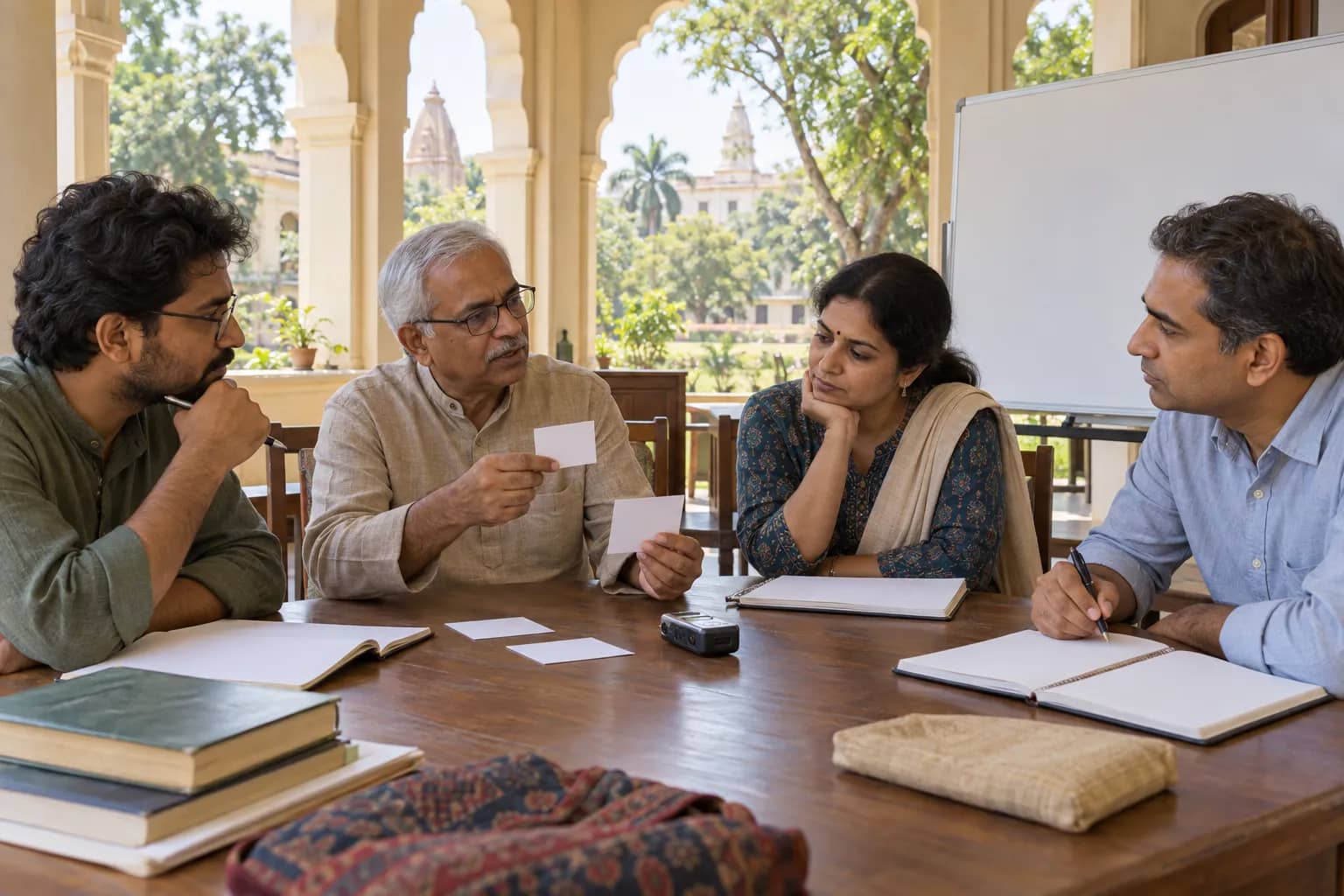
A public hearing was held on July 1. The report says one landholder recorded an objection, after which the assessment team renewed contact through village heads and held further discussions with affected people. That account of the hearing does not establish unanimous consent among all owners, nor does it replace any later decision required for individual claims.
The report projects easier movement for residents and people travelling to Bhadrakali Temple, along with improved connections to other roads. Those are the assessment's expected benefits. It also anticipates effects on livelihoods and socio-economic conditions, which are the reason its proposed safeguards deserve attention alongside the connectivity case.
Valuation and restoration before work
Among the recommendations is competent valuation of assets affected by acquisition, with compensation under the applicable provisions. The assessment calls for relevant departments to establish the value of structures and other assets rather than treating the land area alone as the complete measure of loss.
It also recommends that affected community, social and government assets be relocated or reinstated before construction begins. For shared facilities, that is a separate issue from the amount payable to an individual landowner: maintaining access to a service requires arrangements for the asset itself, not merely a monetary entry in a project estimate. The study also recommends consultation with affected communities when restoring damaged assets.
The report seeks clear information for affected owners on compensation eligibility, amounts, payment timing and the route for raising objections. These are recommendations within the assessment, not evidence that an award has been issued or that all rehabilitation measures have been completed. No individual payment entitlement can be inferred from the aggregate figures published in the study.
Land and compensation questions have featured in other Varanasi road projects, including the separately reported Dalmandi widening compensation process. The district's wider transport coverage also includes IIT-BHU's highway-research agreement with NHIDCL. Those developments concern different projects and do not establish the approval or payment status of the Kuru to Koilar proposal.
The district website lists October 31 as the end of the notice's display period. It is not stated as an objection deadline or a last date for receiving compensation. The material published so far provides an assessment and its safeguards, but does not announce a contractor, a construction start or an opening date.