Kashi Vishwanath Wears the Tricolour in Independence Day Floral Shringar
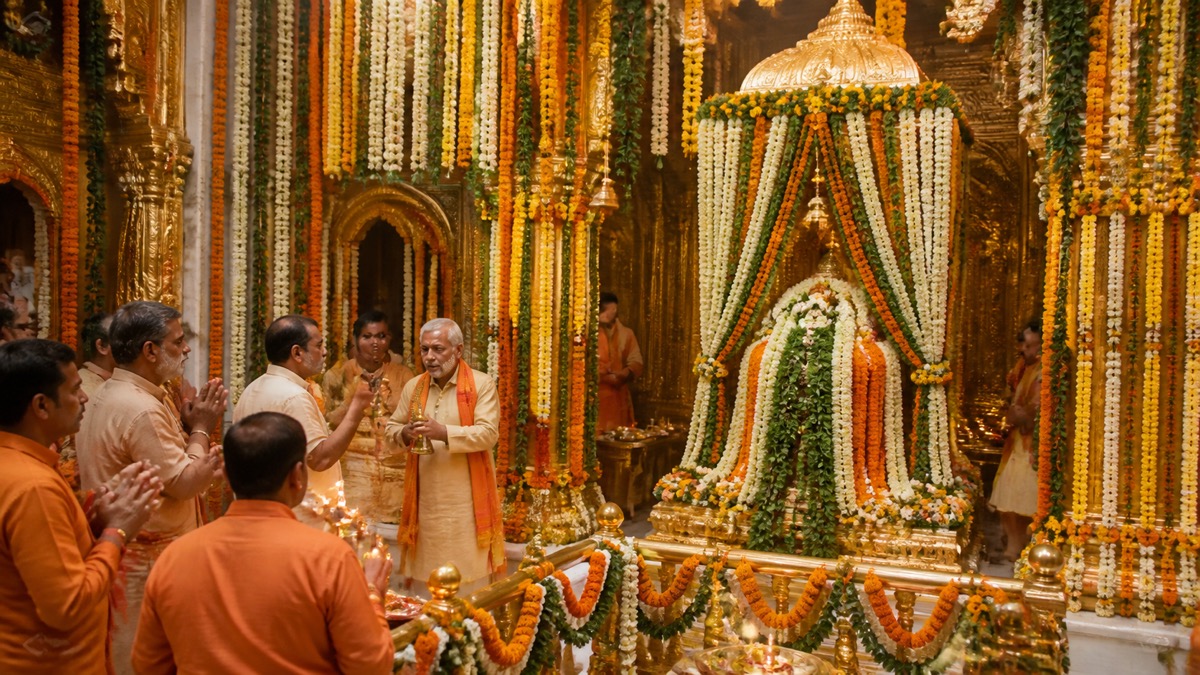
The first light of Independence Day entered Kashi Vishwanath Dham through a distinctly floral frame, with saffron, white and green blossoms arranged around the sanctum for Mangala Aarti. Bells, conches and chants of “Har Har Mahadev” accompanied the morning worship as the temple used the colours of the national flag for its ceremonial shringar.
The decoration brought a civic symbol into a sacred space without changing the ritual centre of the morning. Devotees arriving for early darshan saw bands and clusters of flowers in the three colours, carefully placed to remain decorative rather than reproduce the flag as an object of worship. Images from the aarti quickly travelled across social platforms, giving Varanasi one of its most recognisable Independence Day visuals.
Kashi has long absorbed public events into a religious and cultural calendar. National days are marked in schools, government offices, neighbourhoods and institutions, while temples often respond through special decoration or prayer. At Vishwanath Dham, the scale of footfall means even a temporary arrangement becomes a shared public image for visitors from across India.
The flower work also represents hours of unseen labour. Selection begins with colour and freshness, but teams must account for heat, moisture, ritual access and the movement of priests and security personnel. Stems and strings need to be secured without blocking the sanctum or creating waste on walking surfaces. The best decorations appear effortless because the preparation has been precise.
There is a practical environmental question after the photographs are taken. Large temple flower volumes can be composted or processed into incense and other products instead of entering mixed waste or the river. A tricolour shringar that is dismantled responsibly would carry the day’s public message into the less visible work of keeping Kashi clean.
For devotees, however, the morning was experienced less as a design project than as an overlap of forms of belonging. The sound of the aarti remained devotional; the colours carried the national association. Neither required the other to disappear. That coexistence is part of Varanasi’s habit of layering meanings rather than arranging them in separate rooms.
The floral display lasted only for the observance, but its timing gave it resonance. Before the official speeches and parades gathered pace, Kashi’s most visited shrine had already marked the day in its own visual vocabulary. Saffron, white and green flowers framed an old ritual, offering pilgrims a quiet, local expression of a national anniversary.
Sources and reporting
Based on visual and local reporting from the Independence Day Mangala Aarti at Shri Kashi Vishwanath Dham.
Related Stories
Lohta Hit-and-Run: Hardoi Truck Driver Ankit Pal Arrested
Magic Van Hit-and-Run Kills Security Guard Near Mohansarai
DGP Flags 15-20 Overseas Gangsters, Opens New PS
Puja Specials via Varanasi: Amritsar, Ahmedabad and Kolkata Paths Listed
Deputy Mayor Quits F&CC Seat; Poll on Oct 1