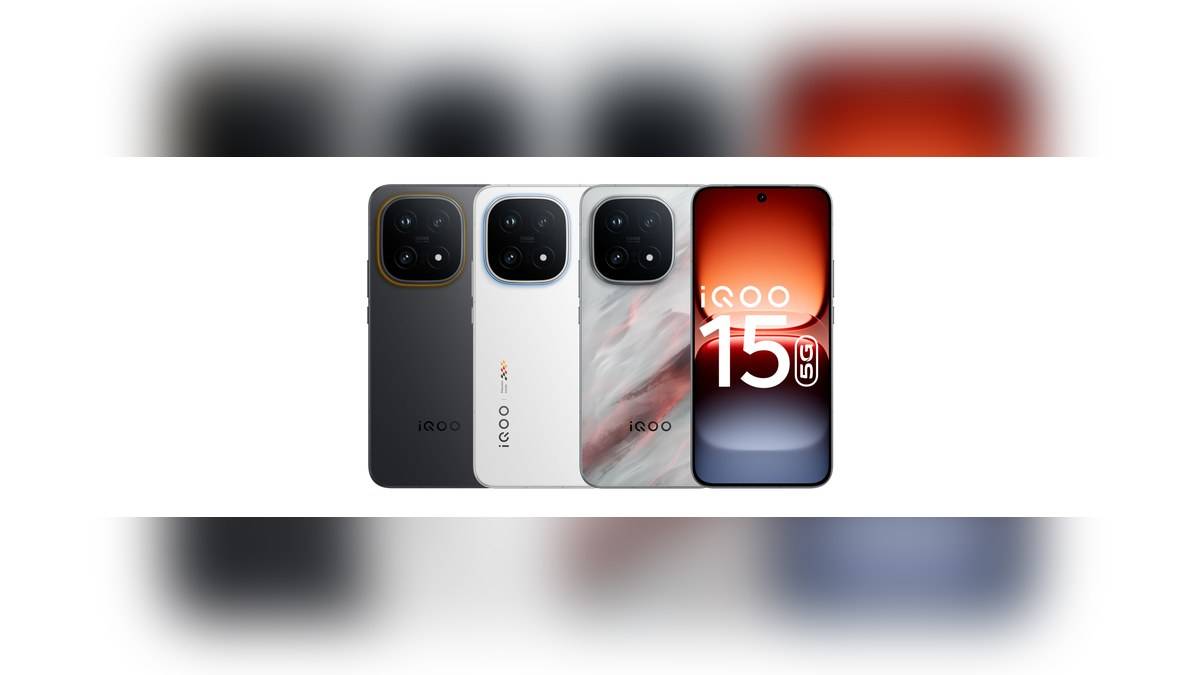
NEW DELHI: The iQOO 15 has a 50MP periscope camera with 3x optical zoom, while its official overview advertises zoom up to 100x. These figures describe different parts of the camera's reach. The phone also has separate 50MP main and ultrawide cameras, so its imaging system needs to be read by lens role rather than megapixel count alone.
| Camera or feature | Official specification |
|---|---|
| Main rear camera | 50MP Sony IMX921, f/1.88 |
| Ultrawide camera | 50MP, f/2.05 |
| Periscope camera | 50MP Sony IMX882, f/2.65 |
| Optical zoom | 3x |
| Advertised zoom ceiling | Up to 100x |
| Front camera | 32MP, f/2.2 |
| Store selection checked | 12GB + 256GB Apex, Rs 85,999 |
Price as of 9 November 2026, 00:31 IST. The amount is the selected iQOO India store listing, included as model context rather than a complete price list. This is an explanation of the published camera hardware and its limits, not a camera review or a claim based on sample photographs taken for this report.
Start with the optical figure
The company's explicit optical specification is 3x. The same page places an up-to-100x figure alongside it. The larger number should not be relabelled 100x optical zoom, because that would change what the official page says. A phone's maximum zoom setting and the lens's optical reach are different specifications.
For a family event or a distant building, that distinction is practical. A tighter frame can help a subject fill the picture, but making it larger on screen is not proof that the result contains correspondingly more detail. The useful question is whether the saved photograph retains the faces, lettering or textures that motivated the shot.
A sensible way to evaluate this specific camera is to compare photographs of the same stationary subject at its optical setting and at a longer zoom setting, then inspect the saved files. That keeps the scene constant. It is more informative than comparing a bright outdoor sample with an unrelated indoor photograph and attributing every difference to zoom.
The three rear cameras are not duplicates
All the rear cameras carry a 50MP label, but the specification sheet assigns them different roles and apertures. The main camera uses Sony's IMX921 sensor. The periscope uses IMX882, and the ultrawide is listed separately. Equal advertised resolution therefore does not mean interchangeable lenses or identical capture conditions.
The ultrawide role is relevant when a room, building or group will not fit the main camera's framing from the available position. The telephoto role addresses a different problem, bringing a narrower portion of the scene into the frame. Neither role can be inferred from the rear camera count by itself.
For portraits, consider where the photographer stands as well as which view is selected. Moving closer changes the perspective of the scene; selecting a tighter view changes the framing. Keeping those decisions separate helps explain why two pictures of the same person can look different even before colour processing is considered.
Stabilisation cannot answer every sharpness question
The overview advertises optical stabilisation on the main camera and gives stabilisation claims for the telephoto. Its footnote ties the CIPA ratings to testing of the main and telephoto lenses in pitch and yaw directions. Those qualifications belong with the claim, rather than being dropped when the rating is repeated.
For an owner, the distinction is between camera movement and subject movement. Steadying a camera does not cause a moving child, performer or vehicle to pause. A sharp background with a blurred moving person should therefore not automatically be diagnosed as a failed stabilisation system.
The official camera modes include Snapshot, Portrait, Landscape and Nightscape, HD Document and Professional Mode. Their availability gives the owner different capture tools, but a mode name is not a measured result. For paperwork, legible text and an evenly framed page matter; for portraits, focus on the person matters more than selecting the longest available zoom.
Keep front-camera and rear-camera claims separate
The front camera is listed at 32MP with an f/2.2 aperture. It is a separate specification from the rear system. A headline about triple 50MP rear cameras should not be understood as a promise that the selfie camera has the same resolution, lens arrangement or zoom capability.
Related reading includes our iQOO Neo 10 vs 15R: Rs 48,999 and Rs 59,999 for 12GB/256GB, the iQOO phone price list India: Rs 16,999 to Rs 93,999 for Z10 Lite to iQOO 15 and the iQOO Z10 Lite vs Z11 Lite 44W: Rs 18,999 and Rs 19,999 compared. Each separates a different specification from the result a user might assume it guarantees.
For iQOO 15, retain the precise distinction: 3x is the stated optical zoom, while 100x is the advertised maximum zoom. Understanding the main, ultrawide, periscope and front-camera roles is more useful than treating those numbers as a single camera-quality score.
Official sources: iQOO 15 overview, India specifications and iQOO India store.