NEW DELHI: Denim is cotton cloth for most of us, and winter denim usually means a heavy fleece lining stitched inside. IndigoTex, a deep-tech startup working out of the Research and Innovation Park at IIT Delhi, is trying a different route. It dyes merino wool with real indigo and finishes the fabric without water, so that a pair of jeans can keep you warm without the bulk.
The company is small and early, but it has picked up a string of recognitions this year, and its website says SIDBI and FITT, the technology transfer arm of IIT Delhi, backed it in March 2026. Here is what IndigoTex makes, how its two core technologies work, and what remains unproven.
A lab project that became a company
According to the company's about page, the idea started when co-founder Satendra Singh joined the MTech programme in Textile Chemical Processing at IIT Delhi and worked under Professor Bhupendra Singh Butola. IndigoTex was incorporated in 2020 as a venture from the institute's Department of Textile and Fibre Engineering.
Satendra Singh is the founder and CEO. Dr Bhupendra Singh Butola, a professor at IIT Delhi with more than 20 years in textile chemistry, is listed as founder and technical director and as the architect of the company's waterless process. Dilip Singh, co-founder and CMO, handles market development and brand partnerships. The site also lists Mohit Ahirwar as design director and Rajiv Madan, who has more than 30 years in the global textile trade, as strategic director.
The company's timeline is short and easy to follow. It filed its indigo on wool patent in 2022 after about four years of research, launched three product lines under the IndiWool brand in 2024, and says its waterless finishing was validated through a third party life cycle assessment in 2025. This year, it says, it is entering global business to business markets through pilot partnerships.
Why indigo and wool are hard to combine
Indigo is the dye that gives denim its colour, and it has traditionally been used on cotton. Wool is a protein fibre and reacts very differently to the alkaline chemistry normally used in indigo dyeing. IndigoTex says its patented process gets an authentic indigo shade on wool without degrading the fibre or reducing its strength.
The company says the process supports denim fabrics with anything from 5 to 100 percent merino wool content. It describes the result, IndiWool Denim, as the world's first true indigo wool denim. That is the company's own claim, and Dalimss News has not independently tested the fabric or checked the patent filings.
The pitch to buyers is comfort across seasons. A comparison on the company's homepage says conventional cotton denim offers thermal comfort only up to about 19 degrees Celsius and becomes heavy once a fleece layer is added. IndigoTex says wool rich denim is lighter, regulates temperature naturally and is made of natural, biodegradable fibres rather than synthetic blends.
ECOTEX, the waterless finish
The second technology matters as much as the dye. Wool shrinks and felts in a washing machine unless it is treated, and the common industrial fix, called superwash, uses chlorine based chemistry and large amounts of water.
IndigoTex's answer is a process it calls ECOTEX. The sustainability page says it uses only air and renewable electricity to make wool fabric durable and machine washable. In the company's own comparison table, conventional finishing uses 50 to 100 litres of water per metre of fabric plus several harsh chemicals and needs an effluent treatment plant, while ECOTEX uses no water, no chemicals and produces no toxic effluent.
The company also says ECOTEX uses significantly less energy than thermal drying, but it does not publish a precise figure on the pages Dalimss News reviewed. The life cycle assessment it mentions is not posted in full on the site, so readers should treat the savings as company claims until the study is made public.
Products and who they are for
IndigoTex sells fabric to brands rather than finished clothes to shoppers. Its range is split into three lines. IndiWool Functional, IndiWool Naturals and IndiWool Heritage Premium together cover fashion and apparel, home textiles such as blankets, bags and accessories, and workwear. For the workwear segment the company lists flame resistant and odour resistant fabrics, and its timeline mentions defence among its target sectors.
The IndiWool Denim page suggests uses such as premium jeans, winter denim collections, travel and outdoor wear and sustainable fashion lines. Brands can request fabric samples through the site. No retail prices are published, which is normal for a business that sells fabric by the metre to apparel makers.
For a country that grows a lot of cotton and processes a lot of denim, the idea has an Indian angle beyond the lab. The company says its Heritage line is meant to support ethical sheep farming and wool growers, though it does not yet publish sourcing volumes or the regions it buys from.
Backing and recognition so far
The awards and media page on the company's site lists a win at the Startup MahaRathi Challenge during Startup Mahakumbh 2025 at Bharat Mandapam in New Delhi in April 2025. It says IndigoTex was named second runner up at the ReNew15 Awards for Climate Entrepreneurs on 7 February 2026, with a prize of Rs 5 lakh, and was one of 15 startups picked for the first cohort of the IGNITE programme run by IDFC FIRST Bank and FITT IIT Delhi.
The same page says that on 18 March 2026 SIDBI and FITT, IIT Delhi backed IndigoTex to scale production of IndiWool Denim, expand research and build partnerships with domestic and global apparel brands. The company has not published the size of that investment on its own site, so Dalimss News is not reporting a figure.
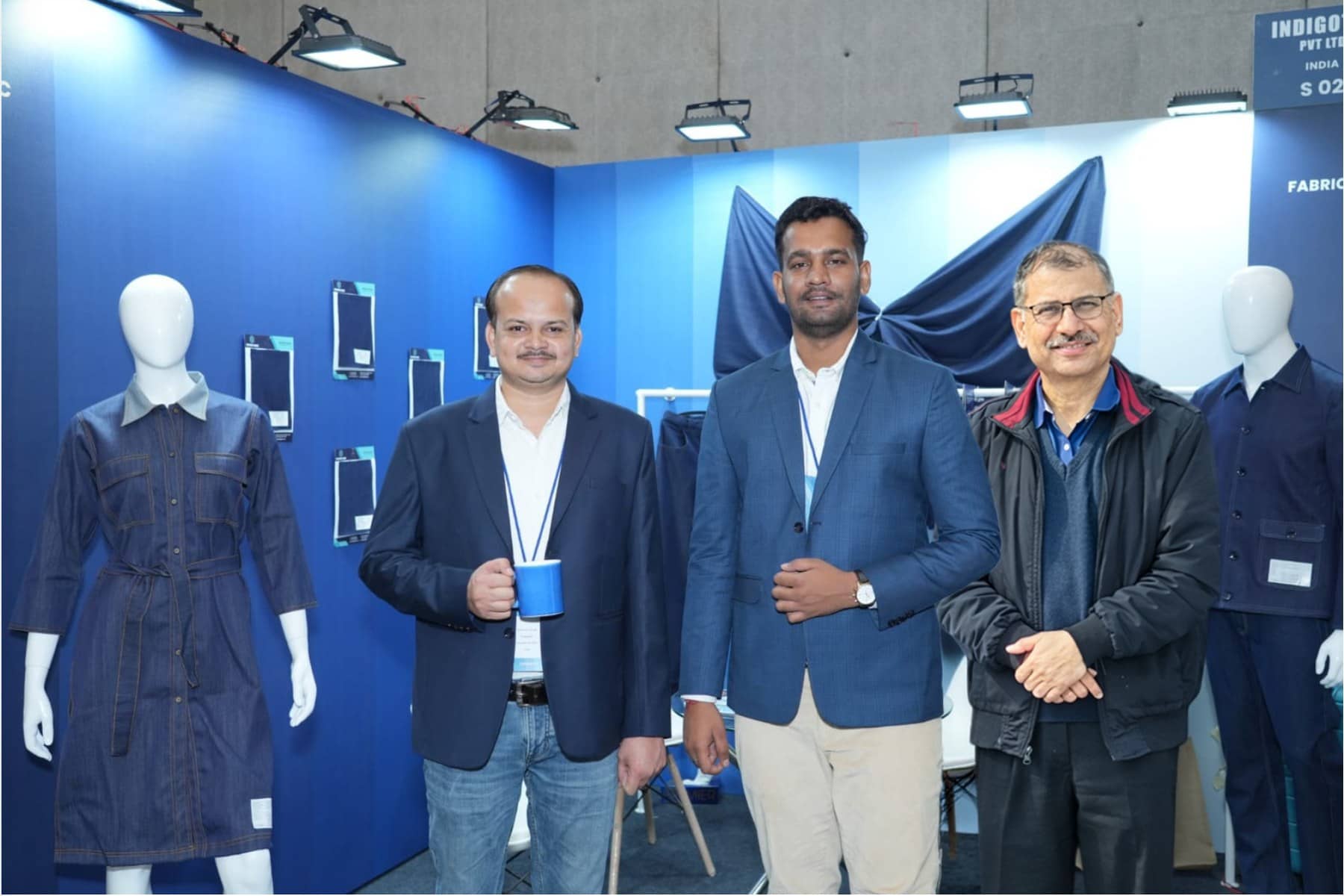
This year IndigoTex has also shown its fabrics at Bharat Innovates 2026 in Nice, France from 14 to 16 June, at VivaTech in Paris and at Bharat Tex 2026 at Bharat Mandapam from 14 to 17 July. The site also quotes Union Textiles Minister Giriraj Singh praising the wool denim work.
What to watch
The real test is scale. Lab results and trade fair stalls are one thing, and running ECOTEX in partner mills at commercial volumes is another. The company's own road ahead lists three goals: scaling ECOTEX for commercial production across partner mills, pilot partnerships in the EU, US and Japan, and certifications such as ZDHC, OEKO-TEX and Woolmark. Those certifications, once granted, would give buyers an outside check on the sustainability claims.
Students and researchers following campus ventures can see where IndigoTex fits within the wider IIT Delhi system, which recently held its convocation for 3,036 graduates. Readers interested in how Indian designers are mixing craft with modern labels can also read our profile of Varanasi based Eleven Clothing.
For now, IndigoTex is a clear example of a university lab trying to turn textile chemistry into a business. Whether wool denim becomes a winter staple will depend on price, mill partners and how the fabric holds up after years of washing, and those answers will only come with time.