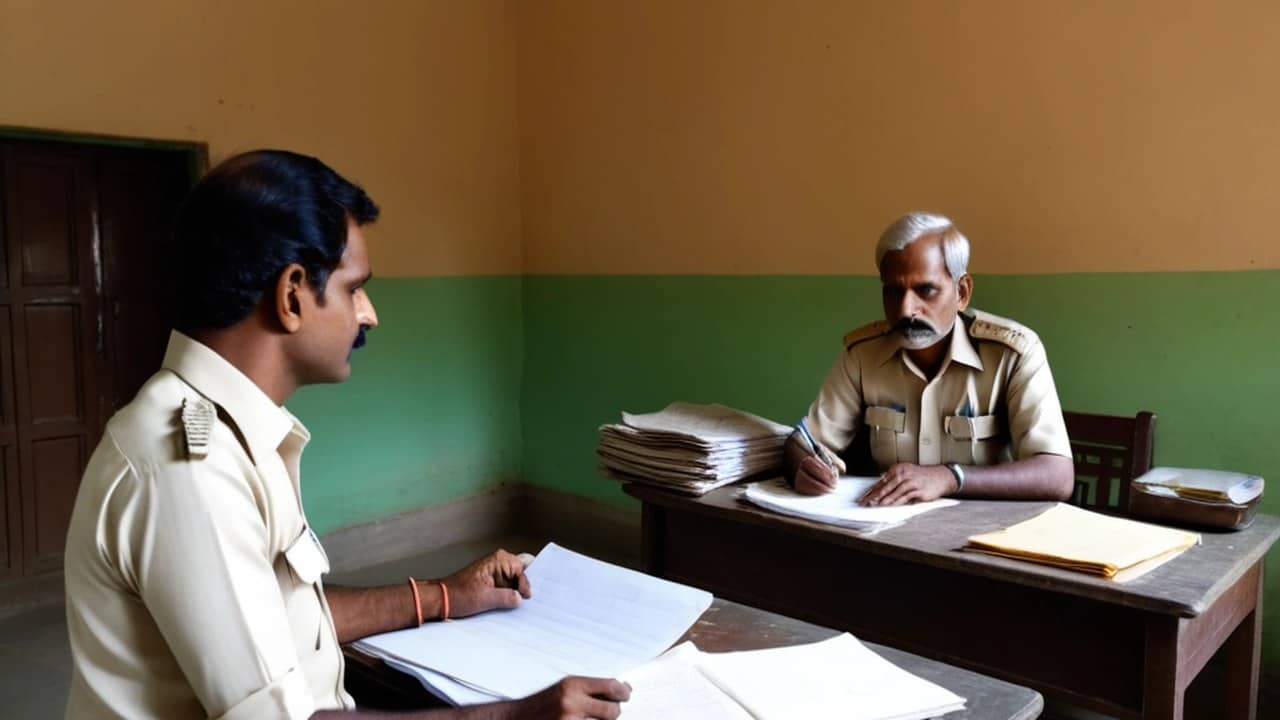
The Indian Institute of Technology (BHU), Varanasi, and Germany's University of Wuppertal have signed an institute-level memorandum of understanding, turning what began as a partnership between their civil engineering departments into a broader research and exchange tie-up. The MoU was signed on 1 October, according to information shared by the institute this week.
The agreement covers joint research projects across departments, exchange of students and faculty members, shared academic activities and multidisciplinary research. In practice, that means work between the two campuses is no longer limited to civil engineering and can extend to other branches of engineering and science.
The partnership did not start at the top. It grew out of collaboration between the civil engineering departments of the two institutions under the Scheme for Promotion of Academic and Research Collaboration, better known as SPARC. After those joint academic and research activities went well, both sides decided to widen the arrangement, the institute said.
SPARC is a Union Education Ministry scheme, launched in 2018, that funds collaborations between Indian institutions and leading universities abroad. Projects under it typically pair faculty members on both sides and support visits, joint papers and short courses, which makes it a common route for departments to build a working relationship before a formal institute-wide agreement.
IIT (BHU) Director Prof Amit Patra exchanged the MoU at an event on the campus. Prof Pahirangan Sivapatham of the University of Wuppertal was present, along with a group of 11 students from the German university.
Prof Patra said the cooperation between the two institutions had made good progress over the past few years. Moving from department level to institute level, he said, would open up opportunities for joint research in different subjects, exchanges of students and teachers, and wider international academic collaboration.
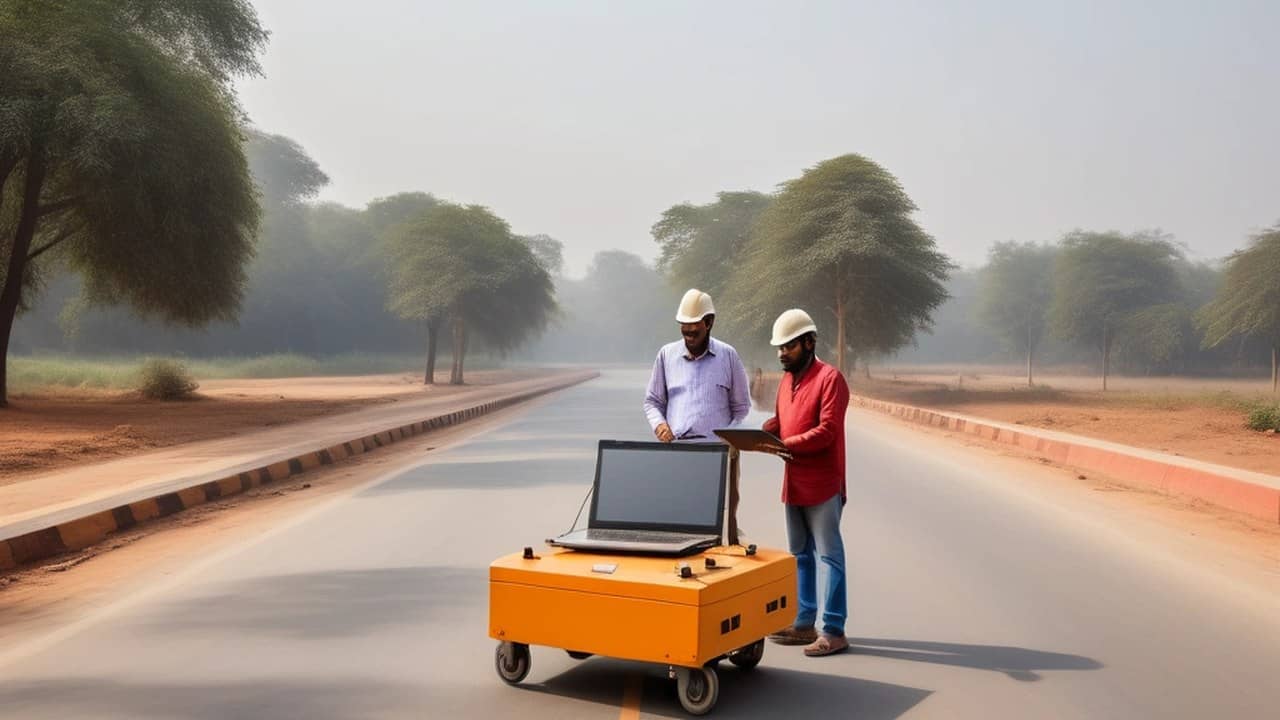
The German group's visit has a practical side. A workshop under way at the institute is giving hands-on training in modern methods of testing roads and pavements, with a focus on two pieces of equipment that most road users never see: ground penetrating radar, or GPR, and the traffic speed deflectometer, or TSD.
GPR works a little like an ultrasound for a road. A unit, often pushed on a cart or mounted on a vehicle, sends short radio pulses down into the pavement and records the echoes that bounce back from each layer. From those echoes engineers can work out how thick the layers are and spot hidden problems such as voids or trapped moisture, without digging the road up.
The TSD answers a different question: how strong is the road underneath its surface? Mounted on a heavy truck that drives at normal traffic speed, it uses laser sensors to measure how much the road surface dips under the weight of a loaded wheel. A road that flexes too much is weak below, and engineers can find such stretches without closing a lane for slow manual tests.
Both institutions expect the wider agreement to support joint research in sustainable infrastructure, road and pavement engineering, advanced methods of testing infrastructure, and environment-related problems. They also plan to involve students, research scholars and faculty in international research and academic activities, the institute said.
For students at IIT (BHU), the clearest change is that exchange and joint research are now open across departments rather than within civil engineering alone. The institute has not yet announced how many places will be offered, how candidates will be selected or when the first exchanges under the new MoU will take place.
The University of Wuppertal is a public university in the German state of North Rhine-Westphalia, founded in 1972. Its link with Varanasi adds to a busy period for the institute, which recently wrapped up Traction 2026, its entrepreneurship programme for early founders, and saw one of its faculty members named a COSPAR inter-commission liaison officer for 2026 to 2030.
The next big date on the campus calendar is the 15th convocation on 31 October, when over 1,700 students are due to graduate. For now, though, the clearest sign of the new partnership is the workshop itself, with a group of German students learning to read roads through radar echoes and laser readings on an Indian campus.