IIT-BHU Creates School of Physical AI and Autonomous Systems
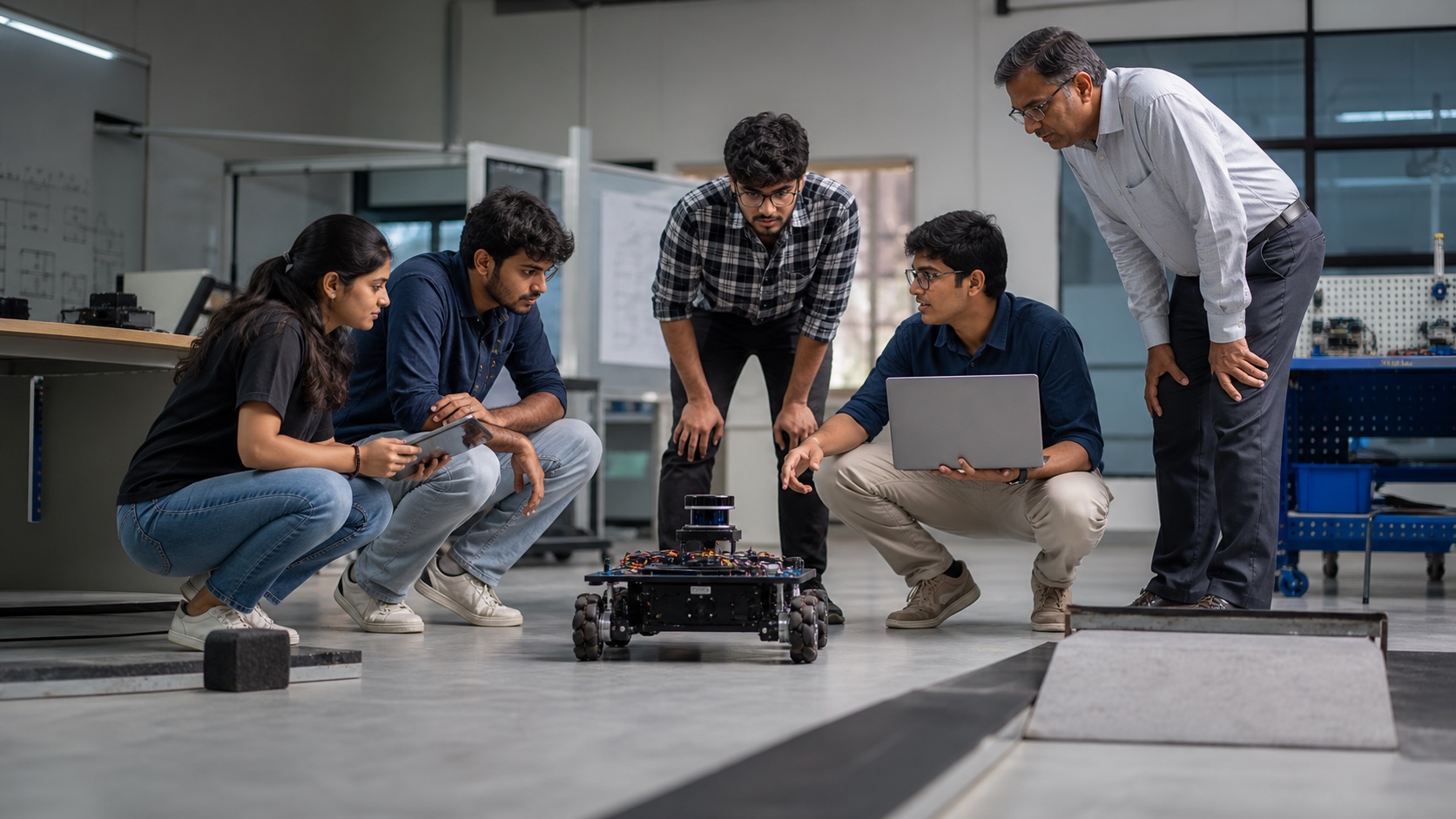
IIT-BHU has established a School of Physical AI and Autonomous Systems, signalling an attempt to bring artificial intelligence out of the screen and into machines that perceive and act in the physical world. An institute notification dated July 15 created the school, and a chair with a coordination committee was appointed on July 18 to begin organising its work.
Physical AI covers systems in which software, sensors and mechanical components operate together: robots, assistive devices, industrial machines and autonomous platforms are familiar examples. The difficult part is not only writing an algorithm. A system must interpret noisy surroundings, make decisions within strict time limits and fail safely when a sensor, network or power supply behaves unexpectedly.
That makes the new school inherently interdisciplinary. Computer science can contribute perception and learning; electronics brings sensing and control; mechanical engineering shapes movement; and materials, design and human factors decide whether a machine survives outside a demonstration room. A school can provide a shared curriculum and test environment where those strands meet rather than competing for ownership.
The autonomy label also creates ethical obligations. Machines that move around people can cause physical harm, collect personal data or reproduce bias embedded in training material. The institute will need safety review, cybersecurity standards and transparent rules for human oversight. Students should learn not only how to improve accuracy, but when a system should stop, defer to a person or refuse an unsafe instruction.
Varanasi and the wider Purvanchal region offer potential civilian problems worth studying: low-cost inspection, accessible mobility, hospital logistics, agriculture and disaster response. Those possibilities should not be mistaken for announced projects. IIT-BHU has so far confirmed the school and its coordinating structure; its courses, laboratories, funding and external partnerships will need separate public detail.
A new school earns credibility through work that can be examined—published methods, robust prototypes, open evaluation and graduates who understand both engineering and responsibility. If IIT-BHU builds that culture, Physical AI could become more than a fashionable phrase. It could give Varanasi a serious research platform for machines designed around Indian conditions and public needs.
The school can also help students separate a controlled demonstration from a dependable autonomous system. Real streets, clinics and factories contain unpredictable people, reflective surfaces, power interruptions and maintenance gaps. Testing across those conditions—and publishing failures as carefully as successes—would give the programme a distinctive practical standard and make its research more useful outside campus.
Sources and reporting
Based on IIT-BHU’s official order establishing the School of Physical AI and Autonomous Systems on 15 July 2026 and its chair and coordination committee notification of 18 July 2026. No unannounced research outcome is attributed to the school.
Related Stories

Devialet brings Phantom Ultimate Pulse Blue to India at Rs 2.4 lakh

Google Vids now lets anyone make free HD AI videos with Omni 1.1
Qualcomm renews global patent licence with Apple from April 2027
GalaxEye gets Rs 63.84 crore to build all-weather OptoSAR satellite

Akamai signs $11.6 billion cloud deal with Anthropic